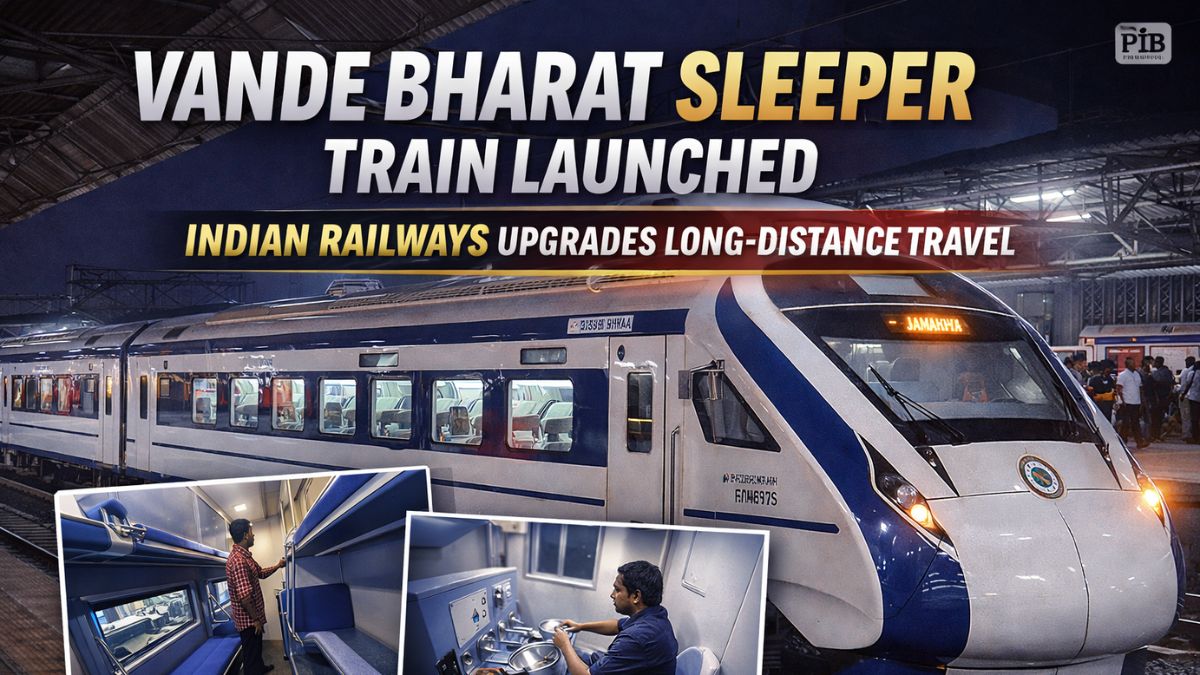



New Delhi: The launch of the Vande Bharat Sleeper marks a significant step in Indian Railways’ efforts to modernise long-distance travel, extending the Vande Bharat platform beyond short-haul, chair-car services. Designed for overnight and intercity journeys, the new sleeper variant aims to combine higher speeds with improved comfort, safety, and energy efficiency.
Railway officials said the Vande Bharat Sleeper launch is part of a broader plan to replace ageing conventional trains on key long-distance routes with semi-high-speed alternatives. Unlike earlier Vande Bharat Express services, which primarily operated during daytime, the sleeper version is intended to serve passengers travelling distances of 800 kilometres or more.
What Sets the Vande Bharat Sleeper Apart
The Vande Bharat Sleeper trainset features modern sleeper and AC coaches equipped with upgraded berths, improved suspension systems, and noise-reduction technology. Passenger amenities include automatic doors, enhanced lighting, modern washrooms, and onboard information systems designed to improve the overall travel experience.
Indian Railways has also emphasised safety upgrades, including advanced braking systems and real-time monitoring of critical components. Officials noted that the train’s design focuses on reducing maintenance requirements while improving operational reliability, an area where conventional long-distance trains have often faced challenges.
Faster Journeys on Busy Routes
With a design speed of up to 160 kmph, the sleeper variant is expected to reduce travel time on high-demand routes once infrastructure upgrades are completed. While actual operating speeds will depend on track conditions and signalling systems, railway planners believe the train could offer a competitive alternative to overnight flights on select corridors.
The introduction of the sleeper format reflects Indian Railways’ recognition that long-distance passengers prioritise both speed and comfort. By enabling overnight journeys with better amenities, the railway aims to attract travellers who currently prefer road or air transport for intercity travel.
Part of a Larger Railway Modernisation Drive
The Indian Railways new train programme is closely linked to the government’s wider railway modernisation agenda. Over the past few years, the national transporter has invested heavily in station redevelopment, electrification, and rolling stock upgrades. The Vande Bharat platform has become a flagship symbol of this transformation.
Officials said more sleeper trainsets are planned, with phased induction across multiple routes. Priority corridors are likely to include those with high passenger density and limited overnight flight connectivity. The move is also expected to ease pressure on conventional Rajdhani and other premium trains.
Passenger Expectations and Challenges
While the launch has generated optimism, experts caution that the success of the Vande Bharat Sleeper will depend on consistent service quality, punctuality, and pricing. Fare levels have not yet been finalised, but analysts suggest they are likely to be positioned between existing premium trains and air travel.
Operational challenges also remain. Track capacity constraints, congestion on busy routes, and the need for upgraded signalling systems could limit the immediate impact of the new trains. Railway officials, however, said ongoing infrastructure projects are expected to address many of these bottlenecks in the coming years.
Economic and Environmental Impact
From an economic perspective, the sleeper train is expected to improve asset utilisation by enabling faster turnaround times and higher passenger throughput. Environmentally, shifting passengers from road and air to rail aligns with India’s broader sustainability goals, as rail transport has a significantly lower carbon footprint.
The railway modernisation programme in India, officials say, is not just about speed but about reliability, safety, and passenger comfort. The sleeper variant represents an attempt to bring long-distance rail travel in line with global standards while retaining affordability for a wide section of passengers.
What Comes Next
Indian Railways plans to monitor passenger feedback closely during the initial phase of operations. Based on performance and demand, additional routes and configurations could be introduced. For now, the Vande Bharat Sleeper launch signals a strategic shift in how India approaches long-distance rail travel, blending technology-driven upgrades with the scale of one of the world’s largest rail networks.
Related: Train Cancellations Today: Indian Railways Cancels Multiple Services
Related: Domestic Travel in India Surges as Tourism Demand Strengthens Nationwide