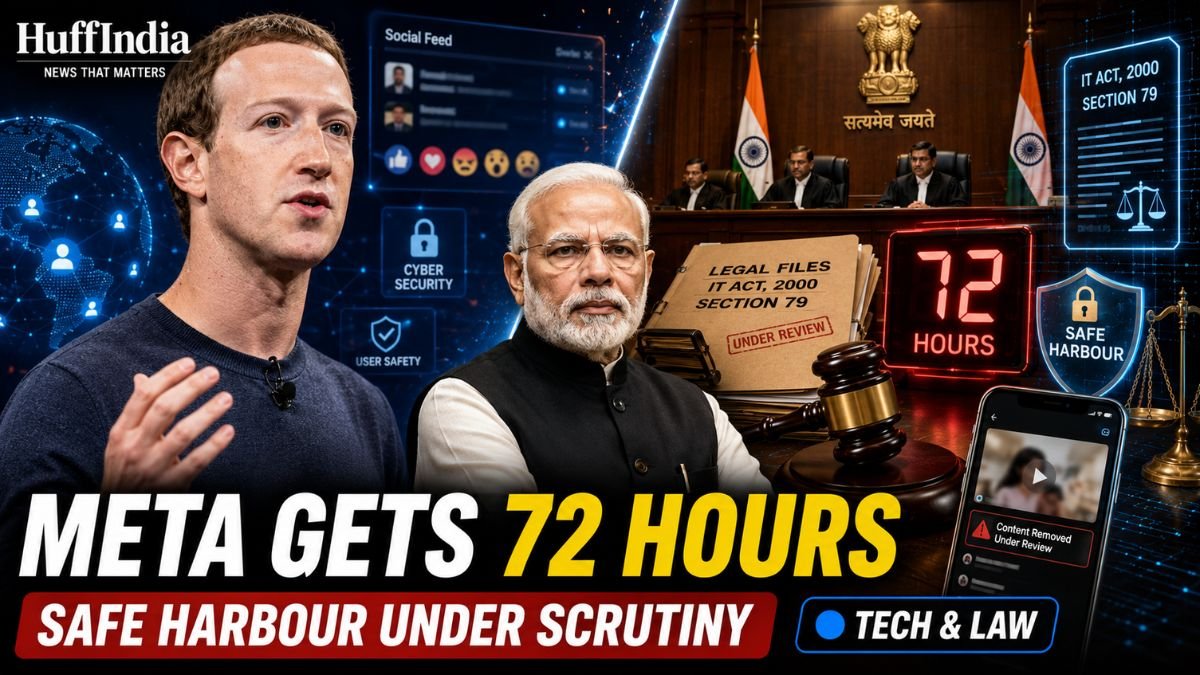



Meta safe harbour protection has come under renewed legal scrutiny after a court directed the social media company to respond within 72 hours regarding a Prime Minister-related video that is at the centre of an ongoing legal dispute. During the hearing, the court observed that failure to provide a satisfactory response could have implications for the intermediary protections available to the platform under Indian law.
The proceedings concern the obligations of social media intermediaries when content alleged to be unlawful or misleading appears on their platforms. The matter is still before the court, and no final determination has been made regarding Meta’s liability or its intermediary status.
Meta Safe Harbour Protection Comes Under Judicial Examination
The court directed Meta to submit its response within 72 hours after hearing arguments relating to the circulation of the disputed video.
During the proceedings, the court reportedly observed that if an intermediary fails to comply with legal obligations under the applicable framework, questions may arise regarding the continued availability of Meta safe harbour protection. The observations were made during the hearing and should not be interpreted as a final judicial ruling.
Meta had not publicly responded to the court’s observations at the time of publication.
What Is Safe Harbour Protection?
Under India’s Information Technology Act, 2000, online intermediaries such as social media platforms may receive legal protection from liability for third-party content, provided they comply with statutory obligations and due diligence requirements.
Commonly referred to as safe harbour protection, these provisions are intended to allow platforms to host user-generated content while requiring them to respond appropriately to lawful government orders and judicial directions.
Whether an intermediary continues to enjoy those protections depends on compliance with applicable legal requirements and is ultimately subject to judicial interpretation.
Why the Case Matters
The latest hearing highlights the growing legal focus on the responsibilities of digital platforms in India.
Courts have increasingly examined how social media companies handle disputed content, misinformation allegations and requests for content removal or disclosure. The present case could become another important reference point in discussions surrounding intermediary liability and digital platform accountability.
Legal experts note that the outcome may help clarify how courts interpret intermediary obligations in future disputes involving online content.
Meta Yet to Present Its Detailed Response
The court granted Meta 72 hours to file its response regarding the matter.
Until the company submits its position, several aspects of the dispute remain subject to judicial consideration. The court has not delivered any final findings regarding the disputed content or whether Meta has complied with all applicable legal obligations.
Further hearings are expected after the company’s response is placed on record.
Broader Debate Around Digital Platforms
The case comes amid continuing discussions over how online platforms should balance freedom of expression, user privacy and compliance with legal requirements.
Technology companies operating in India are required to follow provisions of the Information Technology Act and the Information Technology (Intermediary Guidelines and Digital Media Ethics Code) Rules, while also responding to lawful directions issued by competent authorities and courts.
The issue has become increasingly significant as social media platforms play a larger role in political communication and public discourse.
Official information on the Information Technology (Intermediary Guidelines and Digital Media Ethics Code) Rules is available on the MeitY
What Happens Next?
The immediate focus will be on Meta’s response to the court within the stipulated period.
Depending on the submissions made by the parties, the court may issue further directions or continue hearing the matter before arriving at any conclusions. Legal experts caution that observations made during hearings do not amount to final judgments, and the dispute remains pending before the court.
Also Read | AAP Protest Against E20 Petrol Policy: Kejriwal, Sisodia Stage Sit-In After March Halted
Final Takeaway
The developments surrounding Meta safe harbour protection reflect the increasing judicial scrutiny of digital intermediaries and their responsibilities under Indian law. While the court has directed Meta to respond within 72 hours and raised questions regarding intermediary protections during the hearing, no final decision has been reached. The outcome of the case could provide further clarity on the legal obligations of social media platforms and the circumstances under which intermediary protections may be retained or challenged.