
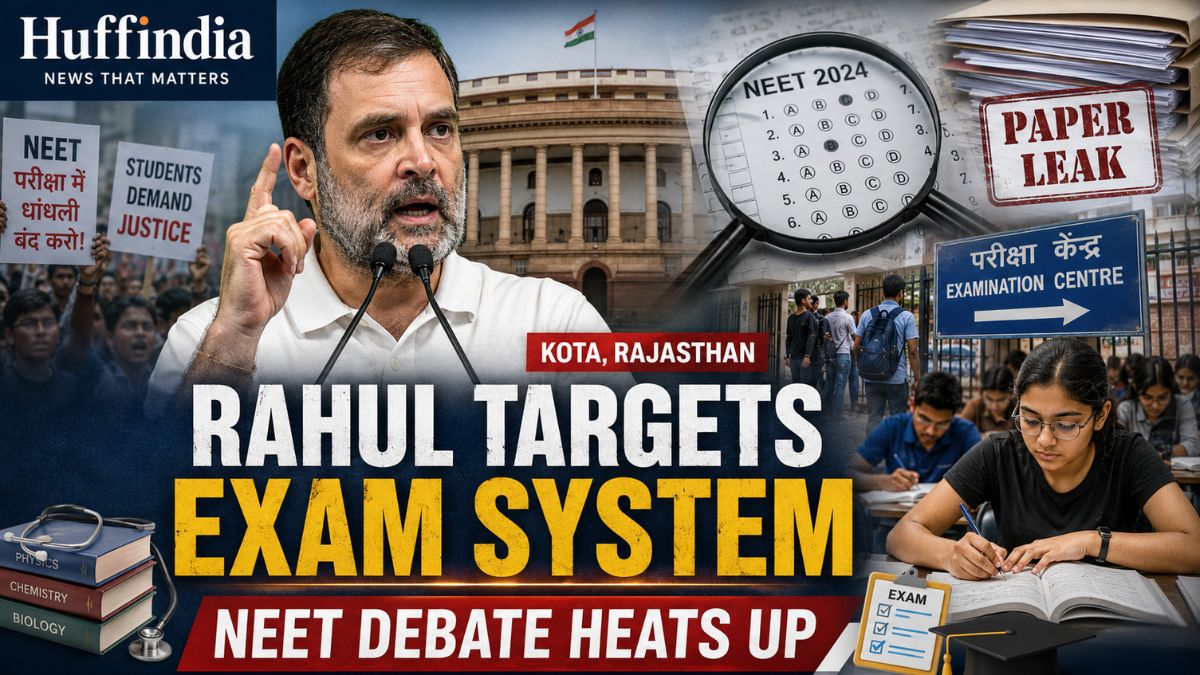



Rahul Gandhi NEET Paper Leak remarks have once again brought India’s examination system into the spotlight. During an interaction in Kota, Rajasthan, the Congress leader questioned the credibility of the country’s competitive examination framework and argued that repeated irregularities have undermined students’ confidence.
The comments come amid continuing discussions around examination transparency, student welfare, and the need for reforms in high-stakes entrance tests. Gandhi linked his criticism to concerns raised over NEET-UG controversies and broader issues surrounding evaluation systems.
The remarks have also triggered a political response, with the BJP accusing the opposition of attempting to politicize education-related concerns ahead of important examination developments.
Rahul Gandhi Raises Concerns Over Exam Irregularities
The Rahul Gandhi NEET Paper Leak discussion gained momentum after the Congress leader highlighted what he described as recurring problems in India’s examination ecosystem.
According to Gandhi, repeated controversies surrounding competitive exams indicate systemic shortcomings that need to be addressed.
He argued that students invest years of effort preparing for major examinations and deserve a system that is transparent, fair, and accountable.
His comments resonated with ongoing public discussions about examination security and administrative oversight.
Focus on Student Potential
A central theme of the Rahul Gandhi NEET Paper Leak remarks was the belief that educational systems should focus more on identifying and nurturing talent rather than merely filtering candidates.
Gandhi suggested that excessive emphasis on elimination-based testing can create additional pressure on students already facing intense academic competition.
Education experts have long debated how competitive examinations can balance merit assessment with broader measures of student capability.
The discussion continues to attract attention from policymakers, educators, and parents across the country.
Kota Remains a Symbol of Exam Aspirations
The Rahul Gandhi NEET Paper Leak comments carried additional significance because they were made in Kota, one of India’s most prominent coaching hubs.
Thousands of students travel to Kota every year to prepare for competitive examinations such as:
- NEET
- JEE
- Government recruitment exams
- Professional entrance tests
The city has become closely associated with India’s highly competitive examination culture.
As a result, any discussion about education reforms often receives significant attention when linked to Kota.
NEET and Examination Transparency
The broader Rahul Gandhi NEET Paper Leak debate reflects growing public concern regarding examination integrity.
Competitive examinations play a critical role in determining academic and professional opportunities for millions of students.
Key concerns frequently raised include:
- Exam security
- Transparency
- Evaluation processes
- Student stress
- Administrative accountability
Authorities have repeatedly emphasized efforts to strengthen examination procedures and improve monitoring systems.
BJP Responds to Criticism
The Rahul Gandhi NEET Paper Leak remarks also sparked a political exchange.
Leaders from the BJP reportedly dismissed the criticism as politically motivated and argued that the government has already implemented measures to improve examination oversight.
The ruling party maintained that education reforms and examination safeguards continue to receive attention from relevant authorities.
Political disagreements over education policy are not uncommon, particularly when issues affect large numbers of students and families.
Why the Debate Matters
The significance of the Rahul Gandhi NEET Paper Leak discussion extends beyond politics.
For students, parents, and educators, examination credibility remains a crucial issue because it directly influences academic and career opportunities.
Experts note that trust in examination systems depends on:
- Fair procedures
- Transparent evaluations
- Strong security measures
- Timely communication
- Effective grievance redressal
Maintaining public confidence is essential for the long-term credibility of competitive examinations.
Calls for Continued Reform
The Rahul Gandhi NEET Paper Leak controversy has once again highlighted demands for ongoing improvements in India’s education system.
Many education specialists support measures such as:
- Enhanced digital monitoring
- Stronger anti-cheating mechanisms
- Greater transparency
- Faster investigation of irregularities
- Better student support systems
While opinions differ on specific solutions, there is broad agreement that maintaining examination integrity is a priority.
Students at the Centre of the Discussion
One aspect repeatedly emphasized during the Rahul Gandhi NEET Paper Leak debate is the importance of keeping student interests at the forefront.
Millions of young Indians depend on competitive examinations as gateways to higher education and professional careers.
Ensuring fairness and transparency remains essential for preserving opportunities and maintaining trust in the system.
Education experts argue that any future reforms should focus on improving both security and student experience.
Looking Ahead
As discussions continue, policymakers, educational institutions, and examination authorities are expected to remain focused on strengthening examination processes.
The issues raised during the Rahul Gandhi NEET Paper Leak debate are likely to remain part of broader conversations about educational reform, student welfare, and institutional accountability.
Future policy decisions may shape how competitive examinations evolve in the years ahead.
For official updates on education policies and examination reforms, readers can visit the Ministry of Education website.
Final Thoughts on Rahul Gandhi NEET Paper Leak Remarks
The Rahul Gandhi NEET Paper Leak comments have reignited an important national conversation about examination credibility and student welfare. While political parties continue to debate responsibility and solutions, the central issue remains ensuring a fair and transparent system for millions of students.
As India continues to refine its examination framework, policymakers face the challenge of balancing security, accountability, and accessibility while maintaining public confidence in one of the world’s largest education systems.
Also read: NTA Telegram Ban: Chief Defends Move Ahead of June 21 Re-NEET Exam