
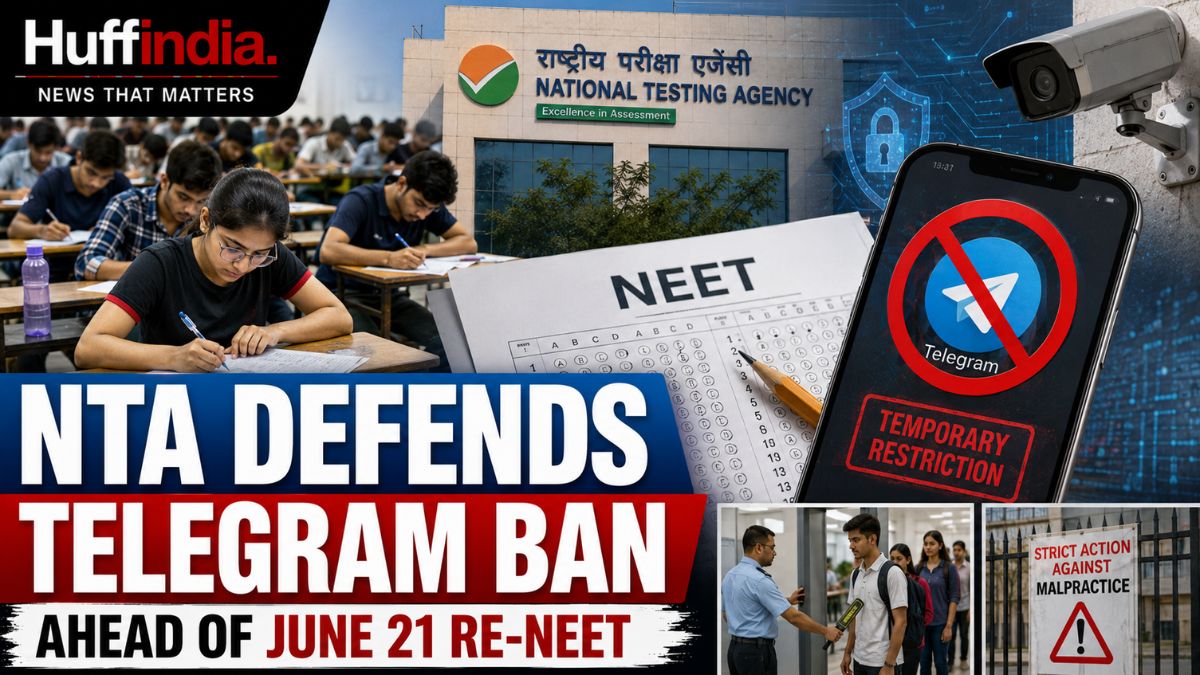



NTA Telegram Ban has become a major talking point in the education sector ahead of the June 21 Re-NEET examination. Responding to criticism and concerns from students, parents, and educators, National Testing Agency (NTA) officials have defended the temporary restriction on Telegram access, arguing that the move is aimed at safeguarding the integrity of the examination process.
The decision comes as authorities seek to prevent the spread of misinformation, unauthorized content sharing, and potential exam-related leaks in the days leading up to the highly anticipated re-examination.
With thousands of candidates preparing for the test, the debate has reignited broader discussions about exam security, digital platforms, and fairness in competitive examinations.
NTA Telegram Ban Explained
The NTA Telegram Ban was reportedly introduced as a temporary precautionary measure ahead of the Re-NEET examination scheduled for June 21.
According to officials, messaging platforms have increasingly been used in recent years for the rapid circulation of examination-related content, including rumors, fake question papers, and misleading information.
Authorities believe stricter monitoring and temporary restrictions can help reduce opportunities for unauthorized sharing during sensitive examination periods.
The move is part of broader efforts to strengthen confidence in the examination system.
NTA Chief Defends the Decision
Addressing concerns over the NTA Telegram Ban, senior agency officials emphasized that the measure is intended to protect students rather than inconvenience them.
The NTA leadership reportedly argued that maintaining examination integrity remains the highest priority, especially after controversies surrounding competitive exams in recent years.
Officials stated that temporary restrictions are being considered as preventive actions rather than long-term policies.
The agency maintains that ensuring a fair and transparent testing environment is essential for all candidates.
Why Exam Security Is Under Increased Scrutiny
The debate surrounding the NTA Telegram Ban reflects growing concerns about exam security across India.
Competitive examinations involving large numbers of candidates have increasingly faced challenges such as:
- Paper leak allegations
- Fake question paper circulation
- Misinformation campaigns
- Unauthorized digital sharing
- Impersonation attempts
As technology continues to evolve, examination authorities are under pressure to develop stronger safeguards against potential misuse of online platforms.
This has led to greater focus on digital monitoring and security measures.
Student Reactions Mixed
The NTA Telegram Ban has generated mixed reactions among students.
Some candidates support stronger examination security measures, arguing that fairness should take precedence over convenience.
Others have expressed concerns about restrictions on communication platforms frequently used for study groups, educational discussions, and exam preparation.
Many students rely on Telegram channels for:
- Study materials
- Revision notes
- Practice papers
- Peer discussions
- Educational updates
The differing opinions highlight the challenge of balancing security concerns with educational accessibility.
Importance of the June 21 Re-NEET Exam
The upcoming examination remains one of the most closely watched education events in the country.
The NTA Telegram Ban has gained attention largely because of the significance of the June 21 Re-NEET exam for thousands of aspiring medical students.
NEET serves as the primary gateway for admission to medical and dental institutions across India.
As a result, any policy decision related to examination administration tends to attract significant public attention.
Students, parents, and educational institutions are all closely monitoring developments.
Technology and Examination Integrity
The discussion around the NTA Telegram Ban also raises broader questions about the role of technology in modern examinations.
Digital platforms provide valuable educational opportunities but can also create challenges when used improperly.
Experts argue that examination authorities must continue investing in:
- Digital monitoring systems
- Cybersecurity measures
- Candidate awareness programs
- Transparent communication
- Stronger verification processes
The goal is to ensure that technology supports learning without compromising examination integrity.
What NTA Says About Future Measures
Officials have indicated that examination security measures will continue evolving based on emerging challenges.
The NTA Telegram Ban may serve as one example of how authorities are adapting to increasingly digital environments.
Education experts believe future examination systems may rely more heavily on advanced monitoring technologies and proactive risk management strategies.
However, transparency and student communication will remain critical to maintaining public trust.
Balancing Security and Accessibility
One of the key debates emerging from the NTA Telegram Ban involves finding the right balance between security and accessibility.
While preventing malpractice is essential, many stakeholders also emphasize the importance of ensuring that legitimate educational resources remain available to students.
The challenge for policymakers will be developing solutions that address both objectives effectively.
This conversation is likely to continue as examination systems become more technology-driven.
Looking Ahead to June 21
With the Re-NEET examination approaching, authorities remain focused on ensuring a smooth and secure process.
Students are being encouraged to rely on official sources for information and avoid unverified content circulating online.
The coming days will likely determine how successful the security measures prove to be and whether additional steps are considered necessary.
For official examination updates and notifications, candidates can visit the National Testing Agency (NTA) website.
Final Thoughts on the NTA Telegram Ban
The NTA Telegram Ban has sparked a wider discussion about examination security, digital communication platforms, and student access to information. While officials argue that the temporary restriction is necessary to protect the integrity of the June 21 Re-NEET exam, opinions remain divided among students and education stakeholders.
As India continues to modernize its examination systems, finding the right balance between technological freedom and exam security will remain an important challenge. For now, the focus remains on conducting a fair, transparent, and credible examination process for all candidates.
Also Read: Khan Sir Bail Plea Gets Major Relief as Patna Court Grants Interim Protection