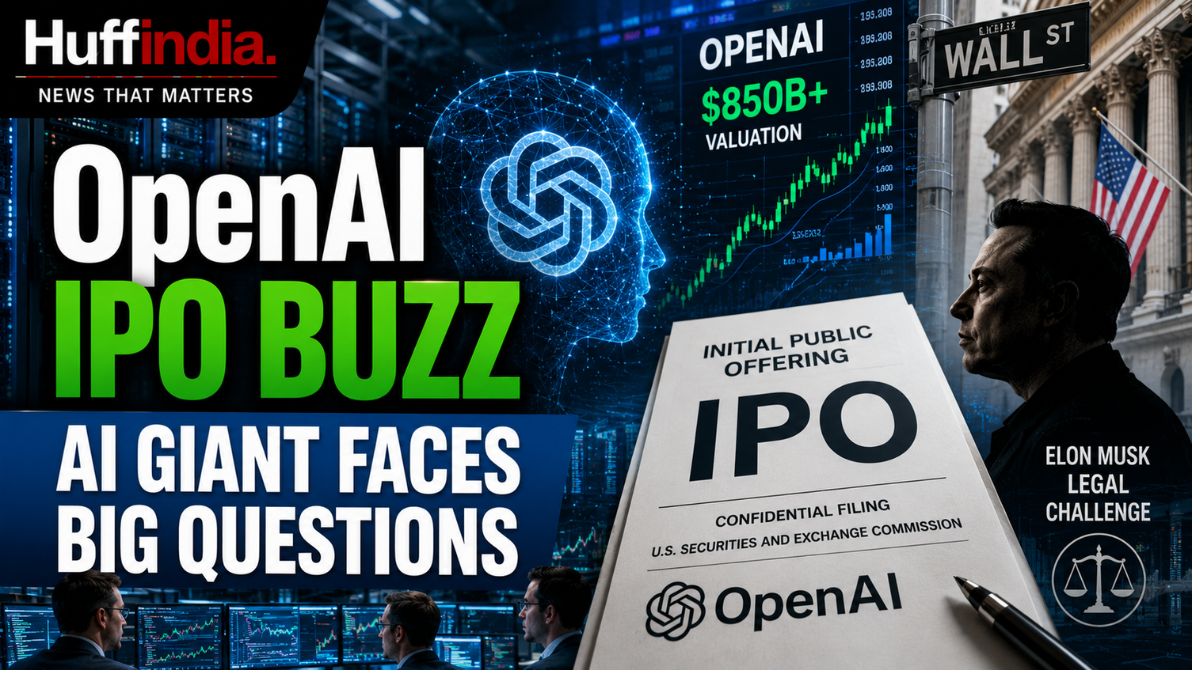



OpenAI IPO discussions are capturing the attention of investors, technology leaders, and policymakers worldwide. Reports suggest that OpenAI, the company behind ChatGPT, has confidentially filed for an initial public offering (IPO) in the United States, potentially setting the stage for one of the largest technology listings in history.
With an estimated valuation exceeding $850 billion, the AI powerhouse has become one of the most influential companies in the global technology sector. However, beyond the excitement surrounding a potential market debut, OpenAI’s evolution has also sparked debates over governance, ethics, competition, and its ongoing dispute with co-founder Elon Musk.
As artificial intelligence continues to transform industries, the proposed OpenAI IPO could mark a defining moment for both Wall Street and the broader AI ecosystem.
Why the OpenAI IPO Is Generating Massive Interest
The potential OpenAI IPO stands out because of the company’s extraordinary rise over the past few years.
OpenAI’s flagship products, including ChatGPT and advanced AI models, have become widely used across industries ranging from education and healthcare to finance and software development.
Several factors are driving investor interest:
- Rapid AI adoption worldwide
- Strong commercial growth
- Expanding enterprise partnerships
- Leadership in generative AI
- Increasing demand for AI infrastructure
A public listing could provide OpenAI with additional capital to support research, computing infrastructure, and global expansion.
From Research Lab to Global Technology Giant
The story behind the OpenAI IPO reflects one of the most remarkable transformations in modern technology.
OpenAI was originally established with a mission focused on advancing artificial intelligence for the benefit of humanity.
Over time, the organization evolved into a commercial entity capable of attracting billions of dollars in investment and competing at the highest levels of the technology industry.
This evolution has generated both admiration and criticism.
Supporters argue that large-scale funding is essential for developing advanced AI systems, while critics question whether commercial incentives could influence the company’s original mission.
Elon Musk’s Challenge Remains in Focus
Any discussion about the OpenAI IPO inevitably includes Elon Musk, one of the organization’s original co-founders.
Musk has publicly criticized OpenAI’s direction, raising concerns about governance, transparency, and the company’s transition from a nonprofit-focused initiative into a highly valuable commercial enterprise.
The dispute has evolved into a broader debate about:
- AI governance
- Corporate accountability
- Competition in artificial intelligence
- Ethical responsibilities
- Public trust in AI development
Legal challenges and public disagreements have ensured that OpenAI remains under intense scrutiny as it prepares for its next phase of growth.
Legal and Ethical Questions Surrounding OpenAI
The potential OpenAI IPO arrives at a time when governments and regulators around the world are examining the implications of advanced artificial intelligence.
Key concerns include:
- Data privacy
- AI transparency
- Intellectual property rights
- Market concentration
- Responsible AI deployment
Technology experts argue that companies leading the AI revolution must balance innovation with accountability.
As OpenAI expands its influence, questions surrounding governance and oversight are likely to remain central topics of discussion.
What an IPO Could Mean for the AI Industry
The OpenAI IPO could have implications far beyond a single company.
Analysts believe a successful public listing may:
- Increase investor interest in AI companies
- Accelerate competition among technology firms
- Encourage additional AI investments
- Expand research funding
- Strengthen public market participation in AI growth
A high-profile IPO could also establish new benchmarks for how investors value artificial intelligence businesses.
The outcome may influence the broader technology sector for years to come.
Investor Expectations Remain High
The reported valuation associated with the OpenAI IPO has attracted significant attention from financial markets.
A valuation above $850 billion would place OpenAI among the most valuable technology companies in the world.
Investors are expected to closely examine:
- Revenue growth
- Commercial partnerships
- Product adoption
- Profitability prospects
- Long-term AI strategy
Given the rapid pace of AI development, market participants are likely to scrutinize every aspect of the company’s future plans.
Challenges Ahead
Despite strong enthusiasm, the path toward a successful OpenAI IPO may not be without obstacles.
The company continues to operate in a rapidly evolving industry characterized by intense competition, regulatory uncertainty, and technological disruption.
Challenges include:
- Increasing regulatory oversight
- Rising infrastructure costs
- Competition from global AI firms
- Legal disputes
- Ethical concerns surrounding AI deployment
Successfully navigating these issues will be critical for maintaining investor confidence.
The Future of AI and Public Markets
The potential OpenAI IPO highlights how artificial intelligence has moved from a specialized research field to a major economic force.
The growing influence of AI is reshaping industries, investment strategies, and public policy discussions worldwide.
If the IPO proceeds, it could become one of the most closely watched technology listings of the decade.
Its success or failure may influence how future AI companies approach growth, governance, and public-market participation.
For information about OpenAI’s products and research initiatives, readers can visit the OpenAI website.
Final Thoughts on the OpenAI IPO
The proposed OpenAI IPO represents far more than a potential stock market debut. It symbolizes the growing importance of artificial intelligence in the global economy and raises important questions about innovation, ethics, governance, and competition.
While investors are focused on valuation and growth opportunities, policymakers and technology experts continue to debate the broader implications of AI development. As OpenAI moves toward its next chapter, the world will be watching closely to see how one of the most influential AI companies balances commercial success with its long-term responsibilities.
Also Read: Stocks in Focus June 16: HCL Tech, SBI, Yes Bank Among Key Market Movers