
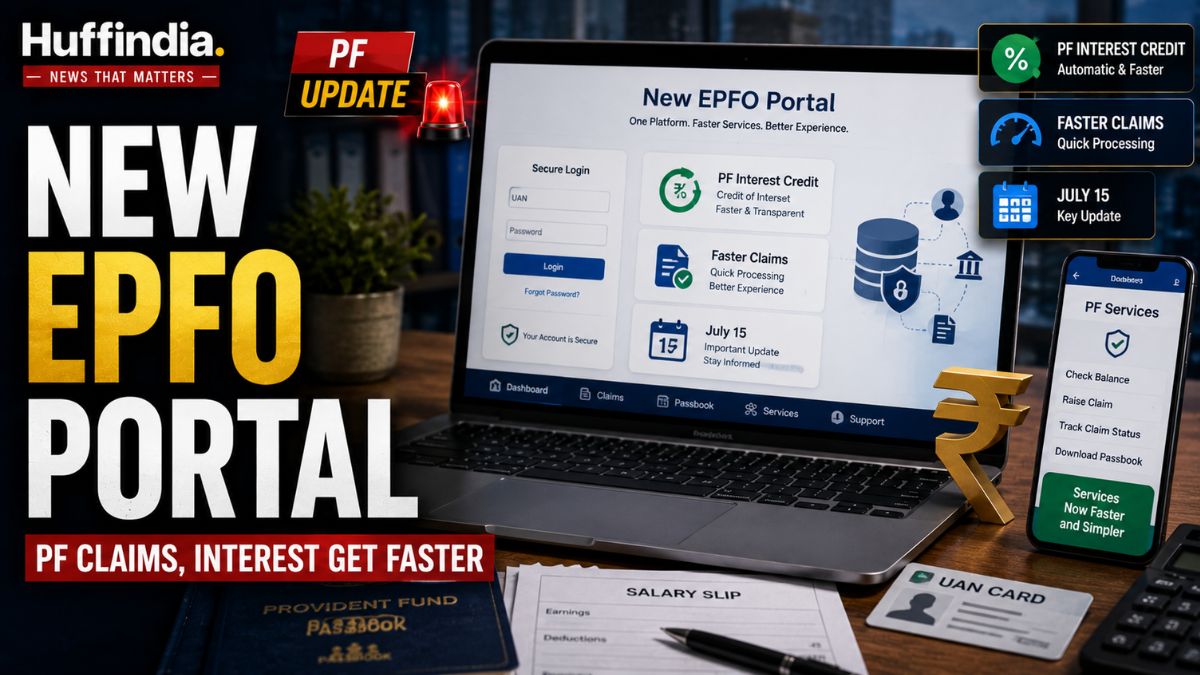



New EPFO portal has become a major personal-finance update for salaried employees after the Employees’ Provident Fund Organisation completed the migration of member records to a centralised database and began rolling out a redesigned digital system for provident fund services.
According to reports by Times of India, India Today, Moneycontrol, Business Today and News18, the new platform is expected to make EPFO services faster, more centralised and easier for members to access. The update comes as EPFO is also preparing to credit 8.25% interest for FY 2025-26 to member accounts.
Moneycontrol reported that Labour and Employment Minister Mansukh Mandaviya said EPFO would credit around ₹1.44 lakh crore in interest to nearly 34 crore subscribers by July 15. The report said the faster credit timeline is linked to the rollout of the new centralised IT platform.
Because EPF money is a major long-term savings source for salaried employees, the New EPFO portal update is important for members tracking their PF balance, claim status, job-change transfers and annual interest credit.
What Is the New EPFO Portal?
The New EPFO portal is part of EPFO’s technology upgrade aimed at shifting member records from a decentralised system to a centralised national database.
According to Times of India, EPFO completed the migration of all member records to a centralised database, restoring online services for members and employers. The report said the upgrade is designed to improve claim processing, interest credit and member-service access.
Moneycontrol reported that the system is part of EPFO’s Centralised IT Enabled Services, or CITES, project. The initiative is expected to modernise service delivery through automation, rule-based processing and a unified digital platform.
For members, this means EPFO services should become less dependent on the specific regional office where their account was earlier maintained. India Today reported that the centralised model would allow member services to be processed across EPFO offices, rather than being tied to a decentralised regional setup.
This is a significant change because PF members have often faced delays due to fragmented records, multiple portals and office-level processing issues.
For additional background on the centralised database, faster claims and EPF interest credit timeline, readers can see Moneycontrol’s report on the EPFO interest credit and new IT platform.
Why Is This Important for PF Members?
The New EPFO portal matters because millions of salaried employees depend on EPFO for retirement savings, withdrawals, transfers and pension-linked records.
Earlier, members often had to use multiple systems to check passbooks, claim status, service history and transfer updates. The new platform is expected to bring many of these services into a more unified interface.
Times of India reported that members will be able to view membership details, provident fund balances, claim status, pensionable service records and benefits availed from a single digital interface.
This could reduce confusion for employees who have changed jobs multiple times and have more than one PF-related record linked to their Universal Account Number.
For employers, a more centralised system may also make compliance, employee record updates and claim-related coordination more efficient.
What Changes for EPFO Claims?
One of the biggest changes is automated pre-validation of claims.
According to Times of India, the New EPFO portal will check PF claims before they reach EPFO offices for processing. The system is expected to identify deficiencies, discrepancies or missing information at an early stage.
This matters because many EPF claims are delayed or rejected due to incomplete KYC, bank-account mismatches, incorrect member details or missing documents.
Under the upgraded system, members may be informed about errors before the claim is processed, giving them a chance to correct details. This could improve first-time claim acceptance and reduce the need for repeated follow-ups.
Moneycontrol reported that claims will undergo automated pre-validation to identify deficiencies before processing. It also said members will be able to respond to clarification requests online during claim processing.
If implemented smoothly, this could reduce physical visits to EPFO offices and make the claim process more transparent.
What Is Changing in Auto-Settlement Limits?
The New EPFO portal update also includes a higher auto-settlement limit for certain advance claims.
Times of India reported that a substantial proportion of fully KYC-linked advance claims of up to ₹5 lakh will now be processed through auto-settlement. The earlier limit was ₹1 lakh.
Moneycontrol also reported that EPFO has enhanced the auto-settlement limit for advance claims from ₹1 lakh to ₹5 lakh for fully KYC-compliant accounts.
This is important for members because auto-settlement can reduce processing time where claims meet all eligibility conditions and records are clean.
However, members should note that auto-settlement does not mean every claim will be approved automatically. Eligibility rules, KYC status, withdrawal category, balance availability and account details still matter.
Members should check claim eligibility carefully before applying.
Also Read | Cupid Share Price Rises After FY27 Revenue Guidance Upgrade
What About EPF Interest Credit for FY26?
The annual EPF interest credit is another major part of the current update.
Moneycontrol reported that EPFO will credit 8.25% interest for FY 2025-26 to around 34 crore subscribers by July 15. The report quoted Labour and Employment Minister Mansukh Mandaviya as saying around ₹1.44 lakh crore would be credited in interest.
Business Today also reported that EPFO interest for FY26 would be credited by July 15, while Times of India said members are expected to see the interest reflected in their passbooks by that date.
Previously, members often had to wait until September, October or even later for annual interest to appear in their EPF accounts. The new centralised system is expected to reduce that delay.
The interest amount is expected to be auto-processed and verified before being reflected in member passbooks.
Members should wait for official passbook updates rather than relying on unofficial calculators or screenshots.
How Will Job Changes Become Easier?
Another reported feature is automatic PF transfer when employees change jobs.
Times of India reported that Aadhaar-linked UAN-based PF accounts will be transferred automatically when members take up new employment, removing the need to submit a separate transfer request.
This could be useful for salaried employees who move between companies and often face delays in transferring PF balances from previous employers.
Automatic transfer may reduce paperwork and help consolidate PF savings under one member identity.
However, the benefit will depend on clean records, correct UAN linkage, Aadhaar verification and accurate employer updates. Members should still check whether their past and current employment records are correctly reflected in the EPFO system.
If discrepancies remain, members may need to follow official correction procedures.
How Can Members Use the New System Safely?
Members should use only official EPFO links and avoid fake portals.
EPFO services should be accessed through official government or EPFO websites. Members should not enter UAN, Aadhaar, PAN, bank details or OTPs on unknown websites claiming to help with PF claims or interest credit.
The current update is likely to create high search traffic around EPFO interest, PF passbooks and claim status. Scammers may use that interest to circulate fake links.
Members should also keep their KYC details updated, including Aadhaar, PAN and bank account information. Incorrect or mismatched details can delay claims even on an upgraded platform.
It is also advisable to check passbook updates after July 15 if the interest credit does not immediately appear.
What Should Members Watch Next?
PF members should watch three things in the coming days.
First, whether EPF interest for FY26 appears in their passbooks by July 15 as reported.
Second, whether the New EPFO portal works smoothly after the migration and full rollout. Large digital upgrades can sometimes face early traffic or login issues.
Third, whether claim processing timelines actually improve for members with fully KYC-compliant accounts.
Members should also monitor official EPFO communication for any revised instructions, downtime notices, login changes or service updates.
Employers may need to guide employees if the new system changes how records, transfers or claims are handled.
Final Thoughts
The New EPFO portal marks a major digital upgrade for India’s provident fund system. Current reports indicate that EPFO has moved member records to a centralised database, introduced automated claim checks and prepared faster credit of FY26 interest.
The safest conclusion is narrow and factual: EPFO’s centralised platform is expected to improve access, reduce claim errors and speed up interest credit, but members should rely on official portals and wait for confirmed passbook updates.
For salaried employees, the biggest immediate update is the expected 8.25% EPF interest credit by July 15 for FY 2025-26. The longer-term benefit will depend on how effectively the portal handles claims, transfers and member-service requests.