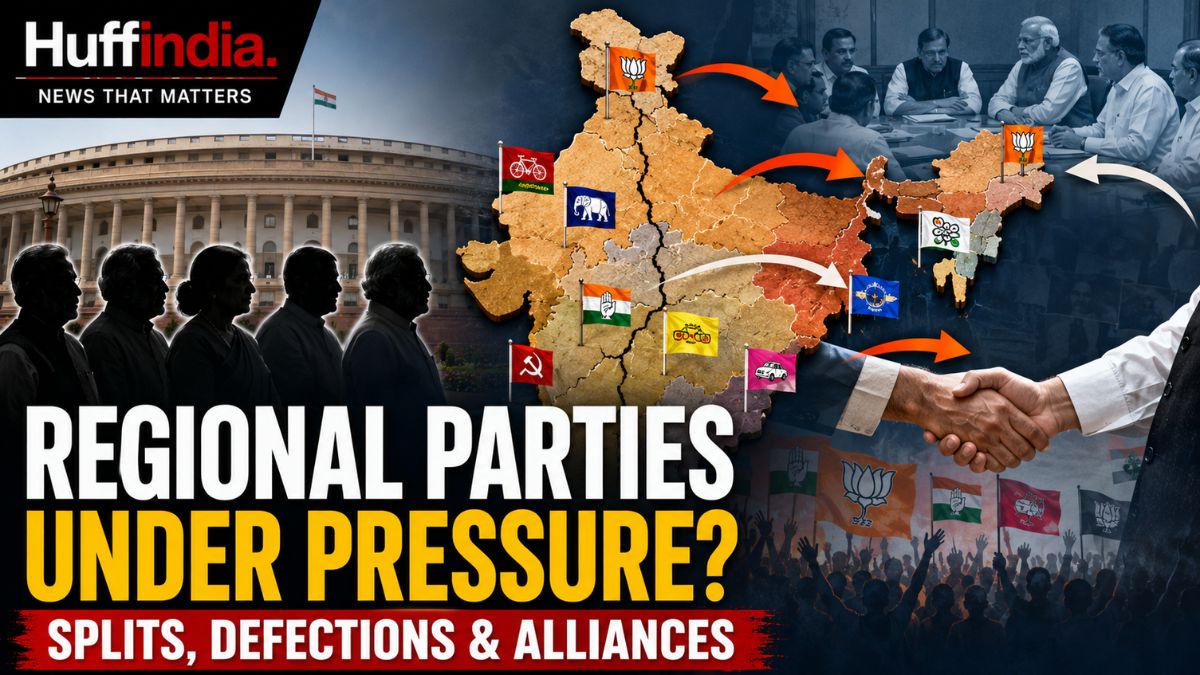



Regional Parties and BJP relations have become one of the defining themes of contemporary Indian politics. While several regional parties continue to demonstrate strong electoral influence in their respective states and remain capable of challenging the Bharatiya Janata Party (BJP) in direct contests, many are increasingly facing a different challenge: internal fragmentation, defections, and absorption into larger political alliances.
Recent political developments across multiple states have highlighted how electoral strength alone may no longer be sufficient for regional parties seeking long-term survival. Instead, organizational stability, leadership continuity, and alliance management are emerging as equally important factors.
The changing political landscape has sparked debate about whether India’s regional political forces can maintain their independent identities while navigating an increasingly competitive national environment.
Regional Parties and BJP Competition Continues
The relationship between Regional Parties and BJP remains complex and varies significantly from state to state.
In many regions, strong local parties continue to command significant voter support due to deep-rooted social, cultural, linguistic, and regional identities. These parties often possess established leadership structures and voter bases that allow them to compete effectively against national parties.
Several regional organizations have demonstrated that they can still defeat the BJP in direct electoral contests when local issues dominate political discourse.
However, electoral success at the ballot box does not always translate into long-term organizational stability.
Defections Are Emerging as a Major Challenge
One of the most significant developments affecting Regional Parties and BJP dynamics is the growing trend of political defections.
Across various states, elected representatives and senior leaders have switched political affiliations, often citing strategic considerations, leadership disagreements, or changing political circumstances.
Such defections can weaken party structures, reduce legislative strength, and create uncertainty among supporters.
Political analysts note that regional parties often face greater vulnerability when leadership is concentrated among a limited group of individuals or when succession planning remains unclear.
Coalition Politics Is Reshaping Power Equations
Coalition-building has long been a feature of Indian democracy, but the nature of alliances has evolved.
The current Regional Parties and BJP equation increasingly involves strategic partnerships, issue-based cooperation, and broader coalition arrangements designed to maximize political influence.
For some regional parties, joining larger alliances offers access to resources, governance opportunities, and political stability.
Others, however, worry that prolonged participation in national coalitions may gradually dilute their independent political identity.
This tension between autonomy and influence remains a central challenge for many regional political organizations.
Why Regional Parties Matter
Despite concerns about defections and political realignments, regional parties continue to play a vital role in India’s democratic framework.
They often serve as important voices for:
- State-specific concerns
- Regional development priorities
- Linguistic and cultural identities
- Local governance issues
- Community representation
The ongoing debate surrounding Regional Parties and BJP reflects broader questions about federalism, representation, and political diversity within the country.
Many observers argue that regional parties remain essential to ensuring that local perspectives continue to shape national policymaking.
Leadership and Succession Challenges
Several political analysts believe leadership transitions represent one of the biggest tests facing regional parties.
As founding leaders age or step back from active politics, questions often emerge regarding succession, organizational cohesion, and future direction.
The Regional Parties and BJP debate frequently intersects with discussions about leadership continuity because internal divisions can create opportunities for rival political formations to expand their influence.
Successful leadership transitions are often viewed as critical for maintaining organizational strength and voter confidence.
BJP’s Expanding National Footprint
The BJP’s growth across multiple regions has also contributed to changing political dynamics.
Over the past decade, the party has expanded its presence in states where regional parties historically dominated political discourse.
This expansion has intensified competition and encouraged new political alliances.
Supporters view the BJP’s growth as evidence of increasing national reach, while critics argue that it places additional pressure on smaller political organizations.
The evolving relationship between Regional Parties and BJP therefore remains central to understanding India’s broader political transformation.
Impact on Future Elections
The issue of defections and coalition-building could play an important role in future electoral contests.
While many regional parties continue to enjoy substantial grassroots support, internal stability may become just as important as electoral popularity.
Political observers suggest that voters are increasingly paying attention to:
- Leadership stability
- Organizational unity
- Governance performance
- Alliance strategies
- Long-term vision
How parties address these issues may influence electoral outcomes in the years ahead.
What Analysts Are Watching
Experts studying Regional Parties and BJP dynamics are focusing on several key trends:
- Growth of political alliances
- Leadership transitions
- Defection patterns
- State-level electoral performance
- Coalition management strategies
These factors are expected to shape political developments not only at the state level but also in national politics.
The interaction between regional aspirations and national political ambitions remains one of the most important stories in contemporary India.
The Bigger Picture
The current political environment illustrates that electoral contests are no longer determined solely by voter support on election day.
Organizational strength, leadership management, and alliance-building have become increasingly important components of political success.
For regional parties, the challenge lies in maintaining relevance and independence while adapting to changing political realities.
For the BJP, continued expansion requires balancing national objectives with regional sensitivities and coalition partnerships.
For official election data and political party information, readers can visit the Election Commission of India website.
Final Thoughts on Regional Parties and BJP
The evolving relationship between Regional Parties and BJP reflects a broader transformation within Indian politics. While regional parties continue to demonstrate electoral strength in many states, they face growing pressures from internal divisions, defections, and coalition politics.
As political realignments continue to reshape the landscape, the future of India’s regional parties may depend not only on their ability to win elections but also on their capacity to maintain organizational unity and adapt to an increasingly competitive political environment. The outcome of this process will likely influence the direction of Indian politics for years to come.
Also Read: Mahua Moitra Yusuf Pathan Row: Major TMC Rebellion Sparks Questions Over Loyalty