
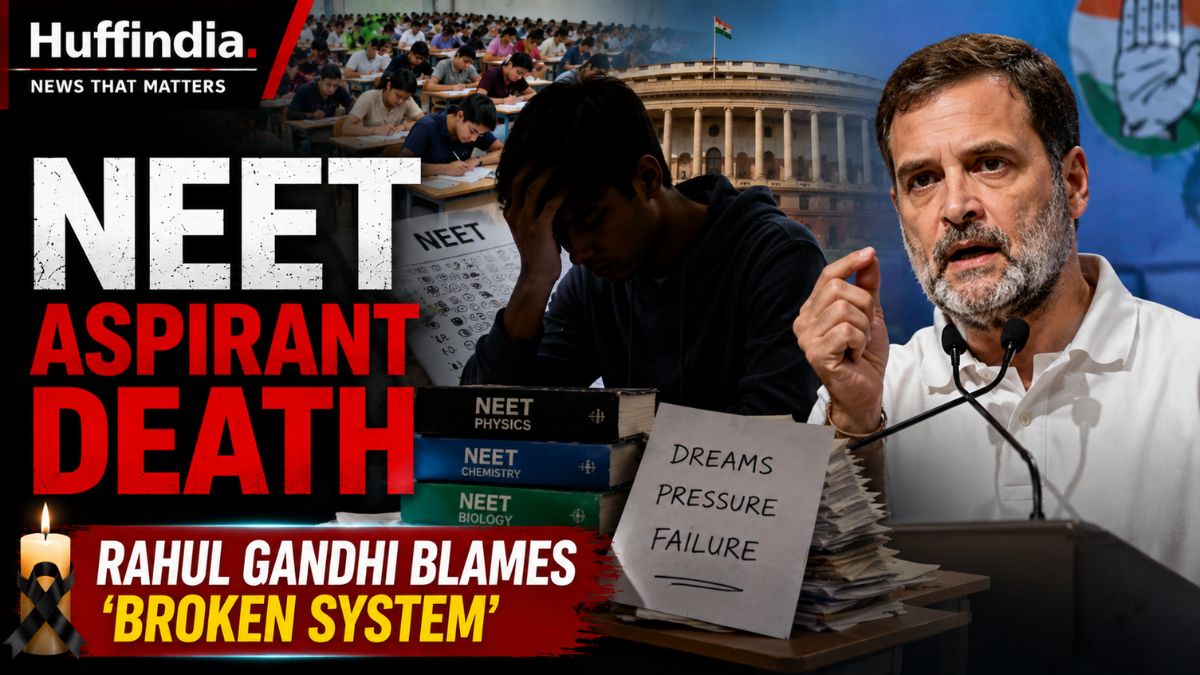



NEET Aspirant Death has once again brought the spotlight onto India’s highly competitive entrance examination system, triggering a political debate over student pressure, accountability, and the functioning of national-level exams. Congress leader Rahul Gandhi criticized what he described as a “broken system” following the death of a NEET aspirant and called for urgent reforms in the examination process.
The incident has reignited concerns surrounding the intense competition faced by students preparing for medical entrance examinations, while also prompting fresh political exchanges between the opposition and the central government.
Rahul Gandhi linked the tragedy to broader systemic issues, arguing that students are being forced to navigate an educational environment marked by immense pressure, uncertainty, and limited opportunities.
NEET Aspirant Death Triggers Questions About Student Well-Being
The latest NEET Aspirant Death has drawn attention to the emotional and psychological challenges faced by students preparing for one of India’s most competitive entrance examinations.
Every year, millions of candidates appear for the National Eligibility cum Entrance Test (NEET), competing for a limited number of seats in medical colleges across the country. The examination is often viewed as a gateway to a medical career, making it one of the most high-stakes academic tests in India.
Education experts have frequently highlighted the mental health challenges associated with intense preparation schedules, coaching pressures, parental expectations, and uncertainty regarding outcomes.
The recent incident has once again sparked conversations about whether existing support systems are sufficient to address student stress.
Rahul Gandhi Blames ‘Broken System’
Reacting to the incident, Rahul Gandhi described the tragedy as more than an individual case, arguing that it reflected deeper structural issues within the education system.
According to the Congress leader, the NEET Aspirant Death should not be viewed solely as a personal tragedy but as a warning sign regarding systemic challenges faced by students across the country.
He called for greater accountability and questioned whether current examination structures adequately support student well-being while ensuring fair opportunities.
The remarks quickly gained attention on social media and became part of a wider political discussion concerning education policy and examination reforms.
Political Debate Intensifies Over Examination System
The incident has led to renewed criticism of the examination process from opposition leaders, while government supporters have argued that educational reforms and transparency measures have already been implemented in recent years.
The NEET exam controversy has periodically surfaced in national discussions due to concerns regarding exam administration, fairness, coaching culture, and access to educational opportunities.
Supporters of the current system argue that standardized national examinations help ensure merit-based admissions. Critics, however, contend that the intense competition creates excessive pressure on students and families.
The latest political exchange reflects the broader debate over how India can balance meritocracy with student welfare.
NEET Aspirant Death Renews Focus on Mental Health
Mental health professionals have repeatedly emphasized the importance of emotional support for students preparing for competitive examinations.
Experts note that academic pressure, fear of failure, social expectations, and uncertainty about future prospects can significantly affect mental well-being.
Several educational institutions and counseling organizations have advocated for expanded mental health services, stress-management programs, and accessible counseling support for students appearing in major examinations.
The NEET Aspirant Death has strengthened calls for greater awareness and institutional support mechanisms to address these concerns.
The Scale of Competition in NEET
NEET remains one of India’s largest entrance examinations, attracting candidates from across the country each year.
The number of applicants continues to rise, while competition for seats in government medical colleges remains extremely intense. This reality has contributed to the growth of coaching centers and specialized preparation programs designed to improve student performance.
While supporters argue that competition is unavoidable in a country with high demand for medical education, critics believe systemic improvements are necessary to reduce stress and improve student experiences.
Students and parents seeking official information about NEET and medical entrance examinations can visit the National Testing Agency (NTA) website.
Calls for Accountability and Reform
Following the incident, education advocates and policymakers have renewed discussions about possible reforms.
Suggestions often include expanding counseling services, increasing educational opportunities, improving examination transparency, and strengthening student support systems throughout the preparation process.
Some experts argue that addressing mental health concerns should become an integral part of educational policy rather than a secondary consideration.
The NEET Aspirant Death has therefore become part of a larger conversation regarding the future direction of India’s examination and higher education framework.
Public Reaction on Social Media
The tragedy has generated widespread reactions online, with many users expressing condolences while also discussing broader issues affecting students.
Parents, teachers, mental health professionals, and students have shared perspectives on the pressures associated with competitive examinations. Several users echoed calls for reforms aimed at reducing excessive stress while maintaining academic standards.
Others emphasized the importance of community support, open conversations about mental health, and early intervention for students experiencing emotional difficulties.
What Happens Next?
As the political debate continues, attention is likely to remain focused on examination policies, student welfare, and educational reforms.
While investigations and discussions surrounding the incident continue, the broader questions raised by the NEET Aspirant Death are unlikely to disappear quickly. Policymakers, educational institutions, and mental health experts may face increasing pressure to examine how academic systems can better support students while preserving fairness and opportunity.
Final Thoughts on the NEET Aspirant Death Debate
The NEET Aspirant Death has become more than a single news event. It has reignited national conversations about academic pressure, student mental health, educational accountability, and the future of competitive examinations in India.
Rahul Gandhi’s criticism of what he called a “broken system” has added a political dimension to the discussion, but the central issue remains the well-being of students navigating one of the country’s most demanding educational environments.
As calls for accountability and reform grow louder, the debate is expected to continue across political, educational, and social platforms in the weeks ahead.
Also Read: CBSE OSM Row Intensifies as Students Raise Answer-Sheet Concerns