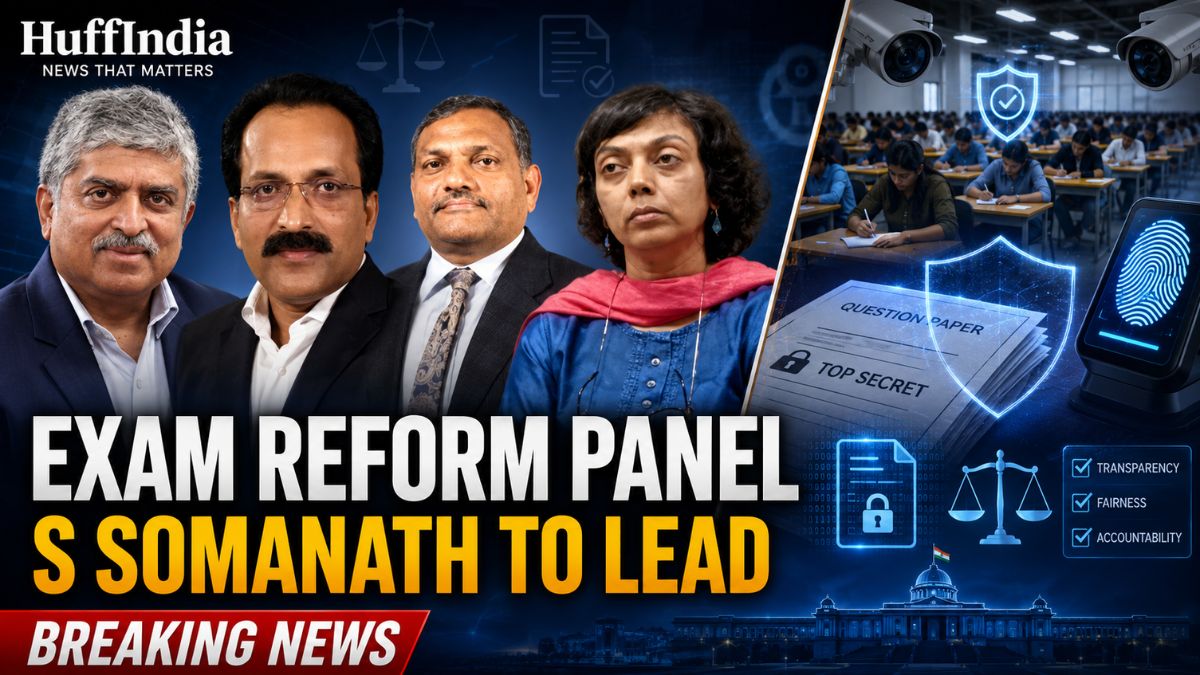



The Centre has constituted an exam reform panel headed by former ISRO Chairman S Somanath to recommend measures for strengthening the integrity of public examinations across the country. The committee has been tasked with reviewing key aspects of the examination process, including question paper security, candidate verification, technology safeguards and result processing, amid growing efforts to prevent examination-related malpractice.
The government said the initiative is aimed at making competitive examinations more secure, transparent and reliable while safeguarding the interests of millions of students appearing for national-level tests every year.
Exam Reform Panel to Review Entire Examination Process
The newly constituted exam reform panel has been entrusted with examining multiple stages of the examination ecosystem to identify vulnerabilities and recommend long-term reforms.
According to the government’s announcement, the panel will review:
- Question paper preparation and secure distribution
- Candidate identity verification systems
- Digital examination security
- Result processing and evaluation mechanisms
- Technology-driven monitoring and surveillance
- Best practices for conducting large-scale examinations
The recommendations are expected to help strengthen confidence in public examination systems while reducing opportunities for organised fraud.
Why S Somanath Has Been Chosen
Former ISRO Chairman S Somanath brings extensive experience in systems engineering, mission planning and reliability management, areas that involve designing highly secure and precise operational frameworks.
Government officials believe his experience in managing complex scientific missions can contribute to improving examination processes that require strong security, accuracy and accountability.
The committee is expected to work with education experts, administrators and technology specialists before submitting its recommendations.
Information on public examinations and official notices can also be accessed through the National Testing Agency (NTA)
Existing Anti-Paper Leak Measures Already in Place
The formation of the exam reform panel comes after the government introduced several measures aimed at tackling examination fraud.
Among the steps already announced are:
- Stronger legal provisions against organised examination malpractice
- Faster investigation of paper leak cases
- Provision for fast-track courts in relevant cases
- Tougher penalties for individuals and organised networks involved in examination fraud
Officials have stated that the new committee will build upon these existing measures by recommending structural improvements to examination management systems.
Focus on Technology and Security
Education experts have increasingly emphasised the importance of technology in securing large-scale competitive examinations.
Areas expected to receive attention include:
- Encrypted digital handling of question papers
- Artificial intelligence-based monitoring
- Biometric candidate verification
- Real-time surveillance during examinations
- Secure data management for results
The committee may also study global best practices adopted by examination authorities in other countries.
Why Examination Reforms Matter
Competitive examinations determine admission to higher education institutions and recruitment for government jobs, making their credibility critical.
Any compromise in examination integrity can affect millions of candidates and undermine public trust.
Experts say strengthening examination systems requires a combination of:
- Better technology
- Strong legal enforcement
- Institutional accountability
- Transparent procedures
- Timely investigation of irregularities
The government’s latest initiative aims to address these concerns through comprehensive policy recommendations.
What Happens Next?
The committee will consult relevant stakeholders before finalising its recommendations.
Its report is expected to include proposals on improving examination security, adopting modern technologies, strengthening operational procedures and enhancing transparency throughout the examination cycle.
The government will review the recommendations before deciding on future policy changes.
Also Read | PM Anti-Paper Leak Measures to Be Announced Today After NEET Row
Final Takeaway
The formation of the exam reform panel marks another step in the Centre’s efforts to strengthen India’s public examination system following concerns over examination irregularities. Led by former ISRO Chairman S Somanath, the committee will examine question paper security, candidate verification and result processing while exploring technology-driven reforms to improve reliability. Although stricter anti-paper leak laws and fast-track legal mechanisms have already been introduced, the panel’s recommendations could help shape a more secure and transparent examination framework in the years ahead.