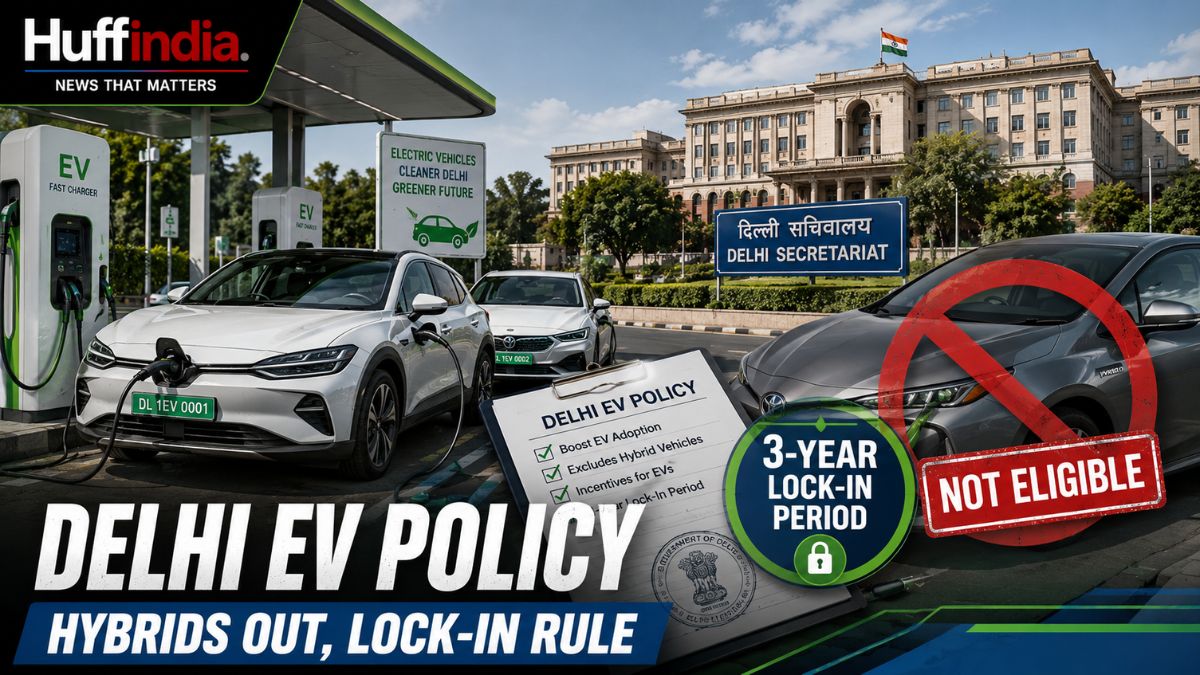



The Delhi EV Policy is set to undergo significant changes as the Delhi government has proposed a revised electric vehicle framework that keeps hybrid vehicles outside the incentive structure while introducing a mandatory three-year lock-in period for eligible electric vehicles.
According to the draft policy under consideration, the proposed measures are aimed at encouraging the adoption of fully electric vehicles and ensuring that government incentives benefit long-term EV owners. The draft is yet to receive final approval, and provisions may change before implementation.
What Does the New Delhi EV Policy Propose?
The revised Delhi EV Policy focuses on accelerating the transition towards zero-emission mobility across the National Capital Territory.
Among the key proposals are:
- Hybrid vehicles will not be eligible for EV purchase incentives.
- Buyers receiving government subsidies may be required to retain their electric vehicle for at least three years.
- Continued support for expanding EV charging infrastructure.
- Measures to encourage higher adoption of battery-powered vehicles.
Officials say the proposals are intended to maximize environmental benefits while preventing misuse of subsidy schemes.
Why Hybrids Are Not Included
One of the biggest talking points in the proposed Delhi EV Policy is the exclusion of hybrid vehicles.
Unlike fully electric vehicles, hybrids combine an internal combustion engine with an electric motor. Policymakers believe that while hybrids improve fuel efficiency, they still rely on fossil fuels and therefore do not fully align with Delhi’s long-term zero-emission transportation goals.
Industry experts note that the move reinforces the government’s preference for battery electric vehicles (BEVs) over hybrid technologies.
Three-Year Lock-In Period Explained
Another important feature of the proposed Delhi EV Policy is the introduction of a three-year lock-in period.
Under the proposal, EV buyers receiving financial incentives may not be allowed to sell or transfer their vehicles during the first three years of ownership.
The objective is to:
- Prevent resale of subsidized vehicles for quick profits.
- Ensure incentives benefit genuine users.
- Promote sustained EV ownership.
- Improve long-term adoption rates.
The lock-in clause would apply only if approved in the final version of the policy.
Focus on Cleaner Urban Mobility
The updated Delhi EV Policy forms part of the capital’s broader clean-air strategy.
Delhi continues to face challenges related to:
- Air pollution
- Vehicular emissions
- Traffic congestion
- Rising fuel consumption
By encouraging greater adoption of electric vehicles, authorities aim to reduce emissions from the transport sector and improve urban air quality.
Industry Reaction
Automobile manufacturers and industry bodies are closely evaluating the proposed Delhi EV Policy.
Some EV manufacturers have welcomed stronger support for battery electric vehicles, while stakeholders representing hybrid technology argue that hybrids also contribute to lowering fuel consumption and emissions.
Industry experts expect further consultations before the policy is finalized.
For official notifications on transport policies, electric vehicle initiatives, and vehicle registration guidelines, visit the Delhi Transport Department.
Existing EV Incentives Likely to Continue
Although the draft introduces new provisions, the Delhi EV Policy is expected to continue supporting EV adoption through several existing measures, including:
- Purchase incentives for eligible EVs.
- Charging infrastructure expansion.
- Promotion of electric public transport.
- Support for commercial EV adoption.
The final policy will determine which incentives remain unchanged and which may be revised.
Also Read | 5 Indian Cars from the 90s We Wish Would Make a Comeback
What Vehicle Buyers Should Know
Consumers planning to purchase an electric vehicle should note that the revised Delhi EV Policy remains in the draft stage.
Until the policy is officially notified, existing rules continue to apply.
Prospective buyers are advised to:
- Follow official government notifications.
- Verify eligibility for incentives.
- Review ownership conditions before purchasing.
- Check dealership guidance once the policy is finalized.
What Happens Next?
The draft Delhi EV Policy is expected to undergo further review before receiving approval from the Delhi government.
Once finalized, authorities are likely to announce:
- The implementation date.
- Eligibility criteria.
- Incentive structure.
- Registration procedures.
- Compliance requirements.
The final policy may differ from the current draft depending on stakeholder feedback and government decisions.
Final Thoughts
The proposed Delhi EV Policy reflects the government’s continued push toward fully electric mobility by prioritizing battery-powered vehicles over hybrids. The introduction of a three-year lock-in period also signals an effort to ensure that public incentives are used for long-term ownership rather than short-term gains.
Since the policy is still in draft form, vehicle buyers and manufacturers will be closely watching for the final notification, which will determine how these proposals are implemented.