


Andhra Pradesh Rajya Sabha Seats have become the latest focus of political discussions after leaders of the National Democratic Alliance (NDA) reportedly met in Amaravati to finalize a seat-sharing arrangement for the upcoming vacancies in the Upper House of Parliament.
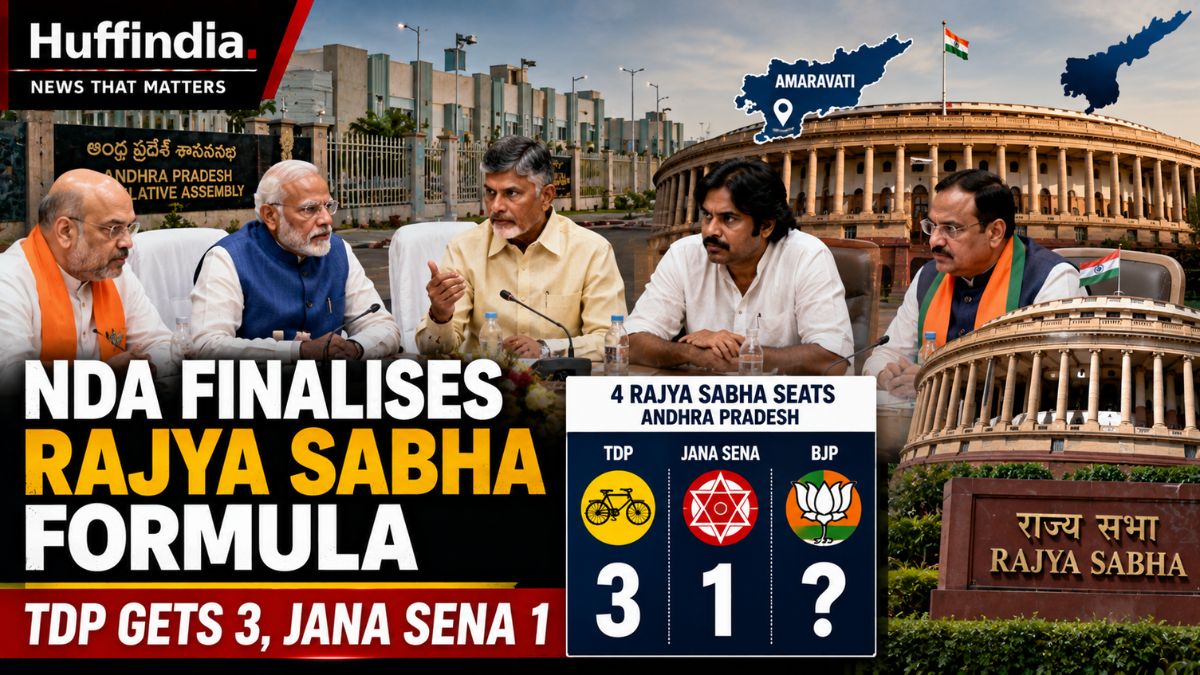
Under the proposed formula, three of the four vacant Rajya Sabha seats from Andhra Pradesh are expected to go to the Telugu Desam Party (TDP), while the remaining seat will be allotted to the Jana Sena Party (JSP). The Bharatiya Janata Party (BJP), despite being a key NDA ally, is not expected to receive a seat under the arrangement.
The decision has generated considerable political interest, particularly amid speculation regarding the BJP’s long-term strategy in Andhra Pradesh and reports linking former Tamil Nadu BJP chief K. Annamalai to a possible Rajya Sabha nomination.
Andhra Pradesh Rajya Sabha Seats Formula Finalised in Amaravati
The reported meeting in Amaravati brought together senior NDA leaders to discuss representation in the Rajya Sabha and coordination among alliance partners.
According to political sources, the alliance leadership agreed that the TDP would receive three of the four available seats, reflecting its dominant position within the coalition in Andhra Pradesh. The Jana Sena Party, led by actor-politician Pawan Kalyan, is expected to receive the fourth seat.
The allocation highlights the balance of power within the NDA alliance in the state following recent electoral developments.
The latest Andhra Pradesh Rajya Sabha Seats arrangement is being viewed as an effort to maintain coalition unity while recognizing the electoral strength of individual alliance partners.
Why the BJP Did Not Receive a Seat
One of the most discussed aspects of the arrangement is the BJP’s apparent decision not to seek a Rajya Sabha seat from Andhra Pradesh.
Political observers note that the BJP’s influence in the state remains relatively limited compared to its alliance partners. As a result, the party may have chosen to prioritize coalition stability over immediate parliamentary representation from Andhra Pradesh.
The decision has also fueled speculation regarding broader political calculations within the NDA.
Several analysts believe the BJP’s move reflects a strategic approach aimed at strengthening long-term relationships with both the TDP and Jana Sena Party rather than pursuing a seat-sharing confrontation.
Andhra Pradesh Rajya Sabha Seats and the Annamalai Speculation
Reports suggesting that former Tamil Nadu BJP president K. Annamalai could be considered for a Rajya Sabha berth added another layer of political intrigue to the discussions.
However, the reported seat-sharing formula appears to have reduced the possibility of such a nomination from Andhra Pradesh at this stage.
While no official announcement has linked Annamalai directly to the state’s Rajya Sabha vacancies, the speculation generated significant attention because of his growing national profile within the BJP.
The BJP’s willingness to step back from claiming a seat has therefore been interpreted by some observers as a signal that alliance management currently takes precedence over individual political considerations.
What the Allocation Means for TDP
The decision to allocate three seats to the TDP significantly strengthens the party’s representation in the Upper House.
As the largest partner within the Andhra Pradesh NDA alliance, the TDP is expected to use its increased parliamentary presence to advance regional interests and strengthen its influence at the national level.
Political analysts suggest that additional Rajya Sabha representation could provide the party with greater leverage in policy discussions involving Andhra Pradesh’s development priorities.
The latest Andhra Pradesh Rajya Sabha Seats formula therefore represents an important political gain for the TDP.
Jana Sena Party Secures Representation
For the Jana Sena Party, securing one Rajya Sabha seat is being viewed as a notable achievement.
The allocation provides the party with an opportunity to enhance its national political presence while reinforcing its role within the NDA alliance.
The development also reflects the growing importance of the Jana Sena Party in Andhra Pradesh’s political landscape, particularly following recent electoral successes.
Supporters of the party have welcomed the decision as recognition of its contribution to the alliance’s performance in the state.
NDA Alliance Strategy in Andhra Pradesh
The seat-sharing arrangement offers insights into the broader strategy being pursued by the NDA in Andhra Pradesh.
Rather than competing internally for parliamentary positions, alliance partners appear focused on presenting a united front and maximizing collective political strength.
Observers believe this approach may help the coalition maintain stability while preparing for future electoral challenges.
The Andhra Pradesh Rajya Sabha Seats allocation is therefore being viewed not only as a parliamentary matter but also as an indicator of evolving alliance dynamics within the state.
What Happens Next?
The formal nomination process and official announcements are expected to provide greater clarity regarding the candidates who will eventually contest the seats.
Political parties are likely to finalize names after internal consultations and discussions among alliance leadership.
For official information on Rajya Sabha elections and parliamentary procedures, readers can visit the Rajya Sabha Secretariat.
Until then, political observers will continue to monitor developments closely, particularly regarding the BJP’s future strategy and the selection of candidates by both TDP and Jana Sena Party.
Final Thoughts on the Andhra Pradesh Rajya Sabha Seats Formula
The reported decision to allocate three Rajya Sabha seats to the TDP and one to the Jana Sena Party marks a significant moment for the NDA alliance in Andhra Pradesh.
While the BJP’s decision to forgo a seat has sparked speculation about its political calculations, the move appears to underscore the importance of alliance cohesion and long-term strategy.
As nominations move forward, the Andhra Pradesh Rajya Sabha Seats arrangement will likely remain a key topic of political discussion, offering insights into both state-level dynamics and the broader direction of the NDA coalition ahead of future electoral contests.
Also Read: Critical Gen Z Political Debate Reveals New Battle for Youth Attention