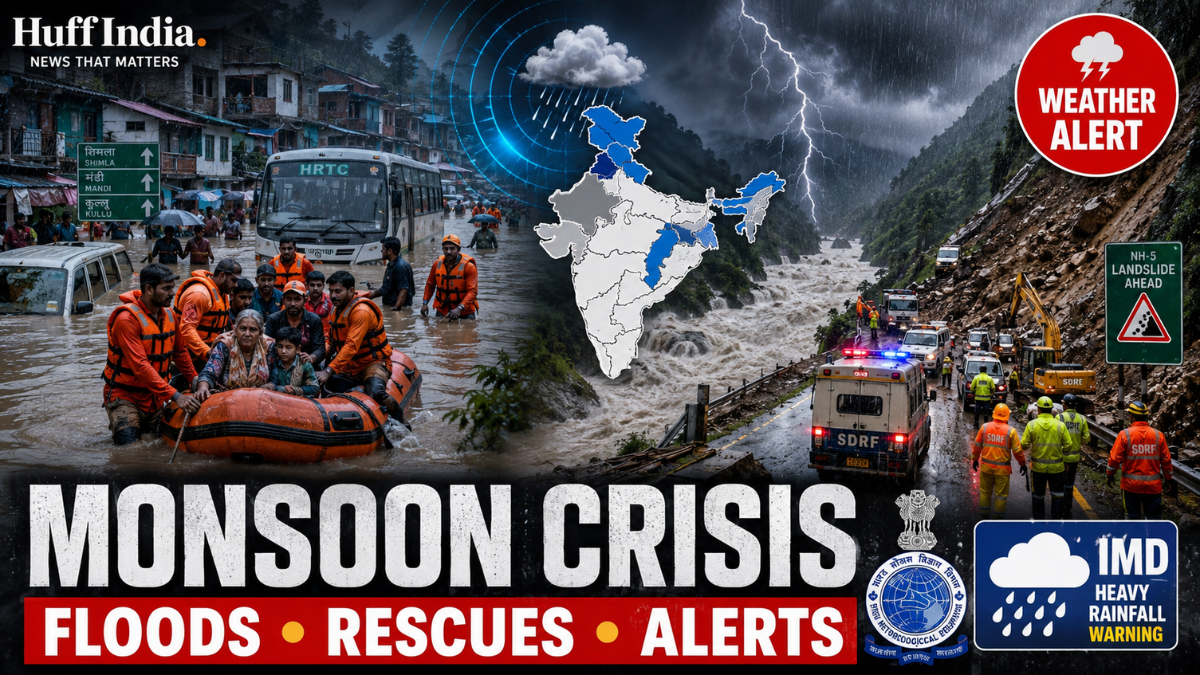



The Monsoon crisis in India has intensified as persistent heavy rainfall continues to trigger floods, landslides, waterlogging and rescue operations across several parts of the country. States including Himachal Pradesh, Uttarakhand, Punjab, Haryana, Rajasthan, Uttar Pradesh, Madhya Pradesh and Assam have reported rain-related disruptions, with emergency teams deployed to evacuate residents from flood-hit areas and restore damaged infrastructure. The India Meteorological Department (IMD) has warned that heavy to very heavy rainfall is likely to continue in several regions over the coming days.
The prolonged spell of monsoon rain has affected road connectivity, damaged bridges and homes, disrupted transport services and forced local administrations to issue advisories urging residents to remain cautious.
Monsoon Crisis in India Worsens as Rivers Swell and Floodwaters Rise
Continuous rainfall has pushed several rivers close to or above danger levels in parts of northern and northeastern India.
Authorities have been monitoring water levels round the clock while deploying disaster response teams to vulnerable districts. In low-lying areas, floodwaters entered residential neighbourhoods, forcing hundreds of families to move to safer locations. Rescue teams used boats and specialised equipment to evacuate stranded residents. (Reuters)
In several hill states, landslides triggered by saturated soil blocked highways and disrupted travel, while restoration work continued despite challenging weather conditions.
Rescue Operations Intensify
Rescue agencies remain on high alert as the Monsoon crisis in India has forced evacuations in multiple flood-prone districts.
Emergency teams have been:
- Evacuating people from flood-affected villages.
- Providing temporary shelters and food.
- Restoring damaged roads and bridges.
- Clearing landslide debris.
- Monitoring vulnerable riverbanks and reservoirs.
Officials have urged residents in flood-prone areas to follow evacuation instructions and avoid travelling through inundated roads or overflowing rivers.
IMD Issues Fresh Heavy Rain Alerts
The India Meteorological Department (IMD) has forecast continued heavy rainfall over several parts of north, central and northeast India.
According to the latest weather bulletin, isolated places could experience:
- Heavy to very heavy rainfall.
- Thunderstorms accompanied by lightning.
- Gusty winds in some regions.
- Localised flooding and waterlogging.
- Increased risk of landslides in hilly terrain.
Meteorologists have advised state administrations to remain prepared for further weather-related emergencies. (imd.gov.in)
According to weather experts, the Monsoon crisis in India could continue over the next few days if heavy rainfall persists across northern and northeastern states.
Transport and Infrastructure Hit
The ongoing Monsoon crisis in India has also disrupted transportation networks.
Several highways experienced temporary closures because of landslides and flooding, while railway services in some regions faced delays due to waterlogging and track inspections. Urban centres witnessed severe traffic congestion as drainage systems struggled to cope with intense rainfall.
Infrastructure damage has included:
- Washed-away approach roads.
- Damaged bridges.
- Power outages.
- Flooded markets.
- Disrupted public transport.
Engineers and disaster management teams continue inspections before reopening affected routes.
Agriculture Under Pressure
The heavy rainfall has produced mixed outcomes for agriculture.
While the monsoon is vital for Kharif crops, excessive rainfall has submerged farmland in several districts, raising concerns over crop damage, delayed harvesting and soil erosion.
Agricultural experts say the extent of losses will become clearer after floodwaters recede and field assessments are completed.
Authorities Urge Public to Stay Alert
State governments have appealed to residents to remain vigilant and rely only on official weather advisories.
People have been advised to:
- Avoid unnecessary travel during heavy rainfall.
- Stay away from overflowing rivers and streams.
- Follow evacuation orders immediately.
- Monitor IMD weather updates.
- Contact emergency services if required.
Schools in some flood-affected districts have also remained closed as a precaution.
Also Read | Venezuela Earthquake: Rescue Teams Race to Find Survivors After Twin Quakes
Climate Experts Highlight Rising Extreme Weather Events
Meteorologists note that India has witnessed an increase in episodes of extremely heavy rainfall in recent years.
While no single weather event can be attributed solely to climate change, scientists say a warming atmosphere can hold more moisture, increasing the likelihood of intense rainfall events. Experts emphasise the importance of improved urban drainage, resilient infrastructure and better disaster preparedness to reduce the impact of future monsoon-related emergencies.
Final Takeaway
The Monsoon crisis in India continues to affect millions as heavy rainfall fuels floods, landslides and widespread disruption across multiple states. Rescue agencies remain on high alert, while the IMD has warned that more heavy rain is likely in the coming days. Authorities are urging residents to follow official advisories, avoid flood-prone areas and remain prepared as emergency teams work to restore normalcy. With the monsoon still active, close monitoring of weather forecasts and timely precautionary measures will remain crucial.