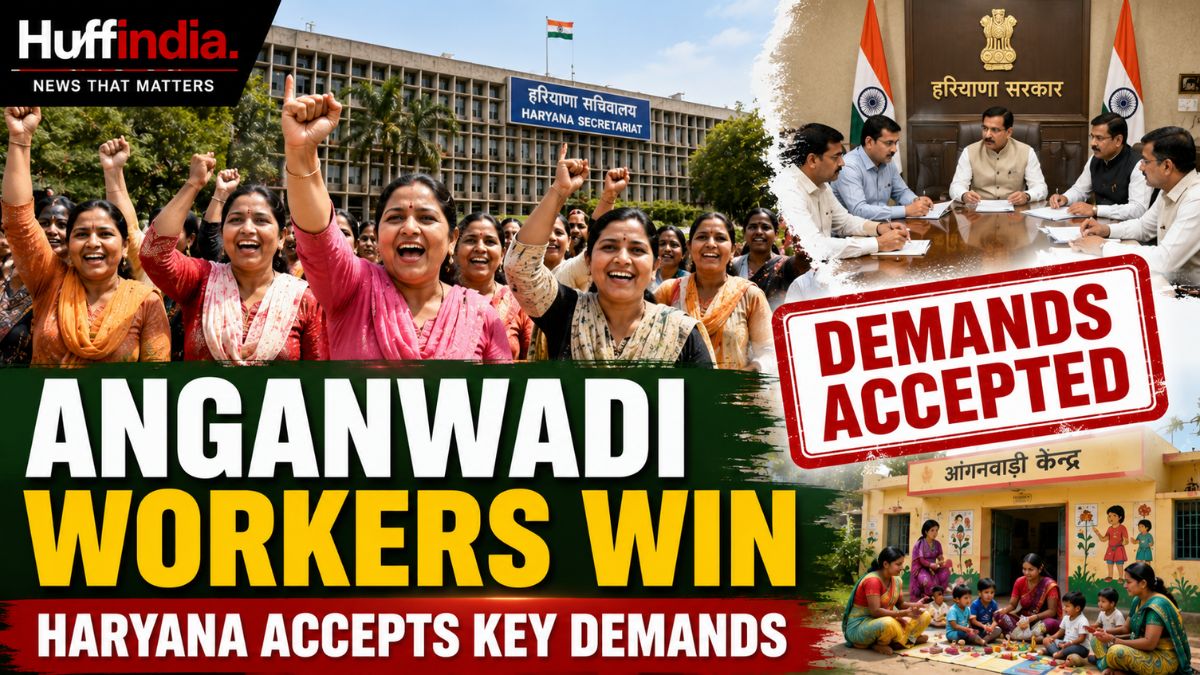



Haryana Anganwadi Workers have secured a significant victory after the state government agreed to several long-pending demands following protests organized in different parts of the state. The development comes after weeks of demonstrations and negotiations involving Anganwadi workers, helpers, trade unions, and government representatives.
According to a statement issued by the Centre of Indian Trade Unions (CITU), Haryana, the government accepted multiple demands raised by Anganwadi workers and helpers after protests in Panchkula and Bhiwani. The decision has been welcomed by worker organizations, which described it as an important step toward addressing concerns that had remained unresolved for years.
The move is expected to impact thousands of Anganwadi workers and helpers who play a crucial role in implementing child welfare and nutrition programs across Haryana.
Haryana Anganwadi Workers Receive Government Assurance
The latest announcement marks a significant breakthrough for Haryana Anganwadi Workers, who have been seeking improvements in working conditions, benefits, and welfare measures for an extended period.
Worker representatives had repeatedly raised concerns regarding service conditions and support mechanisms available to frontline Anganwadi staff.
Following sustained protests and discussions, the state government reportedly agreed to address several of these issues, leading to a positive outcome for workers and helpers.
Union leaders have described the development as an example of how collective action can help bring attention to long-standing concerns.
Protests in Panchkula and Bhiwani Played Key Role
The demands of Haryana Anganwadi Workers gained momentum after demonstrations were organized in Panchkula and Bhiwani.
Participants highlighted various challenges faced by Anganwadi staff while carrying out responsibilities related to child nutrition, maternal welfare, preschool education, and community outreach programs.
Trade union representatives argued that workers deserved greater recognition and improved support given their contribution to public welfare initiatives.
The protests drew attention to issues affecting thousands of workers across the state and eventually led to negotiations with government authorities.
Importance of Anganwadi Workers in Public Welfare
The discussion surrounding Haryana Anganwadi Workers has also highlighted the critical role played by the Anganwadi system in India’s social welfare framework.
Anganwadi centres operate under the Integrated Child Development Services (ICDS) program and are responsible for delivering several essential services, including:
- Child nutrition support
- Preschool education
- Maternal health awareness
- Growth monitoring
- Community health outreach
Workers and helpers serve as frontline personnel who connect government welfare programs with local communities.
Their contribution is often viewed as essential to improving health and nutrition outcomes for children and mothers.
What the Acceptance of Demands Means
While detailed implementation plans are expected to emerge over time, the government’s decision is being viewed as a positive development for Haryana Anganwadi Workers.
Worker organizations believe the acceptance of key demands could improve morale, strengthen service delivery, and enhance working conditions for Anganwadi personnel.
Supporters also argue that better support for frontline welfare workers can contribute to improved outcomes for beneficiaries who depend on government nutrition and childcare programs.
The decision may also influence future discussions regarding worker welfare in similar sectors.
Trade Unions Welcome the Move
The Centre of Indian Trade Unions (CITU) and other worker representatives have welcomed the government’s response.
According to union leaders, the outcome reflects the effectiveness of peaceful democratic protests and sustained engagement with policymakers.
Representatives of Haryana Anganwadi Workers have expressed hope that the accepted demands will now be implemented efficiently and within a reasonable timeframe.
Many workers view the decision as recognition of their long-standing contribution to public service.
Broader Debate on Frontline Worker Welfare
The developments in Haryana have renewed discussions about the welfare of frontline workers across India.
Many states continue to face debates regarding honorariums, benefits, job security, and service conditions for Anganwadi staff and other community-based workers.
Advocates argue that strengthening support systems for such workers is essential because they often serve vulnerable populations in rural and urban communities.
The success achieved by Haryana Anganwadi Workers may encourage similar conversations in other regions.
Challenges That Remain
Despite the positive outcome, observers note that implementation will be the key factor determining the long-term impact of the government’s decision.
Workers and unions are expected to monitor progress closely to ensure that commitments translate into practical benefits.
Key issues likely to remain under discussion include:
- Timely implementation
- Worker welfare measures
- Training and capacity building
- Service conditions
- Long-term policy reforms
The effectiveness of these measures will influence how the decision is ultimately viewed by workers and stakeholders.
What Happens Next?
Attention will now shift toward implementation and follow-up discussions between worker representatives and government authorities.
Many Haryana Anganwadi Workers are hopeful that the accepted demands will lead to tangible improvements in their professional and personal lives.
Policy experts also believe the outcome could serve as an example of constructive dialogue between governments and worker organizations.
For official updates on women and child welfare schemes, readers can visit the Haryana Women and Child Development Department website.
Final Thoughts on Haryana Anganwadi Workers
The government’s decision to accept several long-pending demands marks an important moment for Haryana Anganwadi Workers and helpers. Following protests in Panchkula and Bhiwani, worker organizations have secured commitments that they believe will improve conditions for thousands of frontline welfare personnel.
While implementation remains the next major challenge, the development highlights the importance of dialogue, worker participation, and recognition of those who play a vital role in delivering essential social welfare services. The outcome is likely to remain a significant talking point in discussions about labor rights and public welfare programs in the state.
Also Read: Women Employee Protest India: Why Female Workers Are Raising Their Voice