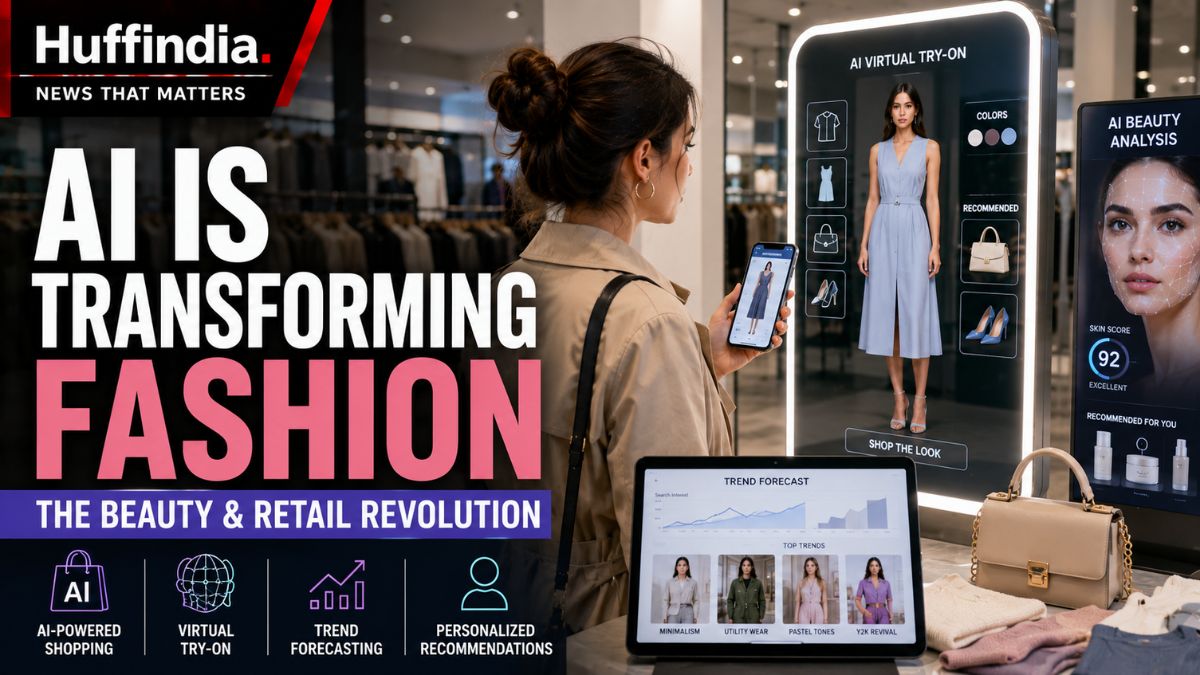



AI in Fashion Industry is rapidly moving from an experimental technology to a core business tool as fashion brands, beauty companies, and retailers increasingly embrace artificial intelligence to improve customer experiences, predict trends, and streamline operations.
Industry experts believe 2026 could become a defining year for AI-driven transformation across fashion and beauty. From personalized shopping recommendations and virtual fitting rooms to predictive trend forecasting and AI-generated product designs, the technology is reshaping how consumers discover, purchase, and interact with brands.
As competition intensifies in the global fashion market, companies are investing heavily in digital innovation to meet changing consumer expectations and stay ahead of emerging trends.
AI in Fashion Industry Is Changing How Consumers Shop
One of the most visible applications of artificial intelligence is personalized shopping.
Retailers now use AI-powered algorithms to analyze browsing behavior, purchase history, and customer preferences to recommend products tailored to individual shoppers. These systems can suggest clothing styles, colors, beauty products, and accessories based on a customer’s unique profile.
The result is a more personalized shopping experience that helps consumers discover relevant products while improving conversion rates for retailers.
Many major fashion brands have reported increased engagement and sales through AI-driven recommendation engines.
Virtual Try-Ons Are Becoming Mainstream
The rise of augmented reality and artificial intelligence has accelerated the adoption of virtual try-on technology.
Consumers can now digitally try on makeup, eyewear, hairstyles, clothing, and accessories using smartphone cameras before making a purchase. This technology helps reduce uncertainty and improves buyer confidence, particularly in online shopping environments.
Beauty companies are increasingly using AI-powered facial recognition systems to recommend makeup shades and skincare products tailored to individual skin tones and features.
Industry analysts expect virtual try-on tools to become a standard feature across fashion and beauty platforms in the coming years.
AI-Powered Trend Forecasting Is Transforming Fashion
One of the most significant developments in the AI in Fashion Industry is predictive trend forecasting.
Traditionally, fashion forecasting relied heavily on expert analysis, runway observations, and consumer research. Today, AI systems can process vast amounts of data from social media, search trends, online shopping behavior, influencer content, and consumer feedback.
These insights help brands identify emerging styles and consumer preferences before they become mainstream.
By predicting demand more accurately, companies can reduce overproduction, improve inventory management, and respond more quickly to market shifts.
Beauty Brands Embrace Artificial Intelligence
The beauty industry is experiencing a similar transformation.
AI-powered skincare analysis tools can evaluate skin conditions and recommend personalized product routines. Virtual beauty consultants, chatbot assistants, and AI-generated beauty recommendations are becoming increasingly common across digital platforms.
Many brands are also using artificial intelligence to analyze customer reviews and identify opportunities for product improvements.
The growing adoption of AI reflects consumers’ increasing demand for customized beauty solutions and digital convenience.
AI in Fashion Industry Supports Sustainability Goals
Sustainability has become a major priority for fashion companies, and AI is helping brands address environmental challenges.
Artificial intelligence can improve demand forecasting, reduce excess inventory, optimize supply chains, and minimize waste. Better forecasting allows brands to produce quantities that more closely match actual consumer demand.
Industry experts believe AI could play a significant role in reducing one of the fashion sector’s biggest challenges—overproduction.
As sustainability becomes increasingly important to consumers, technology-driven efficiency may become a competitive advantage for brands.
Digital Fashion and AI-Generated Designs Gain Momentum
Another emerging trend is the use of AI in product design.
Designers are increasingly experimenting with AI tools that generate concepts, color palettes, fabric combinations, and creative inspirations. While human creativity remains central to fashion, AI is becoming a valuable tool for accelerating the design process.
Digital-only fashion collections, virtual garments, and metaverse-inspired products are also gaining attention among younger consumers.
These innovations demonstrate how technology is expanding the boundaries of traditional fashion design.
Challenges Facing AI Adoption
Despite its growing popularity, AI adoption is not without challenges.
Privacy concerns, data security, algorithmic bias, and transparency remain important considerations for companies deploying AI-powered systems. Businesses must also ensure that technology enhances rather than replaces authentic customer relationships.
Experts emphasize that successful implementation requires a balance between automation and human creativity.
Consumers continue to value personal connections, brand storytelling, and unique experiences that cannot be fully replicated by technology alone.
The Future of AI in Fashion Industry
Industry observers expect AI investment to accelerate throughout 2026 and beyond.
Fashion retailers are increasingly integrating artificial intelligence across product development, marketing, customer service, inventory management, and supply chain operations. The technology is no longer viewed as a future trend but as a current business necessity.
For insights into global fashion and beauty business trends, readers can visit the Business of Fashion.
As consumer expectations evolve and competition increases, AI-driven innovation is likely to become a defining factor in determining which brands succeed in the digital marketplace.
Final Thoughts on AI in Fashion Industry
The AI in Fashion Industry is transforming the way brands operate and consumers shop. From personalized recommendations and virtual try-ons to predictive trend forecasting and sustainable production strategies, artificial intelligence is reshaping nearly every aspect of the fashion and beauty ecosystem.
While challenges related to privacy and implementation remain, industry leaders increasingly view AI as an essential tool for future growth. As technological capabilities continue to advance, 2026 may be remembered as a pivotal year in the ongoing digital transformation of fashion and beauty.
Also Read: Rupee Against Dollar Sees Major Gain Ahead of RBI Rate Decision