
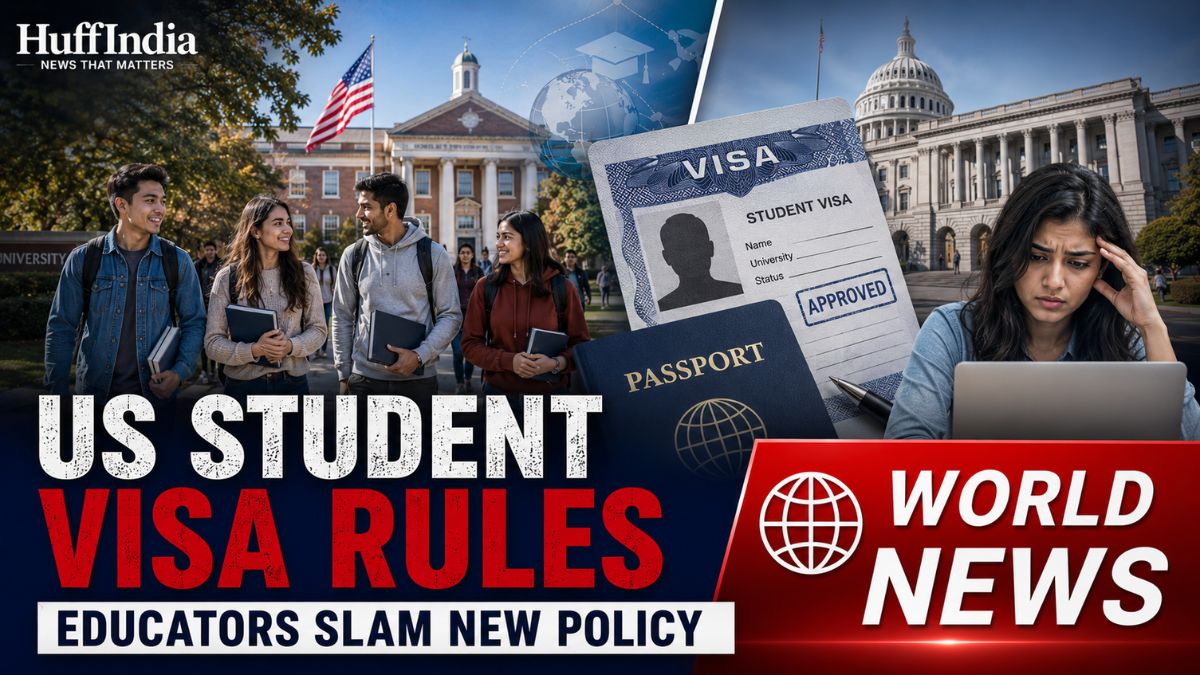
Trump student visa rules are facing growing criticism from international education organisations after the Trump administration introduced new measures affecting foreign students seeking to study in the United States. The latest policy changes have been described as “misguided and unnecessary” by the Association of International Educators (NAFSA), which warned that the new rules could undermine the country’s reputation as a preferred destination for global talent.
The criticism comes at a time when American universities continue to rely heavily on international students for academic research, campus diversity and economic contributions. Education leaders argue that policies creating uncertainty around student mobility may discourage prospective applicants from choosing the United States.
Trump Student Visa Rules Draw Sharp Criticism
The Trump student visa rules have prompted concerns from higher education organisations, with the Association of International Educators (NAFSA) saying the measures could create unnecessary barriers for genuine students.
The Association of International Educators (NAFSA) has published its response to the policy changes, outlining its concerns about the potential impact on international students and U.S. higher education. Readers can learn more on NAFSA’s official website
In a statement, the organisation described the policy changes as “misguided and unnecessary,” arguing that international students make valuable academic, cultural and economic contributions to universities and local communities across the United States.
NAFSA urged policymakers to adopt immigration policies that strengthen, rather than weaken, America’s position as a global education leader.
What Are the New Rules?
The latest measures introduced by the Trump administration seek to tighten oversight of international student admissions and visa compliance.
While officials have said the objective is to strengthen national security and improve immigration enforcement, critics argue that the changes could increase uncertainty for students planning to pursue higher education in the US.
Education experts say any significant policy change affecting student visas is likely to influence application decisions well before each academic year begins.
International Educators Raise Concerns
The Trump student visa rules have been criticised by universities and education groups that work closely with international students.
According to NAFSA, international students contribute billions of dollars annually to the US economy while supporting research, innovation and workforce development.
The organisation argues that policies perceived as restrictive could reduce America’s competitiveness in attracting highly skilled students, particularly as countries such as Canada, Australia and the United Kingdom continue expanding opportunities for international applicants.
Also Read | PM Modi Australia Visit Ends With Landmark Strategic Pacts
Impact on International Students
For students planning to study in the United States, the policy changes could mean greater scrutiny during the visa process and additional uncertainty regarding future immigration requirements.
Many international applicants invest significant financial resources and years of preparation before applying to overseas universities. Education consultants say policy stability is an important factor influencing where students ultimately choose to study.
Any perception of increased administrative hurdles may encourage students to explore alternative destinations offering clearer immigration pathways.
Why the US Higher Education Sector Is Concerned
American universities have long viewed international students as an important part of their academic ecosystem.
Beyond tuition revenue, international students contribute to:
- Scientific research
- Innovation and entrepreneurship
- Cultural diversity
- Graduate teaching programmes
- Local economies through housing and consumer spending
Education leaders warn that policies discouraging student mobility could have long-term implications for higher education institutions, particularly those with significant international enrolment.
Administration’s Position
The Trump administration has defended tighter immigration and visa measures as part of broader efforts to strengthen border security and improve compliance with immigration laws.
Supporters of the policy argue that enhanced oversight helps protect the integrity of the student visa system while ensuring visas are granted only to eligible applicants who meet all legal requirements.
Officials maintain that national security remains a central consideration in immigration policymaking.
Global Competition for International Students
The debate surrounding the Trump student visa rules comes as countries compete to attract talented students from around the world.
Canada, Australia, the United Kingdom and several European nations have introduced policies aimed at making international education more accessible through post-study work opportunities and streamlined visa processes.
Experts believe policy certainty increasingly influences student decisions in an increasingly competitive global education market.
What Happens Next?
Education organisations are expected to continue engaging with policymakers regarding the impact of the new rules.
Universities and student advocacy groups are also likely to monitor how the measures affect international enrolment in the coming admission cycles.
The long-term impact will depend on implementation, legal developments and whether additional policy revisions are introduced.
Final Takeaway
The Trump student visa rules have sparked fresh debate over the balance between immigration enforcement and maintaining the United States’ position as a leading destination for international education. While the administration argues the measures strengthen oversight, international educators believe the policies risk discouraging talented students who contribute significantly to American universities and the broader economy.
As universities prepare for future admission cycles, the effectiveness and consequences of the new rules will remain under close scrutiny.