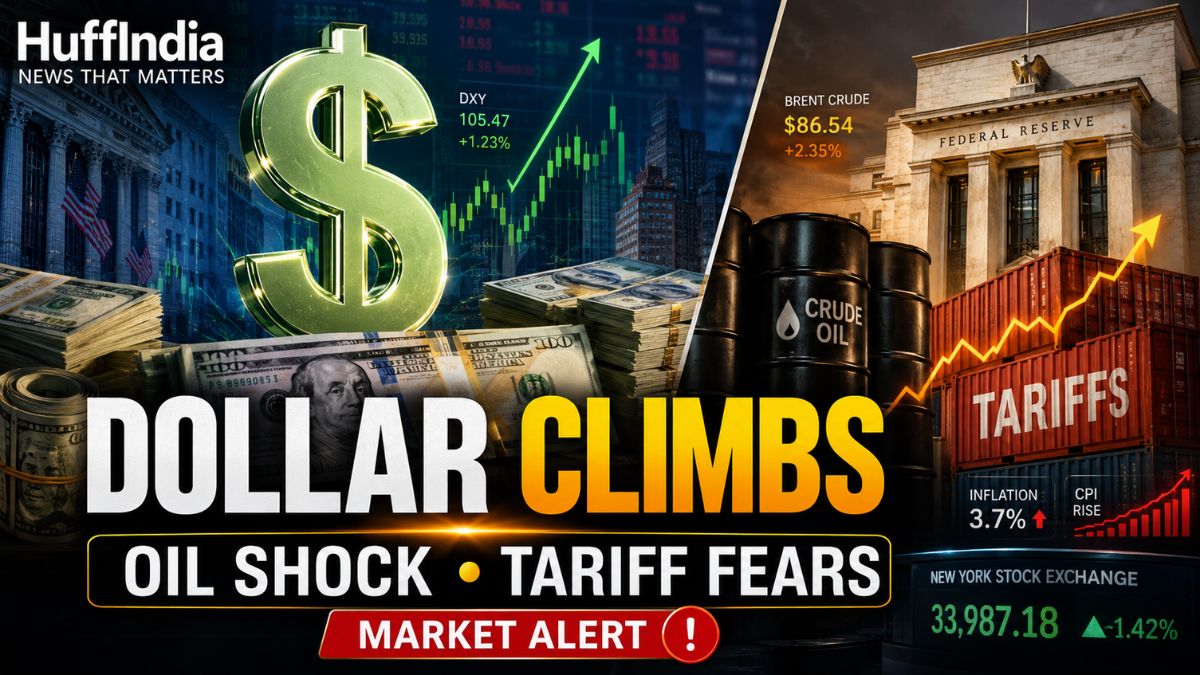



Dollar climbs against major global currencies as investors assess the combined impact of rising oil prices, renewed tariff measures announced by U.S. President Donald Trump and expectations surrounding the upcoming Federal Reserve policy meeting. Market participants are increasingly concerned that higher energy costs and trade-related inflationary pressures could complicate the central bank’s path on interest rates.
The stronger U.S. dollar reflects growing demand for safe-haven assets amid uncertainty in global financial markets. Analysts say the Federal Reserve’s upcoming policy decision and comments from Chair Jerome Powell will be closely watched for clues on the direction of monetary policy.
Dollar Climbs as Investors Turn Defensive
Dollar climbs as traders moved toward the greenback, traditionally viewed as a safe-haven currency during periods of geopolitical and economic uncertainty.
The recent rise in crude oil prices has revived concerns that inflation could remain elevated for longer than previously expected. At the same time, fresh tariff measures announced by the Trump administration have added another layer of uncertainty to the global trade outlook.
Currency markets reacted by strengthening the U.S. dollar against several major currencies, while investors reduced exposure to risk-sensitive assets.
Oil Prices Add Fresh Inflation Pressure
Global oil prices have risen sharply in recent sessions following supply concerns and geopolitical developments, increasing the likelihood of higher fuel and transportation costs worldwide.
Economists note that sustained increases in crude oil prices often feed into consumer inflation through higher logistics, manufacturing and energy expenses.
If oil prices remain elevated, central banks may find it more difficult to achieve their inflation targets without keeping interest rates higher for longer.
Trump Tariffs Raise Market Concerns
Another factor supporting the stronger dollar is renewed concern over Trump tariffs.
Market participants believe additional import tariffs could increase the cost of goods entering the United States, potentially adding to inflationary pressures already driven by higher energy prices.
Businesses importing raw materials and consumer products may face higher costs, which could eventually be passed on to consumers through increased retail prices.
All Eyes on the Federal Reserve
The Federal Reserve’s upcoming policy meeting has become the primary focus for investors across global markets.
Investors can follow the Federal Reserve’s official monetary policy announcements, meeting statements and economic projections on the Federal Reserve’s official website
While economists expect policymakers to carefully assess incoming inflation and employment data, markets will closely analyse the Fed’s statement for any indication of future interest rate decisions.
If officials signal that inflation risks remain elevated, expectations for interest-rate cuts could weaken further, providing additional support to the U.S. dollar.
Impact on Global Markets
The stronger dollar has implications beyond the United States.
A rising dollar can:
- Increase borrowing costs for emerging markets
- Put pressure on commodity prices
- Affect multinational corporate earnings
- Influence global capital flows
- Raise import costs for countries with weaker currencies
Financial markets worldwide are therefore closely monitoring both Federal Reserve decisions and developments in energy markets.
What Analysts Are Saying
Market analysts believe the combination of higher oil prices and renewed tariff uncertainty has increased demand for safe-haven assets.
Some economists caution that if inflation remains persistent, central banks could delay monetary easing despite slowing economic growth.
Investors are expected to remain cautious until the Federal Reserve provides greater clarity on its outlook for inflation and interest rates.
Also Read | Stock Market Today 16 July: Sensex Up 230 Points, Nifty Above 24,100 at Opening
What to Watch Next
Investors will closely follow:
- The Federal Reserve’s interest rate decision
- Jerome Powell’s post-meeting press conference
- Inflation forecasts
- Future guidance on monetary policy
- Oil price movements
- Developments related to U.S. trade policy
These factors are likely to influence currency markets, equities and global bond yields over the coming weeks.
Final Takeaway
The fact that the Dollar climbs ahead of the Federal Reserve meeting highlights growing investor caution as rising oil prices and renewed tariff concerns reshape expectations for inflation. While the stronger dollar reflects confidence in safe-haven assets, the Fed’s policy guidance will be crucial in determining whether this momentum continues or eases in the weeks ahead.