

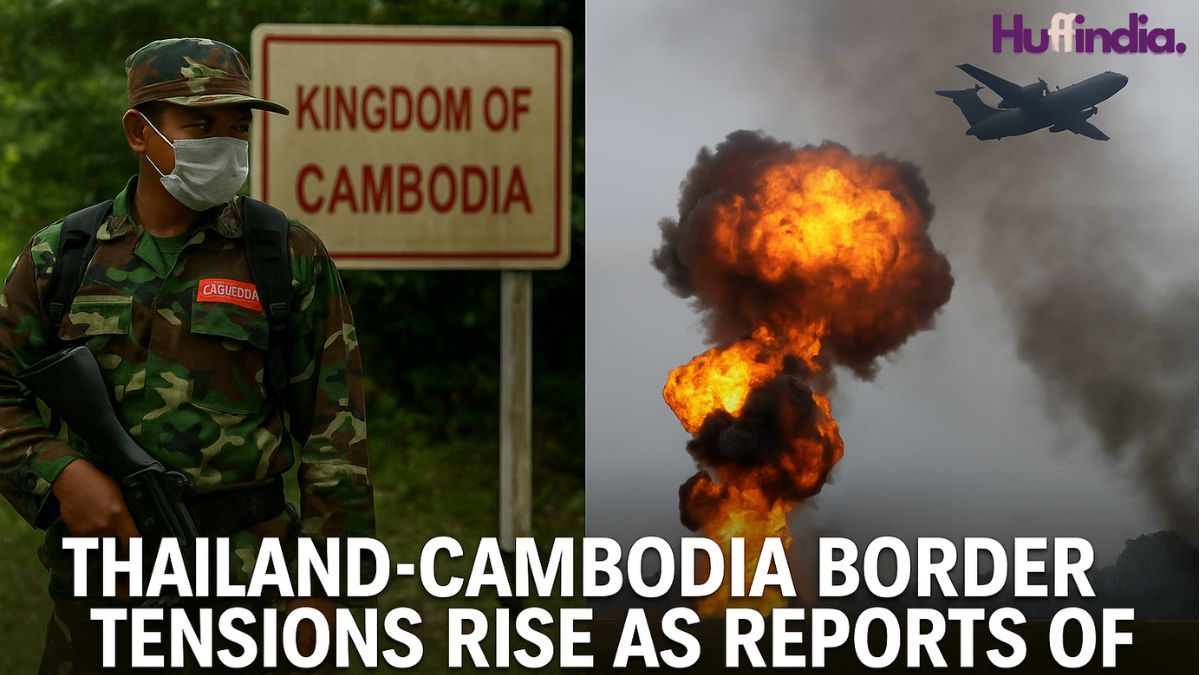
The geopolitical situation in Southeast Asia has entered a new phase of uncertainty as Thailand Cambodia border tensions escalated sharply amid reports of airstrikes along the disputed frontier. According to early international media reports, Thai military aircraft conducted targeted strikes near the border after renewed hostilities allegedly emerged from Cambodian forces.
While neither government has officially released a detailed statement, intelligence analysts and regional observers warn that the situation could trigger a broader security challenge within ASEAN. Today’s developments have placed both nations under global scrutiny as diplomatic channels scramble to manage the rising tension.
How the New Wave of Thailand Cambodia border Tensions Began
Preliminary reports suggest that a series of unverified cross-border incidents last week may have triggered the latest episode in the Thailand Cambodia border tensions. Local villagers reported hearing shelling near the mountainous border region—an area historically contested by both nations due to unclear demarcation lines and military presence on both sides.
Experts note that the underlying dispute dates back decades, rooted in:
- Border misalignment
- Control over strategic high-ground terrain
- Cultural and historical claims
- Shifting regional military alliances
The latest escalation may be connected to increased military patrols reported earlier this month.
Airstrikes Reported — What We Know So Far
International outlets have reported that Thai forces carried out limited airstrikes, apparently as a defensive response to Cambodian troop activity.
However, details remain unclear due to restricted access in the conflict zone.
Key points emerging so far:
- Strikes were reportedly near the border, not deep inside Cambodian territory
- Civilian evacuations from nearby villages have been initiated
- Local eyewitness accounts mention loud blasts and ground troop movement
- Cambodian authorities have yet to confirm or deny cross-border troop activity
If verified, this would mark one of the most serious escalations in years and may put additional strain on ASEAN regional stability.
(Source: International Breaking News
ASEAN & Global Community Call for Calm
Diplomats from Singapore, Malaysia, Indonesia, and Vietnam have expressed concern over the unfolding events. ASEAN officials have emphasised the importance of maintaining peace under the association’s conflict-resolution framework.
The United Nations regional office stated it is “closely monitoring developments” and urged both nations to engage in immediate dialogue to de-escalate rising Thailand Cambodia border tensions.
Historical Context of the Dispute
Thailand and Cambodia have previously clashed over territories around the Preah Vihear Temple and surrounding mountainous areas.
Historical flashpoints include:
- 2008–2011 border skirmishes
- Conflicting military fortifications
- Legal disputes presented before the International Court of Justice (ICJ)
Though major violence has been avoided in recent years, analysts say unresolved border demarcation continues to fuel periodic flare-ups.
Possible Impact on Trade, Tourism & Regional Stability
Southeast Asia’s economy depends heavily on cross-border tourism, trade routes, and labour migration. Renewed conflict may:
- Disrupt border trade checkpoints
- Impact local tourism economies
- Increase military presence in civilian areas
- Affect foreign investment sentiment in ASEAN markets
Experts warn that prolonged hostilities could complicate regional supply chains, especially in transportation and manufacturing sectors.
What Happens Next?
Military experts predict two possible outcomes:
1. Diplomatic De-Escalation
If ASEAN mediators intervene quickly, both nations may pull back troops and resume border negotiations.
2. Escalation with Wider Impact
If further airstrikes or territorial pushes occur, the dispute may intensify, inviting broader international involvement.
For now, clarity is expected once both governments release official statements.
Conclusion
As Thailand Cambodia border tensions rise following reports of airstrikes, the situation remains fluid and potentially volatile. With global bodies monitoring closely and ASEAN nations urging restraint, the next 24–48 hours will be crucial for preventing a deeper conflict. The international community awaits official updates as the region hopes for a peaceful resolution.
Related: The Hong Kong High-Rise Fire Disaster That Left Families Devastated
Related: China Russia Anti-Missile Drills: Powerful 3rd Joint Exercise