
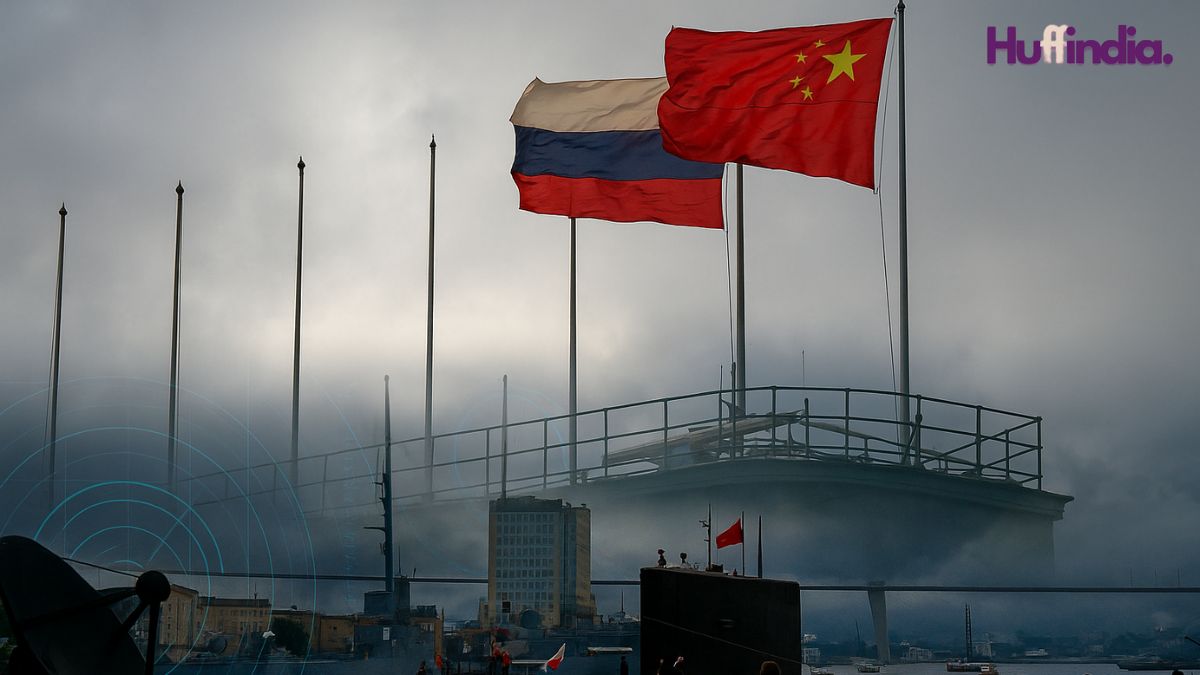



China and Russia have completed their third round of China Russia Anti-Missile Drills, marking another major step in their expanding defence collaboration. According to an official announcement from the Chinese Ministry of National Defense, this latest anti-missile drill was conducted on Russian territory and focused on enhancing joint air-defence and missile-interception capabilities. The exercise reflects rapidly growing China Russia military cooperation amid shifting global power dynamics.
The drill included advanced radar tracking, command-and-control coordination, and simulated interception of ballistic and cruise missiles. Officials from both nations claimed that the exercise was not directed toward any specific country. However, geopolitical analysts say the timing aligns with rising global missile defence tensions, especially surrounding U.S. missile shield proposals and increasing military activities in the Indo-Pacific.
What Happened During the Anti-Missile Drill
The Anti-Missile Drill 2025 involved multiple stages of early-warning detection, joint radar operations, and an integrated response to hypothetical missile threats. China and Russia also tested secure communication systems designed to synchronize air-defence networks across borders — a capability that experts believe is crucial in any modern Strategic Defence Alliance.
Military observers note that this is not an isolated development. Earlier this year, the two nations carried out joint naval drills, anti-submarine exercises, and maritime patrols, all of which underscore a deepening defence partnership that has only strengthened since 2022.
Economic Times reporting confirms that both countries remain committed to expanding their defence training programs further, and future anti-missile simulations are already planned.
Why These Drills Matter Globally
The third iteration of the China Russia Anti-Missile Drills carries significant global implications.
1. Strengthening of a Strategic Defence Alliance
Experts believe the drills serve as both a signal and a deterrent. As Western nations expand missile defence systems and host multinational exercises, China and Russia appear intent on showcasing their own readiness and unity.
2. Escalation of Global Missile Defence Tensions
Analysts warn that repeated anti-missile drills could intensify strategic mistrust across regions. Countries in East Asia, Europe, and the Indo-Pacific may respond by upgrading their own defence systems.
3. Increased Military Interoperability Between China and Russia
What stands out is the continued improvement in communication, detection and response mechanisms — all key features of a maturing Strategic Defence Alliance.
India’s Strategic Concerns
While India is not involved in these drills, the developments carry direct implications for its national security posture. China’s enhanced air-defence capabilities, paired with Russia’s technological depth, could shape India’s future procurement strategies, missile-defence architecture, and long-term diplomatic relations.
India maintains defence ties with Russia and has ongoing discussions on technology transfer, joint production, and air-defence systems.
According to the Economics Times:
As the geopolitical situation evolves, India may need to balance its strategic autonomy while monitoring how China Russia military cooperation transforms regional power equations.
Expert Analysis & Global Reactions
Security experts interpret the Anti-Missile Drill 2025 as a demonstration of preparedness rather than aggression. However, Western defence circles remain cautious, suggesting that such exercises could complicate arms control negotiations.
Some analysts argue this joint exercise is a counterweight to U.S. and NATO missile-defence systems. Others view it as China and Russia’s attempt to reinforce their influence in shaping global security norms.
The drills also highlight the increasing importance of early-warning technology, missile-tracking networks, and integrated defence grids — capabilities that are becoming central to modern military strategy.
Conclusion
The completion of the third China Russia Anti-Missile Drill marks a significant milestone in global military developments. With rising geopolitical tensions and a shifting balance of power, this exercise reinforces a powerful message: China and Russia are committed to enhancing their Strategic Defence Alliance and expanding their joint operational capabilities.
As the international community monitors these developments, the future of global missile defence tensions remains uncertain — but undeniably more complex.