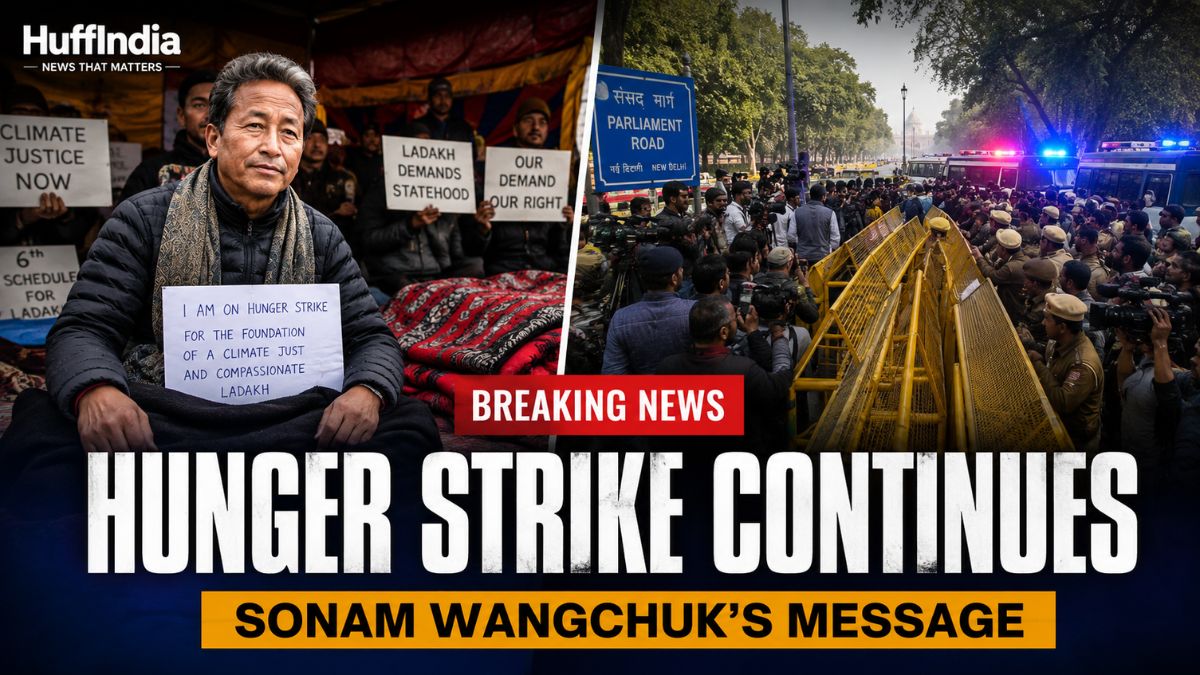



Sonam Wangchuk hunger strike entered a new phase on Monday after the noted education reformer and environmental activist announced that he would continue his indefinite fast, saying police action against peaceful protesters during the “Sansad Chalo” march had strengthened his resolve.
In a handwritten statement issued from Safdarjung Hospital, where he is currently admitted, Wangchuk said he decided to continue his fast after witnessing what he described as the treatment of peaceful demonstrators. He appealed for youth representatives to be allowed to meet Members of Parliament or, alternatively, for parliamentarians to meet him at the hospital.
Sonam Wangchuk Hunger Strike: Why Has the Fast Been Extended?
According to Wangchuk, the decision to continue the Sonam Wangchuk hunger strike came after police intervened during the Cockroach Janta Party’s (CJP) “Sansad Chalo” march in Delhi.
In his statement, he said he was deeply affected by the handling of protesters and would continue fasting until youth leaders are permitted to present their concerns before Parliament or lawmakers visit him in the hospital.
The activist also appealed for the issue to be addressed through dialogue rather than confrontation, expressing hope that accountability would eventually be ensured.
What Happened During the Protest?
The latest development follows demonstrations organised in Delhi during the Monsoon Session of Parliament.
Thousands of students and young protesters gathered as part of the march demanding accountability over issues related to the education system. Security arrangements around Parliament were tightened, and police stopped protesters from moving towards restricted areas. Reports from the protest site indicated clashes, detentions and crowd-control measures during the march.
The Delhi Police has previously stated that Wangchuk was shifted from the protest site to Safdarjung Hospital following medical advice and in compliance with court directions because of concerns over his deteriorating health.
Wangchuk’s Appeal From Hospital
In his handwritten note, Wangchuk said he remained committed to non-violent protest despite being hospitalised.
He urged authorities to allow youth representatives an opportunity to place their concerns before elected representatives, saying that dialogue would be the most constructive way to resolve the situation.
His statement has since been widely shared on social media, drawing reactions from supporters, public figures and political leaders.
Also Read | NEET UG 2026 Result: 11.21 Lakh Qualify, 138 Score Above 690; Aryan Gupta and Panshul Bansal Top
Background of the Protest
The Sonam Wangchuk hunger strike began earlier this month as part of a broader campaign demanding accountability over issues affecting students and the education system.
The protest gained national attention after Wangchuk completed more than three weeks of fasting. His supporters describe the movement as peaceful and centred on democratic engagement, while authorities have maintained that steps taken during the protest were guided by safety and legal considerations.
Wangchuk, a Ramon Magsaysay Award recipient and engineer from Ladakh, has long been associated with environmental conservation, education reforms and sustainable development initiatives.
Police and Government Response
Delhi Police have said their actions were aimed at protecting Wangchuk’s health after medical experts warned about the risks associated with his prolonged fast. Officials also cited compliance with court directions while shifting him from the protest site to Safdarjung Hospital.
As of Monday evening, there had been no official indication that Wangchuk’s latest conditions regarding meetings with parliamentarians had been accepted.
For official updates related to Parliament proceedings and government announcements, readers can visit the Parliament of India
Why the Protest Has Drawn National Attention
The continuation of the Sonam Wangchuk hunger strike has attracted widespread public attention because of Wangchuk’s national profile and the issues raised by student groups.
Known internationally for his work in sustainable education and climate innovation, Wangchuk has previously advocated for environmental protection and governance reforms in Ladakh. His current fast has broadened into a larger public discussion on democratic protest, accountability and engagement with young citizens.
What Happens Next?
With Wangchuk confirming that he will continue his indefinite fast, attention is now focused on whether discussions between authorities and protest representatives will take place.
The coming days are expected to determine whether negotiations can resolve the immediate impasse or whether demonstrations will continue alongside the ongoing Monsoon Session of Parliament.
For now, Wangchuk has reiterated that his protest will remain peaceful and that he hopes dialogue will ultimately provide a solution.