
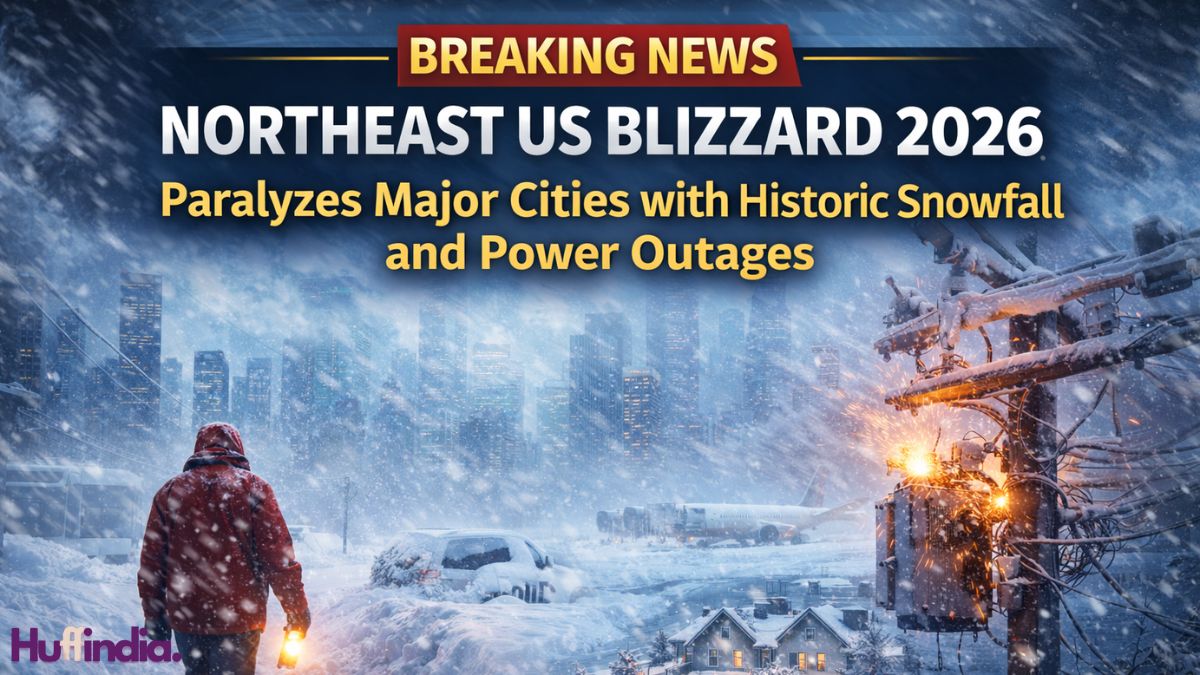



A powerful winter storm, unofficially dubbed the Northeast US Blizzard 2026, has battered large parts of the Northeastern United States and mid-Atlantic states, bringing heavy snowfall, coastal flooding and significant travel disruptions as it entered its third day on Tuesday.
The storm, which formed earlier in the week, dropped as much as 2–3 ft of snow across heavily populated corridors and generated hurricane-force wind gusts, grounding flights, closing highways and prompting emergency declarations across multiple jurisdictions.
Historic Snowfall and Meteorological Impact
The Northeast US Blizzard 2026 produced widespread blizzard conditions with snowfall accumulations reaching near 38 inches in some areas. Forecasters said the combination of frigid air and moisture from the Atlantic Ocean intensified the storm’s impact as it plowed northward through the Ohio Valley and into the Northeast megalopolis.
Meteorologists emphasised that the rapid development of the storm led to high winds exceeding 90 mph in exposed coastal regions, increasing the risk of structural damage and coastal flooding, according to the National Weather Service.
Travel Chaos and Infrastructure Strains
The Northeast US Blizzard 2026 caused widespread travel disruptions across more than a dozen states. Major airports, including those in New York, Boston and Philadelphia, reported hundreds of flight cancellations and delays, while Amtrak service was suspended on several routes. Thousands of motorists were stranded as interstates turned into snowbound corridors.
State transportation officials said they had mobilised plough crews and emergency vehicles to remove snow and assist motorists but warned that efforts were being hampered by ongoing snowfall and sub-zero wind chills.
Power Outages and Emergency Response
Utility companies reported more than 600,000 customers without power across multiple states due to the combination of heavy snow, high winds and fallen trees on power lines. Emergency hotlines were activated and shelters opened for residents in affected communities.
Local officials in states such as New York, Connecticut and Massachusetts declared states of emergency, activating the National Guard in some areas to assist with rescues and supply distribution.
Public safety departments stressed caution, particularly for elderly residents and those without adequate heating. First responders said the priority was to maintain access for ambulances and critical services, even as roads remained treacherous.
Economic and Ripple Effects
The Northeast US Blizzard 2026 is expected to have economic repercussions beyond immediate clean-up and emergency response. Analysts cautioned that disruptions in freight movement, retail operations and fuel distribution could impact regional supply chains through the end of the week.
“As with any significant winter storm in densely populated areas, this blizzard has the potential to ripple through economic activity — from commuter impacts to logistics slowdowns,” said weather risk specialist Rajiv Menon.
What to Expect Next
Forecasters expect the storm to gradually weaken later in the week, although snow showers and cold conditions will persist. Temperatures across affected states may remain well below seasonal averages, limiting melt and prolonging travel hazards.
State and federal agencies continue to coordinate response efforts, prioritising road access, power restoration and public welfare.
Residents are advised to closely follow local weather advisories and emergency notifications as conditions evolve.
Related: India Air Quality Report 21 Feb 2026 Shows Mixed Metro Trends
Related: IMD Rainfall Alert 20 Feb 2026 Issued for Southern States