
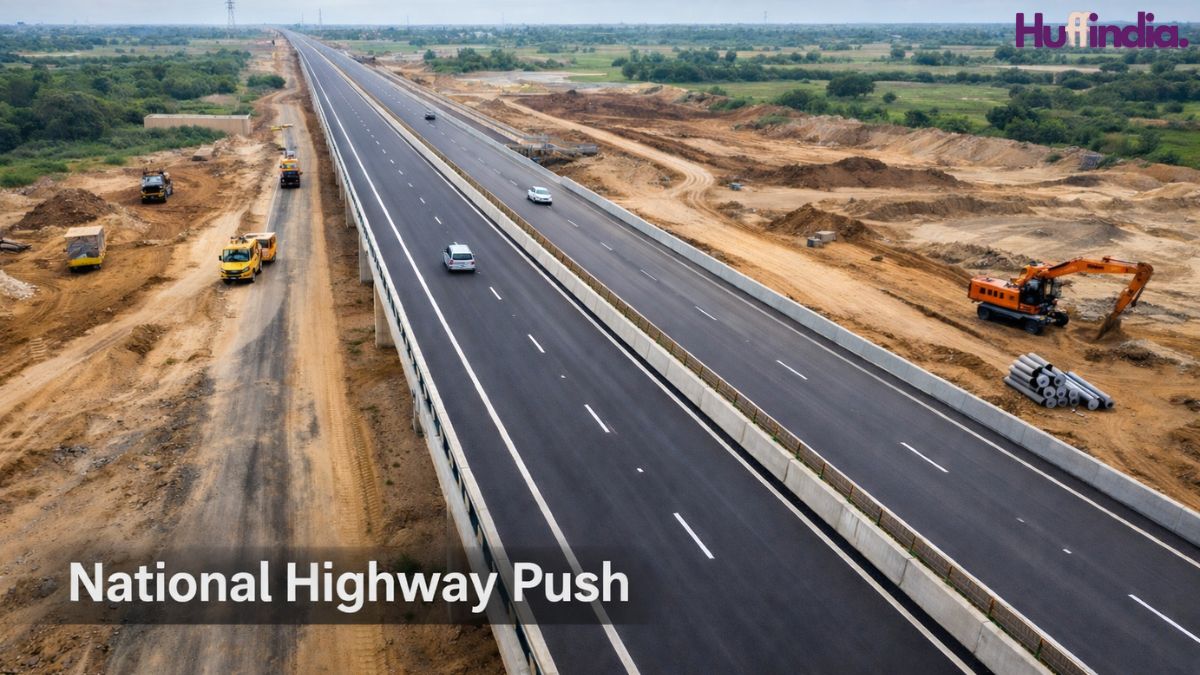



National highway expansion efforts gained momentum as the central government reviewed progress on several key road infrastructure projects aimed at improving connectivity, reducing travel time, and supporting economic growth. Officials said multiple highway corridors are moving ahead on schedule, despite challenges related to land acquisition and weather conditions.
Government Reviews Highway Development Progress
Senior officials from the Ministry of Road Transport and Highways conducted a review meeting to assess the status of ongoing national highway projects across states. The focus was on ensuring timely completion, maintaining construction quality, and resolving bottlenecks that could delay execution.
According to officials, priority corridors linking industrial hubs, ports, and major cities are receiving special attention, given their role in boosting trade and logistics efficiency.
Why National Highway Expansion Matters
India’s road network plays a critical role in the country’s economic ecosystem, carrying a significant share of passenger and freight traffic. Experts say sustained national highway expansion is essential to support rising vehicle volumes, ease congestion, and lower transportation costs.
Improved highways also contribute to regional development by enhancing access to markets, healthcare, and education, particularly in semi-urban and rural areas.
Faster Connectivity and Economic Impact
Government data indicates that upgraded highways have already reduced travel time on several major routes. Faster movement of goods has helped logistics companies reduce fuel consumption and improve supply chain efficiency.
Economists note that investment in road infrastructure has a multiplier effect, generating employment during construction and supporting long-term economic activity once projects are operational.
Challenges on the Ground
Despite progress, officials acknowledged that land acquisition remains a key challenge in certain regions. Delays in environmental clearances and local resistance have also slowed work on select stretches.
To address these issues, authorities are working closely with state governments to expedite approvals and improve coordination at the district level.
Use of Technology in Highway Projects
The government is increasingly using digital tools to monitor project progress. Satellite imagery, GPS-based tracking, and real-time dashboards are being deployed to ensure transparency and accountability in highway construction.
Officials said these measures help identify delays early and allow corrective action to be taken before timelines are significantly affected.
Road Safety and Sustainability Focus
Alongside expansion, authorities emphasized the importance of road safety and environmental sustainability. New highway projects are incorporating features such as improved signage, crash barriers, and service roads to enhance safety for motorists.
Efforts are also being made to adopt greener construction practices, including the use of recycled materials and improved drainage systems to reduce environmental impact.
What Lies Ahead
Looking ahead, the government plans to award additional highway projects in the coming months as part of its long-term infrastructure vision. Officials said funding availability remains strong, supported by budgetary allocations and public-private partnership models.
Experts believe consistent policy support and efficient execution will be key to sustaining the pace of national highway expansion and ensuring that infrastructure development keeps pace with India’s economic ambitions.
For now, the latest review underscores the government’s focus on strengthening road connectivity as a foundation for growth, mobility, and regional integration.
Related: Delhi Dehradun Expressway Set to Transform Travel as Project Nears Completion
Related: India Weather Update January 27, 2026: Dense Fog Disrupts Transport