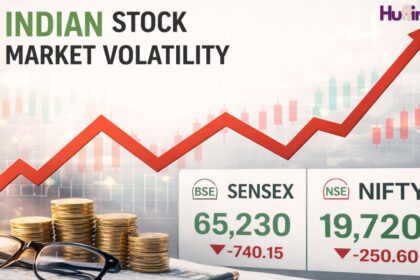
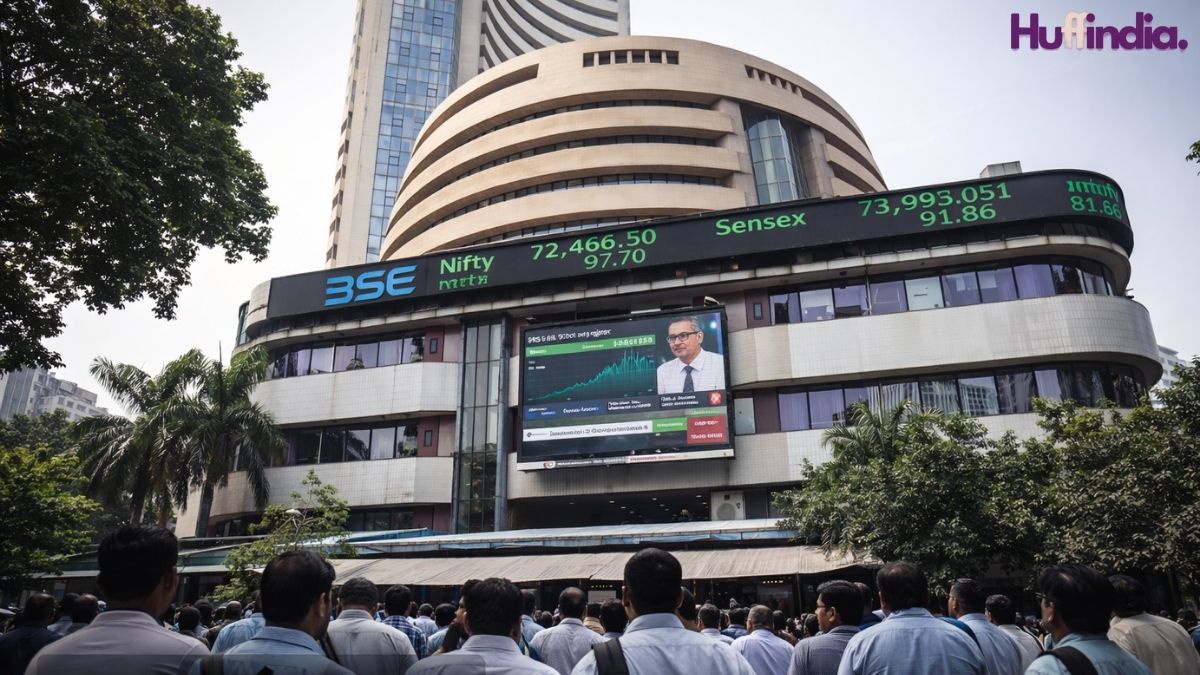



Indian stock markets traded in a narrow range as investors adopted a cautious stance, weighing domestic inflation signals against mixed global market cues. Benchmark indices Sensex and Nifty showed limited movement through the session, reflecting uncertainty over near-term economic direction and policy expectations.
Market participants remained selective, with gains in select sectors offset by profit-taking in others.
Sensex and Nifty Trade in Tight Range
The Sensex and Nifty opened marginally higher but struggled to sustain momentum as investors digested global developments and awaited clearer signals on inflation trends. Banking, FMCG, and select infrastructure stocks provided support, while IT and metal stocks faced mild pressure.
Analysts said the subdued movement reflects a broader consolidation phase after recent market gains.
Indian Stock Markets React to Inflation Outlook India
The performance of Indian stock markets continues to be influenced by the inflation outlook India, particularly after recent data suggested that price pressures remain uneven across sectors. Food inflation and global commodity prices remain key variables shaping investor expectations.
Investor Sentiment India Remains Cautious
Investor sentiment India has turned cautious as market participants assess how inflation trends could influence future monetary policy decisions. While expectations of stable interest rates have offered some comfort, uncertainty around global growth and capital flows has limited risk appetite.
Foreign institutional investors were largely neutral during the session, while domestic institutional investors provided selective support.
Global Cues Shape Market Direction
Global markets offered mixed cues, with Asian equities trading unevenly and US futures indicating cautious sentiment. Ongoing concerns around global interest rates, geopolitical developments, and slowing growth in major economies continue to affect emerging markets, including India.
Market experts noted that Indian equities remain relatively resilient compared to peers, supported by strong domestic fundamentals and corporate earnings stability.
Sectoral Performance Reflects Selective Buying
Sectoral indices showed a mixed picture. Banking and financial stocks benefited from expectations of credit growth and asset quality stability. FMCG stocks saw modest buying interest amid defensive positioning.
Meanwhile, IT stocks faced pressure due to concerns over global demand softness, while metal stocks reacted to fluctuations in global commodity prices.
Broader Market and Retail Participation
Mid-cap and small-cap stocks underperformed benchmark indices, reflecting heightened valuations and increased caution among retail investors. Market participants advised selective stock picking and risk management amid volatile conditions.
Retail participation remains strong, but analysts warn against chasing momentum in overheated segments of the market.
Policy Watch and Upcoming Triggers
Investors are closely watching upcoming macroeconomic data releases, including inflation readings, industrial output numbers, and global central bank signals. Any shift in policy expectations could influence near-term market direction.
According to market commentary and international financial coverage, Indian equities are expected to remain range-bound in the near term as investors seek clarity on inflation and global economic trends.
Market Outlook
Despite near-term volatility, market experts remain constructive on India’s medium-term prospects, citing strong domestic demand, manufacturing momentum, and improving corporate balance sheets.
However, they caution that global risks and valuation concerns warrant a disciplined investment approach.
For now, Indian stock markets appear to be in a consolidation phase — balancing optimism about economic resilience with caution over external uncertainties.
Related: Global Stock Markets Face Volatility as Investors Await Key Economic Signals
Related: Indian Stock Market Emerging Sectors: Why Investors Are Looking Beyond the Nifty 50