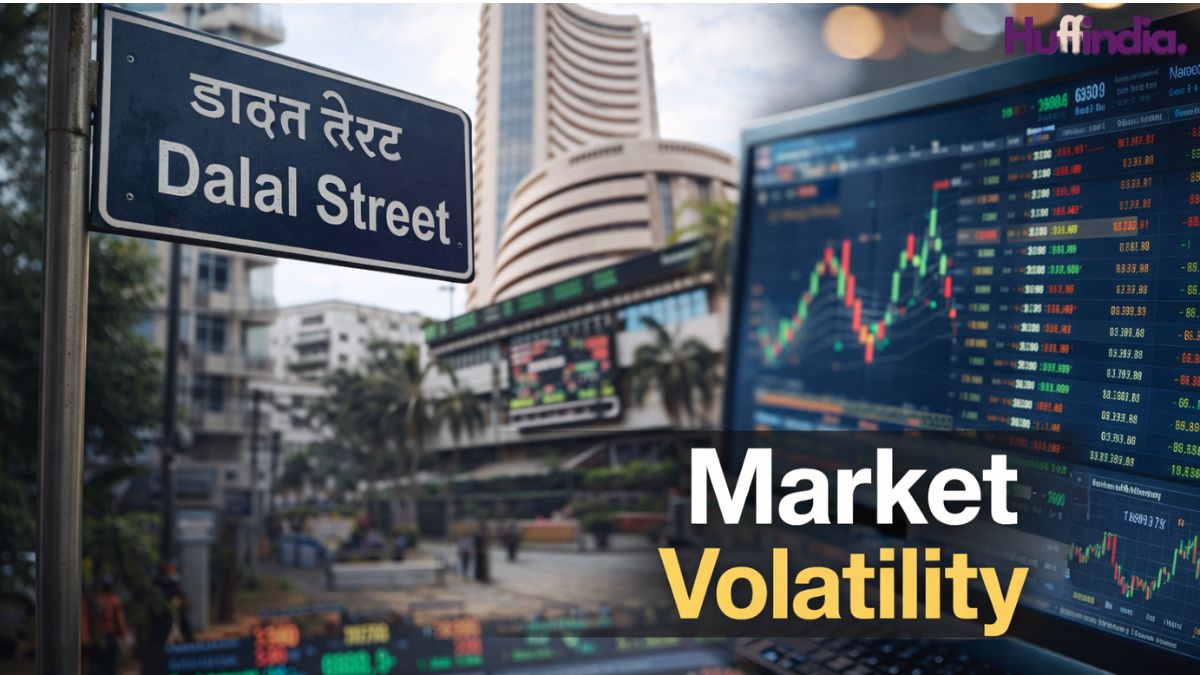



Indian stock market volatility was on display during the latest trading session as investors reacted cautiously to mixed global cues, profit booking, and uncertainty around interest rate outlooks. Benchmark indices fluctuated through the day, reflecting a nervous market mood amid weak overseas signals.
Benchmarks Swing Amid Cautious Sentiment
The Sensex and Nifty opened on a tentative note before swinging between gains and losses as traders weighed global developments. Market participants remained selective, focusing on stock-specific movements rather than broad-based buying.
Analysts said volatility reflected caution ahead of key global economic data and ongoing concerns over inflation trends in major economies.
Global Cues Influence Market Direction
Weak cues from Asian markets and overnight losses on Wall Street weighed on sentiment during early trade. Investors remained wary as expectations around interest rate cuts in the US continued to shift based on incoming economic indicators.
Market experts noted that global bond yields and crude oil prices remain important variables influencing short-term market direction in India.
Sectoral Performance Mixed
Sectoral indices showed mixed trends, with IT and metal stocks facing selling pressure, while select banking and FMCG stocks provided limited support to the benchmarks. Mid-cap and small-cap stocks also witnessed volatility, reflecting broader market caution.
Analysts advised investors to remain disciplined and avoid chasing momentum in uncertain conditions.
Why Volatility Is Rising
Experts attribute the current Indian stock market volatility to a combination of global uncertainty, stretched valuations in certain segments, and cautious positioning ahead of major policy signals. With global central banks maintaining a data-dependent stance, markets are likely to remain sensitive to economic releases.
Domestic factors such as corporate earnings updates and macroeconomic indicators are also shaping investor sentiment.
What Investors Are Watching Next
Market participants are closely tracking upcoming inflation data, central bank commentary, and global economic cues for direction. Any surprise on the policy or macro front could influence short-term trends.
Analysts suggest that long-term investors should focus on fundamentals and avoid reacting to day-to-day market swings.
Expert View
Market strategists believe volatility may persist in the near term but stress that India’s longer-term growth outlook remains intact. They recommend a cautious approach, with emphasis on asset allocation and risk management.
For now, the Indian stock market volatility underscores the importance of patience as investors navigate a complex global environment.
Related: Indian Stock Market Today January 27, 2026: Sensex, Nifty Volatile
Related: Dalal Street Today Ends Cautious as Global Uncertainty Weighs on Markets