


India manufacturing growth is gathering pace as a combination of government policy support and rising private investment strengthens the country’s industrial output and job creation prospects. Recent data and industry feedback suggest that manufacturing activity is expanding steadily, positioning the sector as a key driver of India’s broader economic momentum.
Economists note that manufacturing has gained renewed importance as India seeks to diversify growth engines, reduce import dependence, and build resilience against global economic uncertainty.
Manufacturing Sector Shows Broad-Based Expansion
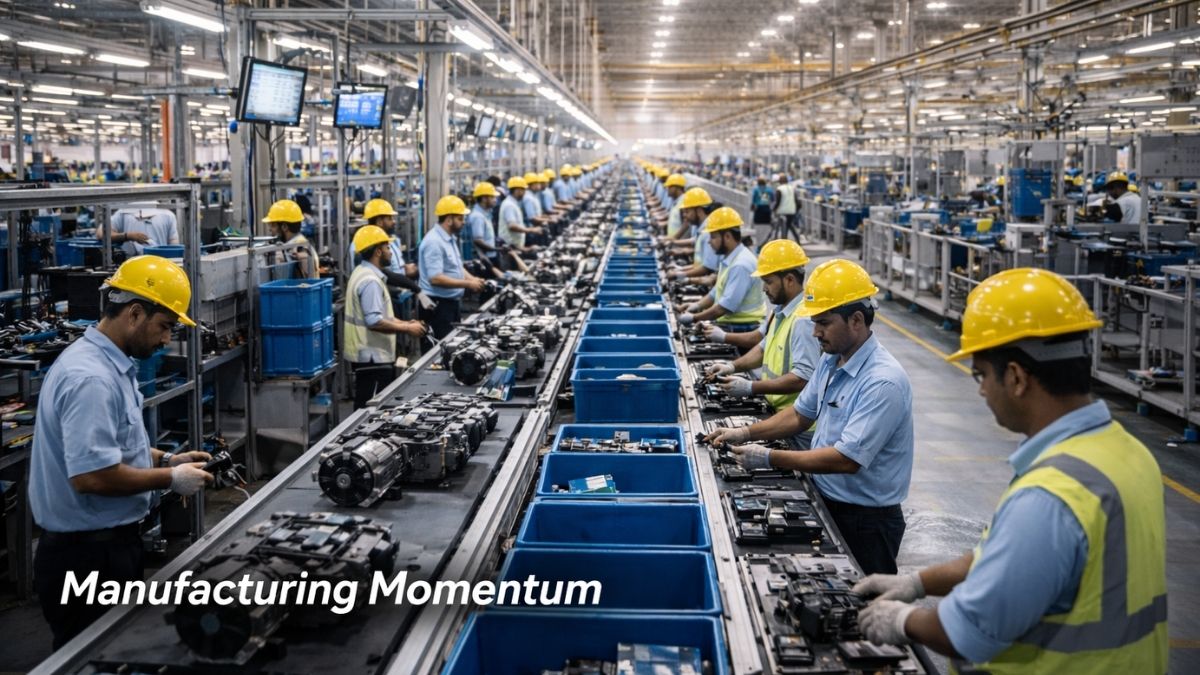
The manufacturing sector in India has seen improvement across multiple industries, including electronics, automobiles, pharmaceuticals, and capital goods. Factory utilisation levels have increased, while new orders and production schedules indicate sustained demand.
Industry leaders say domestic consumption, infrastructure spending, and export opportunities are collectively supporting output growth. Small and medium manufacturers, in particular, are benefiting from improved access to credit and digital supply chains.
India Manufacturing Growth Driven by Investment and Policy
The acceleration in India manufacturing growth reflects the combined impact of government industrial policy and rising private investment India. Incentive schemes, infrastructure upgrades, and regulatory simplification have encouraged companies to expand capacity and establish new production facilities.
Private Investment India Responds to Policy Stability
Private investment has shown renewed confidence as businesses gain clarity on long-term policy direction. Corporates are increasing capital expenditure, focusing on automation, energy efficiency, and technology upgrades to remain competitive.
Foreign companies are also expanding operations in India, viewing the country as an attractive manufacturing base amid shifting global supply chains.
Job Creation and Regional Impact
Manufacturing expansion is contributing to employment generation, particularly in industrial clusters and emerging manufacturing hubs. State governments are competing to attract investment by offering land, skilled labour, and faster approvals.
Experts say manufacturing-led job growth is critical for absorbing India’s expanding workforce and supporting inclusive economic development.
Challenges Remain Despite Positive Momentum
Despite progress, challenges persist. Rising input costs, skill gaps, and global demand fluctuations remain areas of concern for manufacturers. Logistics efficiency and energy availability also continue to influence production costs.
Industry associations have called for sustained policy support, workforce training, and stable trade policies to ensure long-term competitiveness.
Global Context Shapes Manufacturing Strategy
India’s manufacturing push is unfolding amid global economic uncertainty, supply chain realignments, and geopolitical shifts. As companies seek alternatives to concentrated production bases, India is positioning itself as a reliable and scalable option.
Analysts note that continued investment in infrastructure, ports, and logistics will be essential for translating manufacturing growth into export competitiveness.
According to international business and economic reporting, manufacturing expansion is increasingly seen as central to India’s growth strategy.
Outlook for India’s Manufacturing Sector
Looking ahead, economists expect manufacturing activity to remain resilient if domestic demand stays strong and investment momentum continues. Policy consistency, innovation, and skill development will play decisive roles in sustaining growth.
While external risks remain, the strengthening manufacturing base offers India a pathway to balanced and durable economic expansion.
Related: RBI Repo Rate Decision: Central Bank Holds Rates Amid Inflation and Growth Concerns
Related: Petrol Diesel Price Today in India: Latest Rates Across Major Cities