
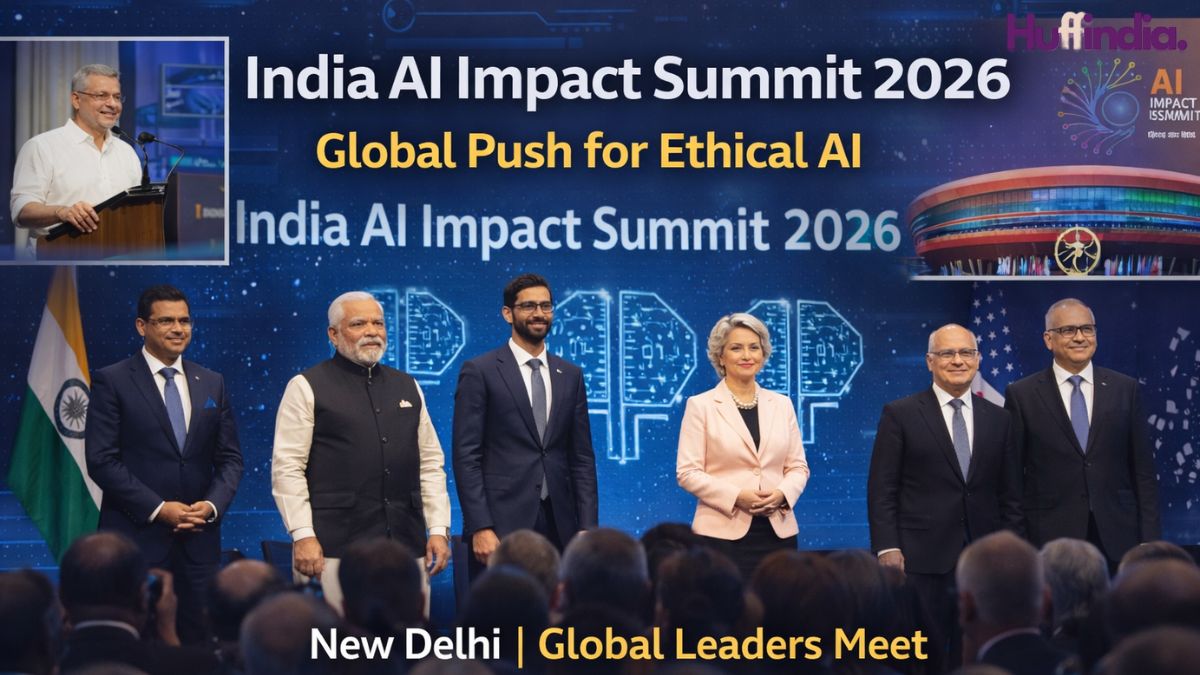



The India AI Impact Summit 2026 concluded in New Delhi with a strong emphasis on ethical innovation, cross-border cooperation and inclusive digital growth. The gathering brought together policymakers, global technology executives, researchers and startup founders to discuss the future direction of artificial intelligence.
The summit marked one of the largest international technology forums hosted in India this year, reinforcing the country’s expanding role in global AI governance and emerging tech diplomacy.
India AI Impact Summit 2026 Focuses on Inclusive AI Development
A central theme of the discussions was inclusive AI development, ensuring that technological advancement benefits wider sections of society. Participants highlighted the importance of transparency in algorithms, bias mitigation and regulatory safeguards.
At the Delhi AI conference, government officials outlined India’s approach to balancing innovation with accountability. They emphasized that AI applications in healthcare, agriculture and public services must align with ethical standards.
According to a Reuters technology briefing (https://www.reuters.com/technology), global AI regulation frameworks are evolving rapidly, with emerging economies contributing more actively to international policy conversations.
Technology policy analyst Dr. Kavita Rao observed:
“The India AI Impact Summit 2026 reflects India’s readiness to shape responsible AI governance while maintaining innovation momentum.”
Strengthening Global Collaboration
Delegations from Europe, Asia and North America engaged in dialogue on data governance, cybersecurity cooperation and cross-border AI research initiatives. The forum encouraged collaborative frameworks to address challenges posed by automation and algorithmic decision-making.
The AI global summit sessions highlighted how shared standards could help reduce regulatory fragmentation and enhance trust among nations.
Experts also stressed that inclusive AI development requires investments in education and workforce reskilling. India’s digital public infrastructure model was presented as an example of scalable, citizen-centric technology deployment.
Economic and Innovation Outlook
Industry observers say outcomes from the India AI Impact Summit 2026 could influence venture capital flows into India’s expanding AI ecosystem. Startup founders showcased applications in fintech, agritech, climate analytics and health diagnostics.
Participants discussed the importance of maintaining competitiveness while safeguarding data privacy. Policymakers reiterated that innovation should not outpace regulatory preparedness.
Professor Rohan Mehta, a specialist in technology governance, noted:
“India’s approach to digital inclusion gives credibility to its leadership in AI diplomacy. Responsible scaling is essential.”
The conference also addressed workforce adaptation, calling for public-private collaboration to strengthen AI literacy and professional training programmes.
Ethical Framework and Policy Signals
A recurring message during the summit was the need for coherent ethical frameworks. Delegates examined best practices for AI audits, explainability standards and consumer data protection.
Observers say that such high-level engagement signals India’s ambition to become a constructive participant in shaping global digital policy.
The India AI Impact Summit 2026 concluded with a joint statement encouraging sustained dialogue and coordinated action among participating countries.
Looking Ahead
Working groups formed during the event are expected to continue consultations in the coming months. Industry stakeholders believe the long-term impact of the summit will depend on how effectively commitments translate into implementation.
As artificial intelligence continues to transform economies worldwide, forums like this highlight the importance of balancing technological advancement with democratic safeguards.
The India AI Impact Summit 2026 ultimately underscores India’s growing confidence in contributing to global AI governance while promoting equitable digital progress.
Related: Sudha Murty Deepfake Warning Highlights Rising Threat of AI-Driven Misinformation
Related: Will ChatGPT replace the content writers job?