
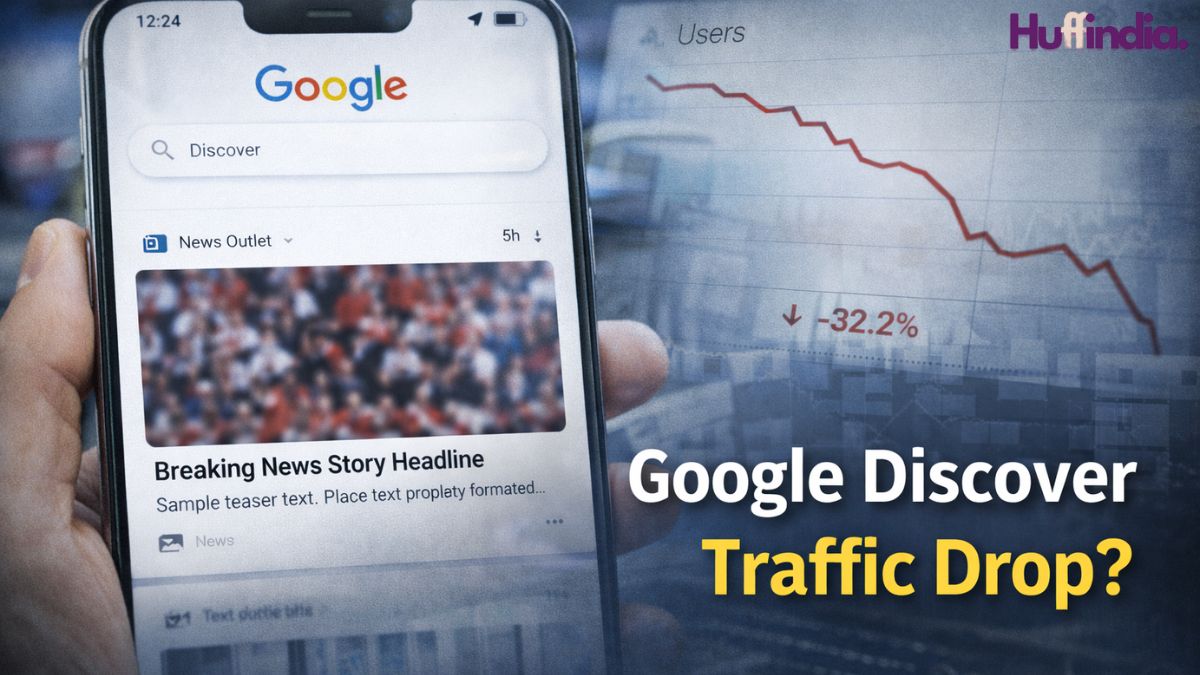



Google Discover traffic drop is a familiar and often frustrating experience for news publishers, particularly smaller and emerging websites. One day, articles attract thousands of impressions from Discover; the next, visibility declines sharply without any clear warning or notification.
This sudden Google Discover traffic drop frequently leads to confusion among publishers, many of whom suspect technical issues, penalties or algorithmic actions. However, media analysts and publishing experts note that Discover traffic behaves very differently from traditional Google Search, and abrupt declines are often part of how the system dynamically responds to user interest and engagement patterns.
What Is Google Discover and Why It Matters
Google Discover is a personalised content feed available on mobile devices, showing users articles based on interests rather than search queries. Unlike Search, Discover content is pushed proactively, making it a powerful source of traffic for news platforms.
According to Google, Discover prioritises freshness, relevance, user engagement and trust signals. This means even high-performing articles can lose visibility quickly once interest fades or user behaviour changes.
Why Google Discover Traffic Drops Suddenly
There are several common reasons behind a Google Discover traffic decline:
1. Content Freshness Has Expired
Discover strongly favours fresh and timely content. News articles often peak within hours or a few days. Once the topic loses momentum, Discover naturally reduces distribution.
2. Engagement Signals Fall
Click-through rate, reading time and user interaction heavily influence Discover visibility. If users stop engaging at the same rate, the system pulls back exposure.
3. Topic Saturation
When multiple publishers cover the same trending topic, Discover rotates sources. Smaller sites may see traffic drop once larger or more authoritative outlets are prioritised.
4. Trust and Authority Signals
Websites that lack consistent EEAT signals — such as author transparency, accurate sourcing and topical authority — may experience shorter Discover visibility windows.
Is It a Penalty or Algorithm Update?
In most cases, a news website traffic drop from Discover is not a penalty. Google has repeatedly clarified that Discover traffic is dynamic and experimental by nature.
While core algorithm updates can indirectly affect Discover visibility, sudden drops are more often linked to content performance rather than technical issues.
Common Mistakes That Reduce Discover Reach
Publishing experts identify several practices that limit Discover’s longevity:
- Overuse of clickbait headlines
- Rewriting the same topic repeatedly
- Thin content with little original value
- Reusing images across multiple articles
- Lack of author and publisher credibility signals
These factors can shorten the lifespan of Discover exposure.
How Publishers Can Recover Discover Traffic
While Discover traffic cannot be fully controlled, publishers can improve consistency by:
- Publishing original, timely explainers
- Using clear, honest headlines with emotional context
- Adding authoritative outbound links
- Maintaining consistent image styles (1200×675)
- Updating evergreen articles regularly
Focusing on quality rather than volume helps strengthen long-term Discover trust.
What Publishers Should Expect Going Forward
Discover traffic is inherently unpredictable. Publishers who rely solely on it may see sharp highs and lows. Media analysts recommend balancing Discover-focused content with evergreen search-driven articles to stabilise overall traffic.
Google itself advises publishers to “focus on creating content users find useful and engaging”, rather than attempting to game Discover distribution.
For official guidance on Discover best practices, publishers can refer to Google’s documentation.
Bottom Line
A sudden Google Discover traffic drop does not necessarily signal a problem with your website. In most cases, it reflects how Discover adapts to user interest, engagement and freshness. Publishers who understand this cycle — and plan content accordingly — are better positioned to recover and grow sustainably.
Related: Microsoft $17.5 Billion Investment in India
Related: Breathtaking Meta Phoenix AR Glasses to 2027: Major Setback for Next-Gen AR