

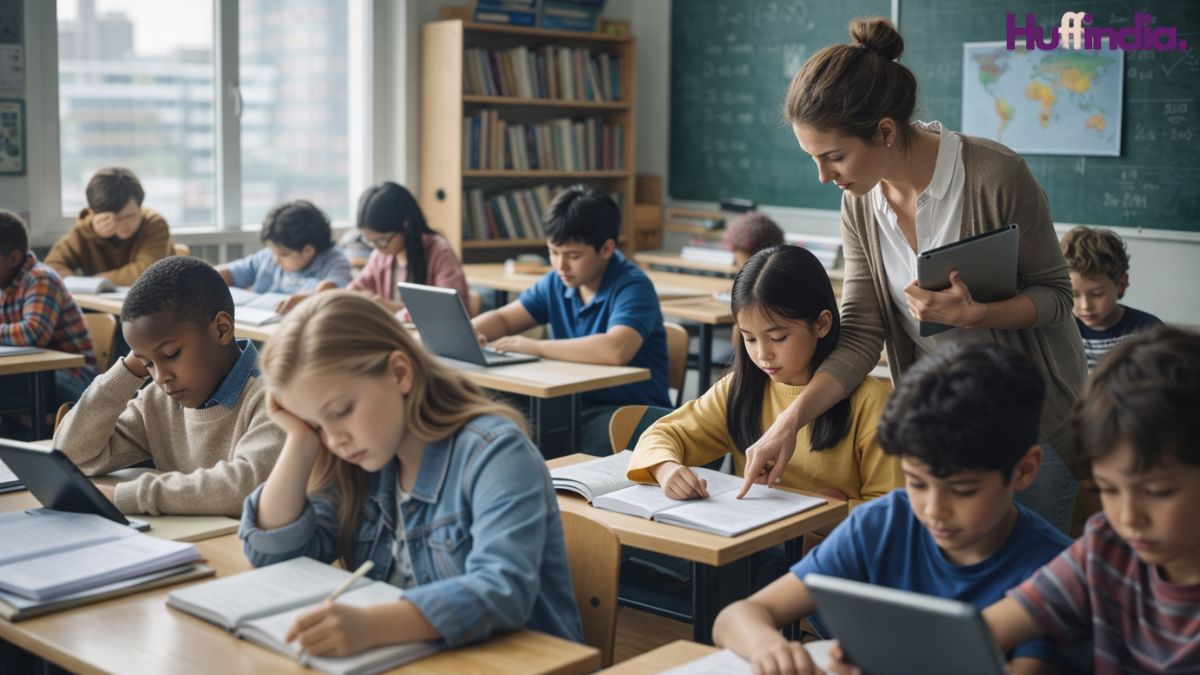
Global education systems are facing renewed pressure as schools and universities struggle to address widening learning gaps left in the wake of the COVID-19 pandemic. While classrooms have largely reopened across most regions, educators warn that academic recovery has been uneven, with millions of students still lagging behind expected learning levels.
Education experts say the challenge is no longer about reopening schools, but about rebuilding learning foundations that were disrupted by prolonged closures, remote instruction, and unequal access to digital resources.
Learning Gaps Expose Deep-Rooted Inequalities
The pandemic magnified existing education inequality, particularly in low-income communities and developing nations. Students without reliable internet access, digital devices, or supportive home environments experienced significant learning loss compared to their peers.
International assessments and national studies indicate that foundational skills in reading, mathematics, and science have declined in several countries. Teachers report that classrooms now contain wider skill disparities, making instruction more complex and resource-intensive.
Global Education Systems Confront Post-Pandemic Challenges
Addressing these gaps has become a priority for policymakers overseeing post-pandemic education strategies. Governments are rolling out remedial programs, curriculum adjustments, and extended learning hours to help students catch up.
Digital Learning Challenges Complicate Recovery Efforts
While technology played a critical role during school closures, ongoing digital learning challenges continue to affect recovery. Educators say that overreliance on screens has contributed to attention issues, reduced engagement, and uneven learning outcomes.
At the same time, schools lacking infrastructure struggle to integrate digital tools effectively, highlighting the need for balanced, inclusive approaches to technology in education.
Teachers Face Growing Pressure
Teachers are at the center of recovery efforts, often tasked with bridging learning gaps while managing larger class sizes and limited resources. Many educators report increased workloads as they adapt lesson plans to meet diverse student needs.
Teacher shortages in several regions have further strained education systems, raising concerns about burnout and long-term workforce sustainability.
Governments and Institutions Respond
In response, governments are increasing investment in education support programs, teacher training, and student assessments. Some countries are experimenting with targeted tutoring, summer learning initiatives, and data-driven interventions to accelerate progress.
Universities and vocational institutions are also reassessing admissions criteria and academic support services, recognizing that traditional benchmarks may not fully reflect students’ post-pandemic readiness.
According to Reuters’ global education and social policy coverage, experts emphasize that sustained investment and long-term planning are essential to reversing pandemic-era setbacks.
Students’ Well-Being Becomes a Key Focus
Beyond academics, student well-being has emerged as a central concern. Mental health challenges, social development delays, and reduced classroom interaction have affected learning outcomes.
Schools are increasingly integrating counseling services, peer support programs, and social-emotional learning into recovery strategies, acknowledging that academic success is closely linked to emotional stability.
The Road Ahead for Global Education
Experts caution that closing learning gaps will take years, not months. Progress will depend on coordinated efforts between governments, educators, families, and communities.
While setbacks are significant, the current moment also offers an opportunity to rethink education delivery, improve inclusivity, and build more resilient systems.
As global education systems adapt to post-pandemic realities, the focus remains on ensuring that no generation of learners is permanently left behind.
Related: Innovative Futures: Virtual Reality Classrooms in India
Related: AI Jobs in India: How Artificial Intelligence Is Changing Careers and Education