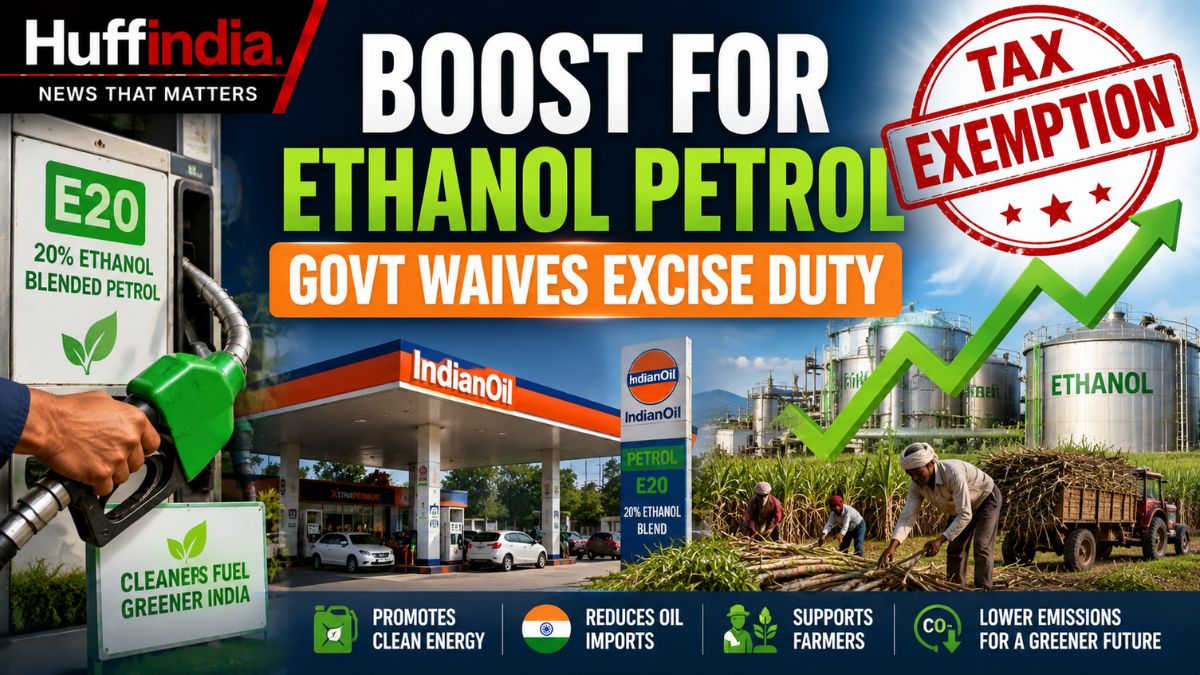



Ethanol Blended Petrol has received a significant policy push after the central government announced an exemption from central excise duty on petrol blended with higher levels of ethanol. The move applies to fuel containing between 22% and 30% ethanol and is being viewed as a major step toward accelerating India’s biofuel transition.
The decision comes as India continues efforts to reduce dependence on imported crude oil, strengthen energy security, support domestic agriculture, and lower carbon emissions through cleaner fuel alternatives.
Industry experts believe the latest measure could encourage fuel retailers, ethanol producers, and automobile stakeholders to increase participation in India’s expanding biofuel ecosystem.
Ethanol Blended Petrol Gets Tax Relief
The government’s latest notification exempts central excise duty on Ethanol Blended Petrol containing ethanol concentrations ranging from 22% to 30%.
The policy is expected to make higher ethanol blends more commercially attractive while encouraging greater adoption across the fuel supply chain.
Officials have repeatedly emphasized the importance of increasing ethanol blending levels as part of India’s long-term energy strategy. By reducing tax burdens on higher ethanol blends, policymakers hope to accelerate investments in production and distribution infrastructure.
The announcement is being seen as one of the most important policy measures aimed at expanding ethanol usage in transportation fuels.
Why Ethanol Blended Petrol Matters
The growing focus on Ethanol Blended Petrol is linked to multiple national objectives.
India remains one of the world’s largest importers of crude oil, making energy security a critical concern. Increasing ethanol blending helps reduce dependence on imported fossil fuels while promoting domestically produced alternatives.
Ethanol is primarily derived from agricultural feedstocks such as sugarcane, maize, and other biomass sources. This creates additional demand for agricultural produce while supporting rural economies.
The use of ethanol-blended fuels can also contribute to lower greenhouse gas emissions compared with conventional petrol.
Part of India’s Biofuel Strategy
The excise duty exemption aligns with India’s broader biofuel policy framework.
Over the past decade, the government has consistently promoted higher ethanol blending targets through incentives, procurement programs, and regulatory measures.
The country has already made significant progress toward increasing ethanol content in petrol sold across various regions.
The latest support for Ethanol Blended Petrol indicates that policymakers intend to move beyond earlier blending levels and encourage wider adoption of higher ethanol concentrations in the future.
Benefits for Farmers and Rural Economy
One of the key advantages of expanding Ethanol Blended Petrol production is its potential impact on agriculture.
Greater ethanol demand can create new markets for farmers supplying feedstocks used in biofuel production. Sugarcane growers, maize farmers, and agricultural processing industries could benefit from stronger demand and improved income opportunities.
Industry observers note that the ethanol program has increasingly become both an energy initiative and an agricultural support mechanism.
The policy may help strengthen rural economic activity while creating additional employment opportunities across the supply chain.
Environmental Advantages
Supporters of higher ethanol blending point to several environmental benefits.
Potential advantages include:
- Reduced dependence on fossil fuels
- Lower carbon emissions
- Improved energy diversification
- Greater use of renewable resources
- Support for sustainable transportation goals
The promotion of Ethanol Blended Petrol is therefore closely linked to India’s broader climate and sustainability objectives.
As governments worldwide seek cleaner energy solutions, biofuels continue to play an important role in the transition process.
Challenges Remain
Despite the policy support, industry experts caution that challenges remain.
Expanding higher ethanol blends requires:
- Adequate production capacity
- Reliable feedstock supply
- Distribution infrastructure
- Vehicle compatibility considerations
- Continued investment in fuel technology
Stakeholders will need to address these issues to ensure the long-term success of higher ethanol blending programs.
Nevertheless, the excise duty exemption is expected to improve the economic viability of future investments.
Impact on Fuel Industry
The latest announcement is likely to influence multiple segments of the fuel sector.
Oil marketing companies, ethanol producers, agricultural processors, and logistics providers may all benefit from increased demand for Ethanol Blended Petrol.
Industry analysts believe the measure could encourage additional private sector participation while supporting innovation in renewable fuel technologies.
The policy may also contribute to the development of a more diversified and resilient energy market.
What Happens Next?
Market participants will now watch how quickly the industry responds to the new incentive.
Key areas of focus include:
- Expansion of ethanol production
- Availability of higher ethanol blends
- Infrastructure development
- Consumer adoption rates
- Future government policy measures
The success of the initiative will likely depend on coordinated efforts between government agencies, fuel companies, and agricultural stakeholders.
For official information on India’s biofuel initiatives and energy policies, readers can visit the Ministry of Petroleum and Natural Gas website.
Final Thoughts on Ethanol Blended Petrol
The government’s decision to exempt central excise duty on higher blends of Ethanol Blended Petrol represents a significant step in India’s ongoing biofuel journey.
By making higher ethanol concentrations more attractive for producers and distributors, policymakers are signaling a strong commitment to cleaner fuels, energy security, and agricultural development. While implementation challenges remain, the move is expected to strengthen India’s transition toward a more sustainable and diversified energy future.
As the country continues pursuing ambitious renewable energy goals, Ethanol Blended Petrol is likely to play an increasingly important role in shaping the future of transportation and fuel consumption.
Also Read: India Fuel Demand Sees Strong Growth Despite Sharp LPG Consumption Decline