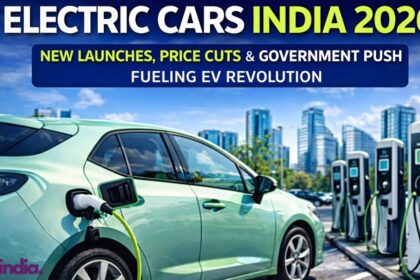
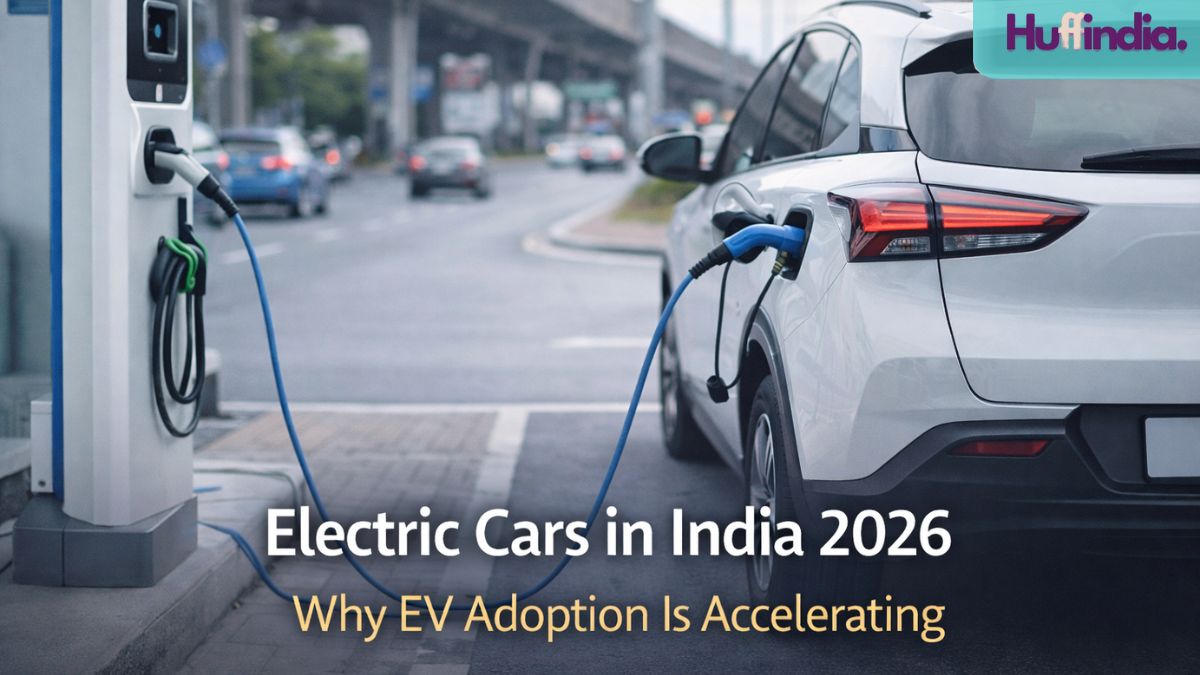



Electric cars in India 2026 are witnessing a sharp rise in adoption as improving charging infrastructure, falling battery costs, and expanding model choices push electric vehicles closer to the mainstream. What was once considered a niche segment is now emerging as a serious alternative to petrol and diesel cars, particularly in urban and semi-urban markets.
Automobile experts say the shift reflects changing consumer priorities, rising fuel costs, and growing confidence in electric mobility.
Electric Cars in India 2026: What Is Driving the Growth
Industry analysts point to multiple factors behind the rapid growth of electric cars in India 2026. Government incentives, lower running costs, and rising environmental awareness are encouraging buyers to consider EVs for daily commuting.
At the same time, automakers have expanded their electric portfolios, offering better driving range, improved safety features, and competitive pricing compared to earlier years.
Charging Infrastructure Is No Longer a Major Barrier
One of the biggest concerns for early EV buyers—charging availability—is gradually easing. Major cities now have public charging stations at malls, offices, highways, and residential complexes.
Experts say improved fast-charging networks are boosting confidence among buyers, making electric cars in India 2026 more practical for both city and intercity use.
Cost Advantage Over Petrol and Diesel Cars
While upfront prices of electric cars remain slightly higher in some segments, the overall cost of ownership is significantly lower. Electricity costs less than conventional fuels, and EVs require minimal maintenance due to fewer moving parts.
Automobile analysts note that over a 5-year period, electric vehicles often prove more economical than petrol or diesel counterparts.
Automakers Expanding EV Line-Ups
Leading car manufacturers in India are accelerating their EV strategies, launching new models across compact, mid-size, and premium segments. From affordable city cars to long-range electric SUVs, options are expanding rapidly.
This increased competition is expected to drive innovation, improve battery technology, and reduce prices further.
Government Policies Supporting EV Growth
Central and state governments continue to support electric mobility through subsidies, tax benefits, and infrastructure investments. Policy stability has played a crucial role in building trust among manufacturers and consumers.
For official updates on electric mobility initiatives and policies, the Ministry of Heavy Industries provides detailed information:
Challenges That Still Remain
Despite progress, challenges persist. Charging infrastructure in smaller towns remains limited, and long-distance travel still requires careful planning. Battery recycling and sustainability are also emerging concerns that policymakers and manufacturers must address.
However, experts believe these issues are transitional rather than structural.
What Buyers Should Know in 2026
Consumers considering EVs are advised to assess daily driving needs, home-charging feasibility, and warranty coverage. With battery technology improving rapidly, resale value and long-term reliability are also expected to strengthen.
Automobile experts say electric cars in India 2026 are no longer experimental—they are becoming a practical choice for a growing segment of buyers.
The Road Ahead
As India pushes toward cleaner mobility, electric vehicles are expected to play a central role in reducing emissions and fuel dependence. Analysts predict sustained growth in EV sales over the next few years, driven by technology, policy support, and consumer acceptance.
The momentum behind electric mobility suggests that EVs are moving from trend to transformation.
Related: India EV Charging Infrastructure Gets Boost as New Government Norms Take Effect
Related: What’s the Future of Electric Vehicles in India? Huffindia