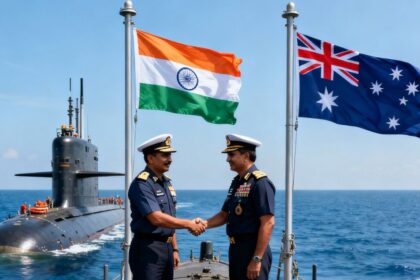




Diplomatic tensions are rising across key regions as major global powers reassess long-standing partnerships, signaling a period of recalibration in international relations. From shifting security commitments to renewed economic diplomacy, governments are adjusting foreign policy strategies in response to geopolitical uncertainty and evolving global power dynamics.
Recent high-level meetings among world leaders have underscored growing divisions on trade, defense cooperation, and regional influence, even as diplomatic engagement continues behind closed doors.
Global Alliances Face Strategic Reassessment
Traditional global alliances are increasingly under review as countries weigh national interests against collective security commitments. While formal treaties remain intact, analysts note that policy priorities are shifting in response to domestic pressures, economic constraints, and emerging security threats.
Some governments are seeking greater strategic autonomy, while others are strengthening bilateral ties outside established blocs. This recalibration reflects a broader effort to adapt to a multipolar world where influence is more widely distributed.
Diplomatic Tensions Shape International Relations
The rise in diplomatic friction is reshaping international relations, particularly in regions where rival interests overlap. Disagreements over military deployments, trade rules, and technological cooperation have added complexity to diplomatic negotiations.
Geopolitical Uncertainty Drives Policy Shifts
Ongoing geopolitical uncertainty has made long-term planning more difficult for policymakers. Conflicts, supply-chain vulnerabilities, and economic volatility have prompted governments to reassess exposure to external risks.
Diplomats say this uncertainty has accelerated discussions around diversification of partnerships, energy security, and defense preparedness.
Economic and Security Dimensions Intertwine
Foreign policy decisions are increasingly influenced by economic considerations. Trade dependencies, investment flows, and access to critical resources now play a central role in diplomatic calculations.
At the same time, security concerns remain paramount. Military cooperation agreements are being reviewed, expanded, or recalibrated as nations respond to evolving threat perceptions.
Experts note that this convergence of economic and security priorities has blurred traditional diplomatic boundaries, requiring more integrated policy approaches.
Regional Implications and Global Impact
The effects of shifting alliances are being felt across multiple regions. In Europe and Asia, governments are balancing commitments to collective defense with domestic political considerations. In emerging economies, leaders are navigating relationships with multiple major powers while safeguarding national interests.
These adjustments have implications for global governance institutions, where consensus-based decision-making has become more challenging amid diverging priorities.
According to Reuters’ global diplomacy coverage, officials emphasize that dialogue remains essential even as disagreements persist, underscoring the importance of sustained diplomatic engagement.
Diplomacy in a Multipolar Era
Analysts describe the current moment as a transition toward a more fragmented diplomatic landscape. While cooperation continues on shared challenges such as climate change and public health, competition is intensifying in areas tied to strategic influence.
This shift does not necessarily signal the collapse of existing alliances, experts caution, but rather an evolution in how countries define partnership and cooperation.
As diplomatic tensions continue to surface, policymakers are expected to prioritize flexibility and dialogue. Multilateral forums, bilateral talks, and confidence-building measures will play a critical role in preventing disputes from escalating into broader crises.
The coming months are likely to test the resilience of global diplomacy, as nations navigate a complex environment shaped by competition, cooperation, and uncertainty.
Related: Israel Hezbollah Conflict Escalates After Beirut Strike | Middle East Stability at Risk
Related: CAA notified : Applying for Citizenship under the 2019 Act Using the CAA Portal