
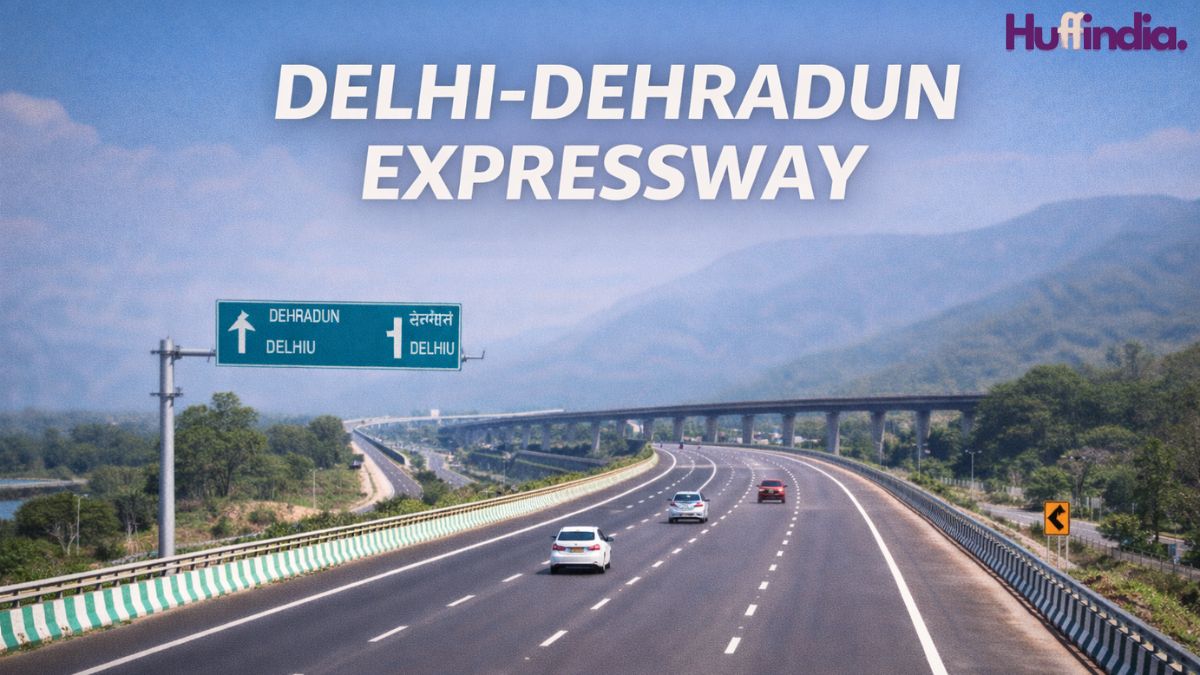



New Delhi: The long-awaited Delhi Dehradun Expressway is approaching completion, raising expectations of faster travel, improved safety, and a significant boost to regional connectivity between the national capital and Uttarakhand. Once fully operational, the expressway is expected to reduce travel time between Delhi and Dehradun from over six hours to nearly two-and-a-half hours, according to officials.
The project, seen as a major step in strengthening NCR infrastructure development, is part of the government’s broader push to modernise road networks and improve highway connectivity across north India.
Delhi Dehradun Expressway and Travel Time Reduction
A key highlight of the Delhi Dehradun Expressway is the sharp reduction in commute duration. Currently, travellers rely on congested highways and city roads, often facing delays due to traffic bottlenecks and urban crossings. The new access-controlled expressway is designed to offer seamless, high-speed travel with improved road safety features.
Officials say the expressway will ease pressure on existing routes while providing a reliable alternative for both private vehicles and commercial transport.
Strategic Importance and Design Features
The Dehradun expressway project spans multiple districts across Delhi, Uttar Pradesh, and Uttarakhand, integrating tunnels, elevated sections, and wildlife-sensitive zones. One of the project’s notable features is an elevated corridor designed to minimise environmental impact while ensuring uninterrupted traffic flow.
Authorities have emphasised that special measures were taken to balance infrastructure expansion with ecological concerns, particularly in forested stretches.
Economic and Regional Impact
Beyond faster travel, the expressway is expected to generate wider economic benefits. Improved highway connectivity north India could facilitate smoother movement of goods, support tourism, and enhance access to markets for businesses in smaller towns along the corridor.
Experts say reduced logistics costs and better connectivity often act as catalysts for regional development. Hospitality, real estate, and local commerce in and around Dehradun are expected to see increased activity once the expressway becomes fully operational.
Safety and Technology Integration
The expressway incorporates modern safety and monitoring systems, including CCTV surveillance, emergency response infrastructure, and intelligent traffic management. These measures aim to reduce accident risks and improve response times in case of emergencies.
Officials note that access-controlled highways typically record fewer accidents compared to conventional roads, provided traffic rules are strictly enforced.
Timeline and Current Status
According to the National Highways Authority of India (NHAI), the project is in its advanced stages, with several stretches already completed or nearing readiness. Final inspections, finishing work, and system testing are underway before phased opening.
While some delays were reported earlier due to land acquisition and environmental clearances, authorities say the project is now progressing steadily toward completion.
What It Means for Commuters
For daily commuters, tourists, and transport operators, the Delhi-Dehradun Expressway could mark a major shift in travel experience. Shorter journey times, smoother roads, and improved safety are expected to make travel between the two cities significantly more efficient.
As India continues to invest heavily in infrastructure, the expressway stands as a prominent example of how large-scale road projects can reshape regional mobility and economic activity.
Related: Delhi-Dehradun Expressway: A Milestone in Connectivity
Related: Domestic Travel in India Surges as Tourism Demand Strengthens Nationwide