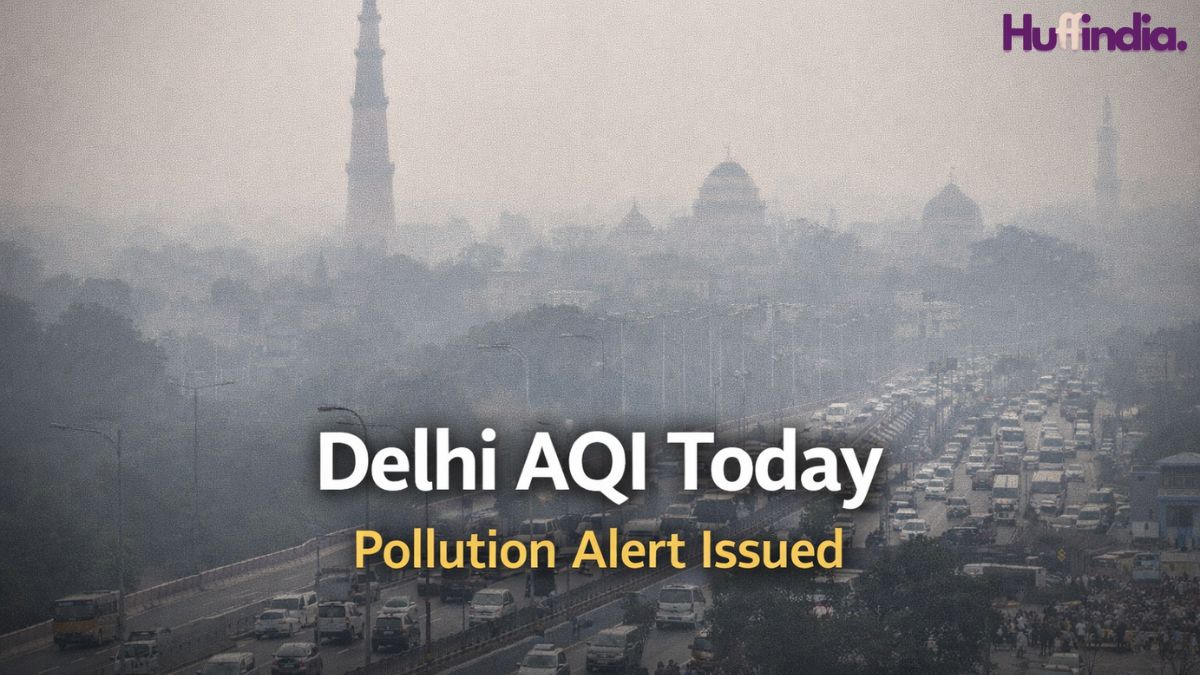



Delhi AQI Today 11th Feb 2026,, remains a pressing public concern as air pollution levels continue to fluctuate, prompting advisories from health and environmental experts. According to official monitoring data, the city’s air quality index has once again shifted into the “unhealthy” category in several districts, raising concerns among residents, schools, and outdoor workers.
The deterioration in air quality comes on the back of persistent emissions from traffic, construction activities, and lingering particulate matter influenced by weather patterns over the National Capital Region (NCR).
Delhi AQI Today: Current Levels and What They Mean
As of morning monitoring stations, parts of the capital recorded AQI values ranging from 200 to 310, categorised as “poor” to “very poor,” according to the Central Pollution Control Board (CPCB). These levels pose increased health risks, particularly for sensitive groups, including children, elderly citizens, and those with respiratory conditions.
Experts explain that prolonged exposure at these levels can cause discomfort in the eyes, throat, and lungs and can aggravate chronic conditions such as asthma and bronchitis.
Official air quality monitoring data for Delhi and other Indian cities can be accessed on the Central Pollution Control Board’s real-time portal.
Weather Patterns Contributing to Deterioration
Meteorologists say the current dip in air quality is linked to low wind speeds, stagnant atmospheric conditions, and relatively cooler night temperatures in Delhi and adjoining regions. These factors prevent the effective dispersal of pollutants, allowing fine particulate matter (PM2.5 and PM10) to accumulate close to ground level.
The India Meteorological Department (IMD) has observed that the western disturbance lingering over North India is affecting wind patterns and moisture levels, further contributing to pollution build-up in the region.
Health Advisory Issued for Residents
Health officials have issued a Delhi AQI Today 11th Feb 2026, urging residents to take precautionary steps. The recommendations include:
- Avoid outdoor exercise during early morning and late evening hours
- Use masks rated for particulate protection when outside
- Keep windows and doors closed, especially in areas with high traffic
- Children, the elderly, and those with lung or heart conditions should limit prolonged outdoor exposure
Doctors emphasise that even physically fit individuals may experience symptoms such as irritation, coughing, or shortness of breath when exposed for extended periods.
Impact on Schools and Daily Life
Several schools in the city have reportedly modified outdoor activities for students, including postponing morning sports sessions. Parents are being advised to monitor their children’s outdoor playtime and ensure regular hydration.
Commuters have also noticed haze over roads and highways, with reduced visibility impacting vehicular movement at certain stretches during peak hours.
Government and Civic Measures
In response to the recurring pollution challenge, municipal authorities have activated several mitigation measures:
- Increased water sprinkling on major roads
- Restrictions on heavy vehicle movement during peak pollution hours
- Enhanced monitoring by mobile AQI sensors across the NCR
However, environmentalists argue that enforcement of these measures needs to be sustained and coupled with long-term strategies such as cleaner fuel adoption, better public transport, and stronger industrial emissions control.
Long-Term Strategies Experts Recommend
Environmental researchers and public health specialists have reiterated the need for broader, systemic solutions to improve air quality in Delhi:
- Promoting electric and low-emission vehicles
- Strengthening public transport infrastructure
- Expanding green cover and urban forestry
- Strict regulation on construction dust and industrial emissions
- Public awareness campaigns on pollution reduction
Experts argue that while daily advisories provide short-term relief, structural reforms are essential for lasting air quality improvement.
Comparison with Nearby Cities
In comparison to Delhi’s air quality, some neighbouring cities in the NCR, such as Noida and Gurugram, also reported similar trends, though localised meteorological conditions led to slight variations in AQI readings. Each area’s microclimate and traffic density contribute to real-time shifts in pollution levels.
Related: Jammu Weather Today (Feb 10, 2026): IMD Warns of Rain, Thunderstorms
Related: Master India Sudden Weather Changes: Why Multiple States Are on Alert