
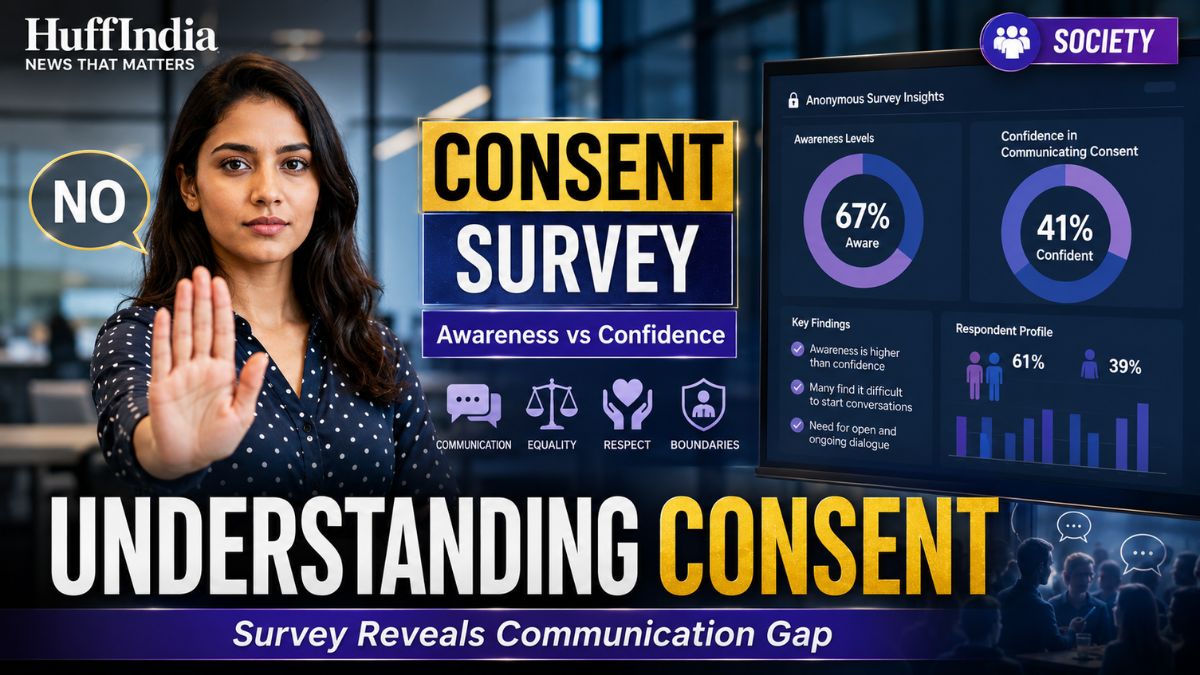



Consent survey findings have sparked fresh discussion about how people understand and communicate personal boundaries. According to the survey, while a large majority of women respondents agreed with the statement “no means no,” fewer said they felt comfortable expressing refusal directly in certain situations.
The survey also found differences between understanding the concept of consent and feeling able to exercise that right in practice. These findings represent the views of the survey participants and should not be interpreted as applying to all women or the wider population.
Consent Survey Finds Strong Awareness of “No Means No”
According to the consent survey, 79% of respondents agreed that “no means no,” indicating broad awareness of the principle of consent.
However, the survey suggests that awareness alone does not always translate into confidence when responding to real-life situations.
Researchers and social experts have long noted that personal, cultural and social factors can influence how individuals communicate boundaries.
Many Respondents Said They Find It Difficult to Refuse Directly
The consent survey reported that 56% of respondents said they could directly say “no” when they wanted to refuse.
Meanwhile, 41% indicated they often avoided refusing outright, suggesting that some people may find direct communication challenging in certain circumstances.
The survey did not establish why respondents felt this way, and individual experiences may differ significantly.
Views on Consent Given Under Pressure
Another finding from the consent survey showed that 36% of respondents believed consent given under pressure should not be considered valid.
Experts in law, psychology and gender studies generally emphasise that genuine consent should be given freely and voluntarily, without coercion or undue pressure.
The survey highlights continuing discussions around awareness, communication and education regarding consent.
Also Read | Psychology of Not Wearing Jewellery: What Your Preference May Reveal
Why Communication Matters
Many educators and advocacy organisations stress that understanding consent involves more than knowing the definition.
Open communication, respect for personal boundaries and mutual understanding are often considered important elements of healthy relationships.
The survey findings suggest there may still be a gap between recognising these principles and feeling confident enough to apply them in everyday situations.
Survey Results Reflect Participant Responses
It is important to recognise that opinion surveys measure the views of those who participated.
The consent survey provides insight into respondents’ experiences and perceptions at the time it was conducted, but it does not necessarily represent the views or experiences of the entire population.
Broader conclusions require additional research across diverse groups and settings.
Information about respectful relationships and violence prevention is available from the World Health Organization (WHO).
Final Words
The consent survey has contributed to an ongoing conversation about awareness, communication and personal boundaries.
While many respondents indicated they understood that “no means no,” the survey also suggests that expressing refusal confidently may remain challenging for some people. The findings underline the importance of continued education, respectful communication and awareness around consent in different social settings.