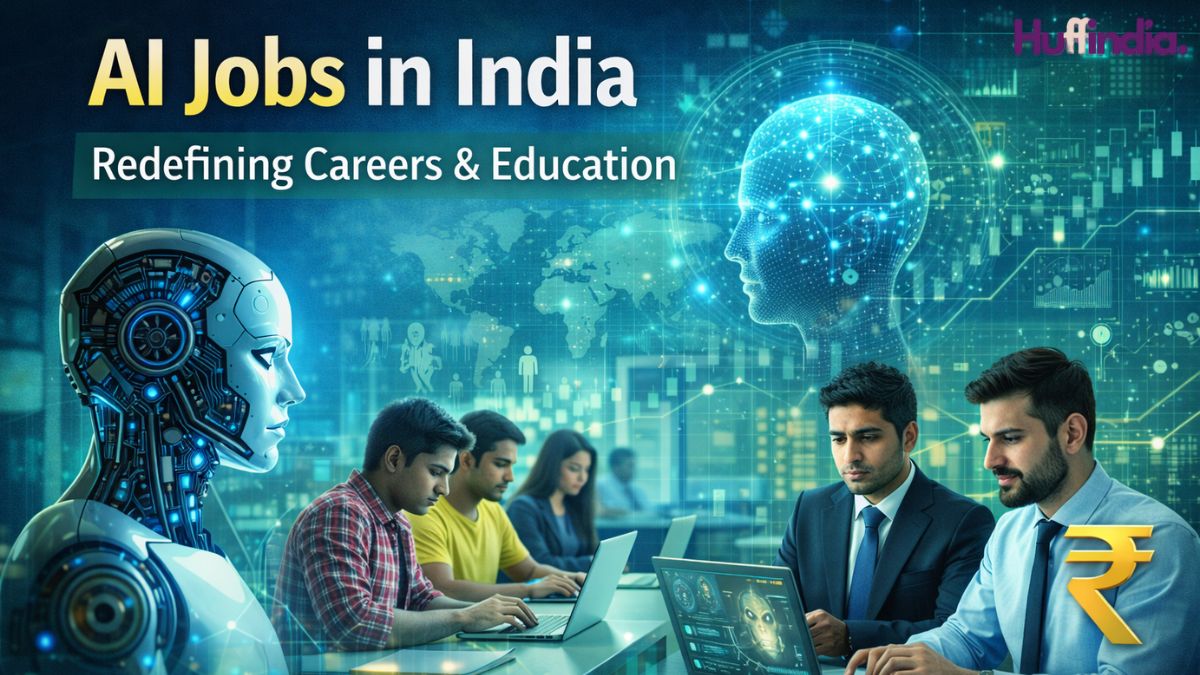



AI jobs in India are no longer limited to elite tech companies or research labs. Artificial intelligence is steadily reshaping how Indians study, work, and build careers, often in ways that go unnoticed outside professional circles. From classrooms to corporate offices, AI is emerging as a defining force in the country’s employment and education landscape.
As automation and data-driven systems expand, the demand for AI-related skills is growing across sectors such as healthcare, finance, manufacturing, education, and public administration.
Why AI Jobs Are Growing Rapidly in India
India’s digital economy has created fertile ground for AI adoption. A large technology workforce, an expanding startup ecosystem, and increased investment in digital infrastructure have accelerated demand for skilled professionals.
Industry analysts note that AI jobs in India are being created not only by tech giants but also by traditional companies integrating automation, analytics, and machine learning into everyday operations. Roles such as data analysts, AI trainers, automation specialists, and prompt engineers are becoming increasingly common.
Unlike previous technology waves, AI is influencing both white-collar and operational roles, making its impact broader and more complex.
Education Systems Are Adapting Slowly
To meet industry demand, educational institutions are revisiting curricula. Engineering colleges, universities, and private training platforms are introducing courses focused on artificial intelligence, machine learning, and data science.
However, experts warn that the gap between academic learning and real-world application remains a challenge. While interest in artificial intelligence education India is rising, consistent standards and practical exposure are still evolving.
Skill-based certifications, online learning platforms, and industry partnerships are playing a growing role in preparing students for AI-driven roles.
Impact on Traditional Careers
The rise of AI has raised concerns about job displacement, particularly in repetitive and process-driven roles. Yet labour economists suggest that while some tasks may disappear, new categories of employment are also emerging.
Jobs that combine domain expertise with AI tools—such as healthcare diagnostics, financial risk assessment, and supply chain optimisation—are expanding. This shift is redefining what employability means in the future of work India.
Rather than replacing humans entirely, AI is increasingly being used as a decision-support tool, augmenting productivity across professions.
Government and Policy Perspective
India’s policymakers are paying closer attention to AI’s workforce impact. Discussions around digital skilling, reskilling, and ethical AI use are becoming part of broader employment and education strategies.
Government-backed initiatives focused on emerging technologies aim to ensure that India remains competitive globally while protecting workforce stability.
For global context on how AI is reshaping employment worldwide, insights from the World Economic Forum offer a comparative view:
Opportunities and Challenges Ahead
While the growth of AI jobs in India presents opportunities, challenges persist. Access to quality training, regional disparities, and affordability of advanced education could limit participation for many aspirants.
Experts emphasise the importance of inclusive skill development models that extend beyond metropolitan centres. Without this, the benefits of AI-led growth may remain unevenly distributed.
At the same time, businesses face their own challenges—finding talent with both technical expertise and ethical awareness remains difficult.
The Road Forward
As AI becomes embedded in daily workflows, adaptability will be the most valuable skill. Continuous learning, interdisciplinary knowledge, and critical thinking are expected to define successful careers in the coming decade.
For India, the AI transition represents both an opportunity and a test. The country’s ability to align education, industry, and policy will determine whether AI becomes a driver of inclusive growth or a source of workforce disruption.
What is clear is that AI is no longer a future concept; it is already shaping how Indians learn, work, and compete in a global economy.
Related: AI Revolution in Industries: How AI is Revolutionizing Healthcare, Finance, and Education in 2025
Related: Amazon $35 Billion Investment in India | Major Boost for AI Jobs