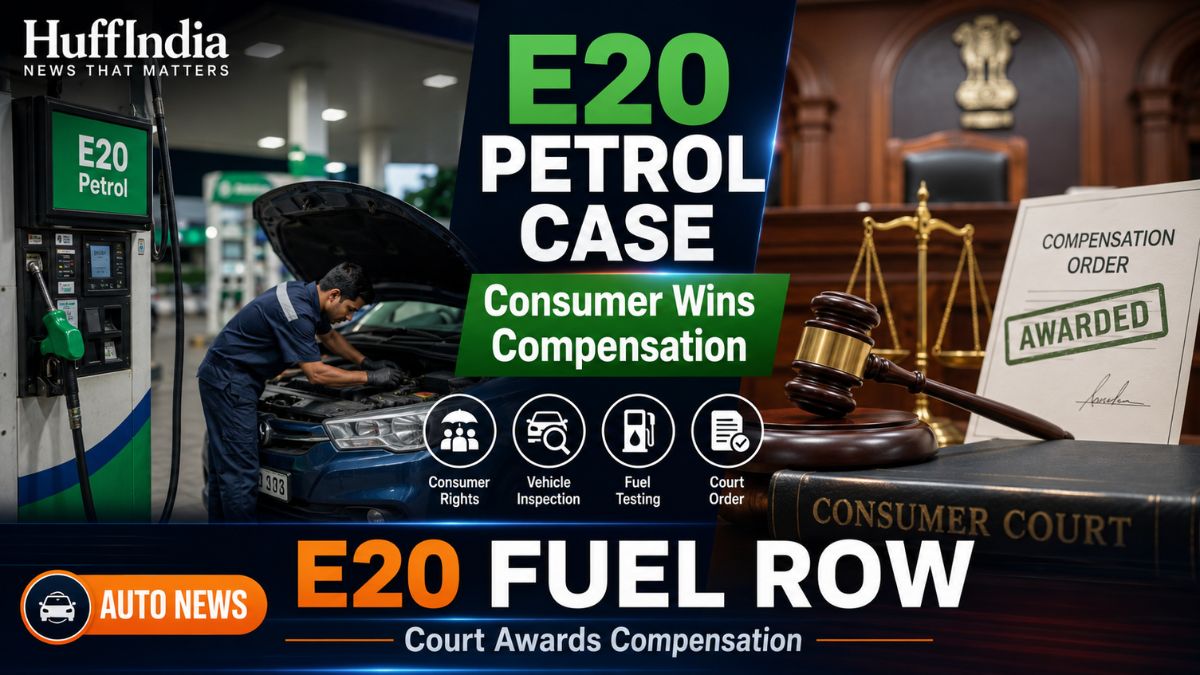



E20 petrol consumer court proceedings have drawn attention after a consumer commission in Raipur awarded compensation to a vehicle owner in a case involving alleged engine damage linked to E20 petrol. The commission directed the concerned parties to reimburse repair expenses and pay compensation after examining the facts presented during the proceedings.
The decision relates to the specific facts of this individual case and should not be interpreted as a finding that E20 petrol generally causes engine damage. Vehicle performance can be influenced by several factors, and the ruling applies only to the dispute before the consumer commission.
E20 Petrol Consumer Court: What the Case Was About
According to the consumer complaint, the vehicle owner alleged that engine problems developed after using E20 petrol. The owner approached the consumer commission seeking reimbursement for repair costs and compensation.
After hearing the matter, the consumer court ruled in favour of the complainant and ordered payment towards repair expenses along with compensation and litigation costs, based on the evidence and circumstances presented in the case.
The order pertains only to this dispute and does not amount to a general ruling on E20 fuel.
E20 Petrol Consumer Court: Compensation Ordered
The E20 petrol consumer court order directed the concerned parties to compensate the vehicle owner for repair expenses incurred due to the dispute, along with additional compensation as specified in the order.
The commission’s decision followed proceedings conducted under consumer protection law. Parties retain legal remedies available under applicable law, including appeal, where permissible.
What Is E20 Petrol?
E20 petrol is a fuel blend containing 20% ethanol and 80% petrol. The Government of India has been promoting ethanol blending to reduce dependence on imported crude oil, lower emissions and support domestic biofuel production.
Automobile manufacturers have also been introducing E20-compatible vehicles as the rollout of ethanol-blended fuel expands across the country.
However, experts generally advise vehicle owners to follow manufacturer recommendations regarding fuel compatibility.
Why the Ruling Has Drawn Attention
The E20 petrol consumer court decision has generated interest because it is among the reported consumer disputes involving alleged engine damage linked to ethanol-blended fuel.
Legal experts note that consumer commission orders are decided on the basis of the evidence presented in each individual case. Such orders should not automatically be interpreted as establishing that every similar complaint would receive the same outcome.
Also Read | E20 Petrol Survey: Most Respondents Want Choice Between E20 and Regular Fuel
What Vehicle Owners Should Know
Automobile experts generally recommend that owners:
- Use the fuel grade recommended by the vehicle manufacturer.
- Follow the maintenance schedule provided in the owner’s manual.
- Preserve fuel bills and service records.
- Report unusual engine issues promptly to authorised service centres.
If disputes arise regarding vehicle defects or repairs, consumers may seek remedies available under the Consumer Protection Act through the appropriate legal process.
Government’s Ethanol Blending Programme Continues
India’s ethanol blending programme remains an important part of the country’s energy transition strategy aimed at reducing fossil fuel dependence and increasing the use of biofuels.
The consumer commission’s order relates to a specific complaint and does not alter the broader policy framework governing ethanol blending.
Readers can learn more about India’s ethanol blending programme on the Ministry of Petroleum and Natural Gas website.
Final Words
The E20 petrol consumer court ruling in Raipur highlights how consumer disputes involving vehicle repairs are assessed on the facts and evidence of individual cases.
While the commission awarded compensation to the complainant in this matter, the decision should not be viewed as a general conclusion regarding E20 petrol or its suitability for all vehicles. Vehicle owners are advised to follow manufacturer guidelines and rely on authorised service centres for technical advice regarding fuel compatibility.