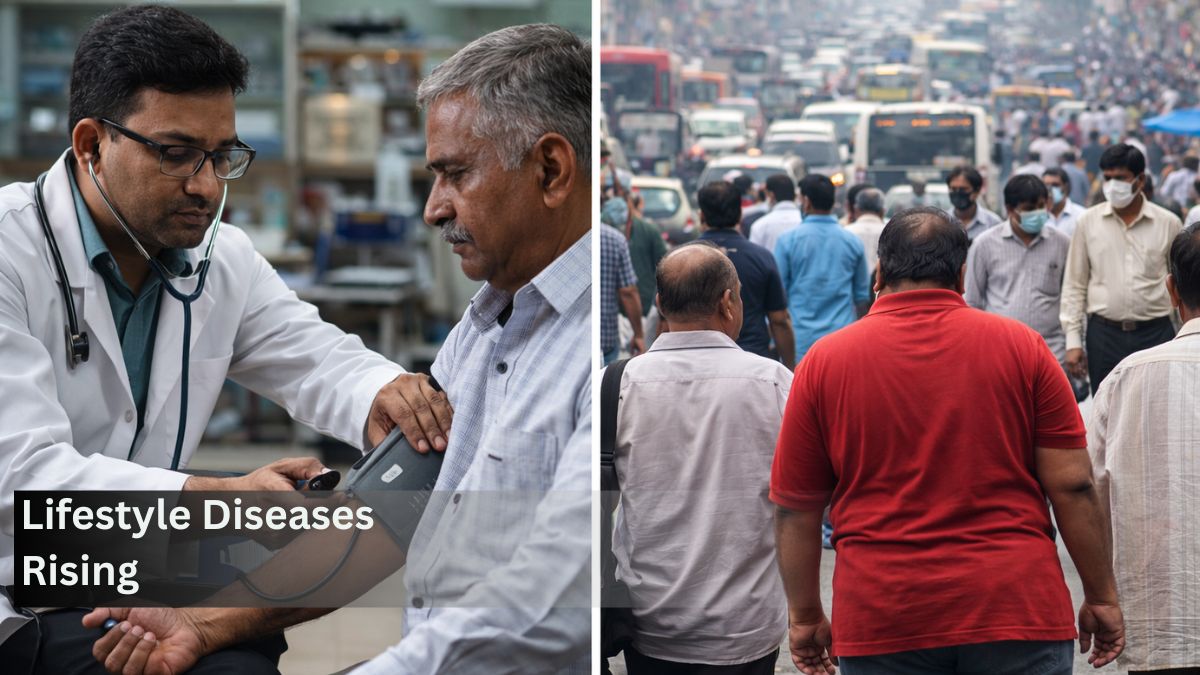



Lifestyle diseases in India are emerging as one of the country’s most serious public health challenges, with medical experts warning that conditions such as diabetes, heart disease, and obesity are rising rapidly across both urban and rural populations. Health professionals say the trend reflects changing lifestyles, dietary habits, and reduced physical activity, placing long-term pressure on India’s healthcare system.
Recent health data and expert assessments indicate that non-communicable diseases are now responsible for a growing share of hospital admissions and premature deaths, overtaking many traditional infectious illnesses.
Changing Lifestyles Drive Health Risks
Doctors attribute the surge largely to sedentary routines, increased consumption of processed foods, and high stress levels linked to modern work patterns. Urban areas were once considered the epicenter of lifestyle-related illnesses, but rural regions are now witnessing similar trends due to changing food habits and reduced physical labor.
Medical practitioners note that younger age groups are increasingly being diagnosed with conditions that were once more common among older adults, raising concerns about long-term productivity and quality of life.
Lifestyle Diseases in India and the Public Health Challenge
The rise of lifestyle diseases in India presents a complex public health challenge, as these conditions often require lifelong management rather than short-term treatment. Unlike infectious diseases, lifestyle-related illnesses place sustained demands on healthcare infrastructure, medication supply, and specialist care.
Diabetes and Heart Disease Drive Health Burden
Among the most concerning trends is the rise in diabetes cases in India, with doctors warning that poor dietary habits and lack of early screening are accelerating the problem. Similarly, heart disease in India remains a leading cause of mortality, often linked to high blood pressure, smoking, and physical inactivity.
Experts stress that many cases go undetected until complications arise, making prevention and early diagnosis critical.
Economic and Social Impact
The growing health burden in India extends beyond hospitals. Chronic illness affects household finances, workforce participation, and national productivity. Families often face long-term medical expenses, while employers report increased absenteeism linked to health issues.
Health economists warn that without effective preventive strategies, lifestyle diseases could significantly increase healthcare spending over the next decade.
Government and Health System Response
Authorities have acknowledged the rising threat and are promoting initiatives focused on preventive care, early screening, and public awareness. Campaigns encouraging physical activity, balanced diets, and routine health check-ups are being rolled out through public health programs.
However, experts argue that awareness alone is not enough. Stronger primary healthcare systems, improved access to diagnostics, and sustained community-level interventions are needed to curb the trend.
According to reporting on India’s health challenges, specialists emphasize that lifestyle disease prevention must become a national priority rather than an individual responsibility.
Role of Awareness and Early Intervention
Doctors highlight that many lifestyle diseases are preventable through early lifestyle changes. Regular exercise, reduced sugar and salt intake, stress management, and routine screenings can significantly lower risk.
Schools, workplaces, and local communities are increasingly being viewed as critical spaces for intervention, particularly in reaching younger populations.
Public health experts warn that if current trends continue unchecked, lifestyle diseases could overwhelm healthcare systems already managing infectious diseases and aging populations. The challenge lies in shifting focus from treatment to prevention — a transition that requires coordinated action from policymakers, healthcare providers, and citizens.
For now, the rise of lifestyle diseases stands as a reminder that India’s health challenges are evolving, demanding equally adaptive and forward-looking solutions.
Related: Global Burnout Crisis Grows as Work-Life Balance Reaches a Breaking Point
Related: Global Health Alert as Respiratory Illnesses Rise Across Regions