
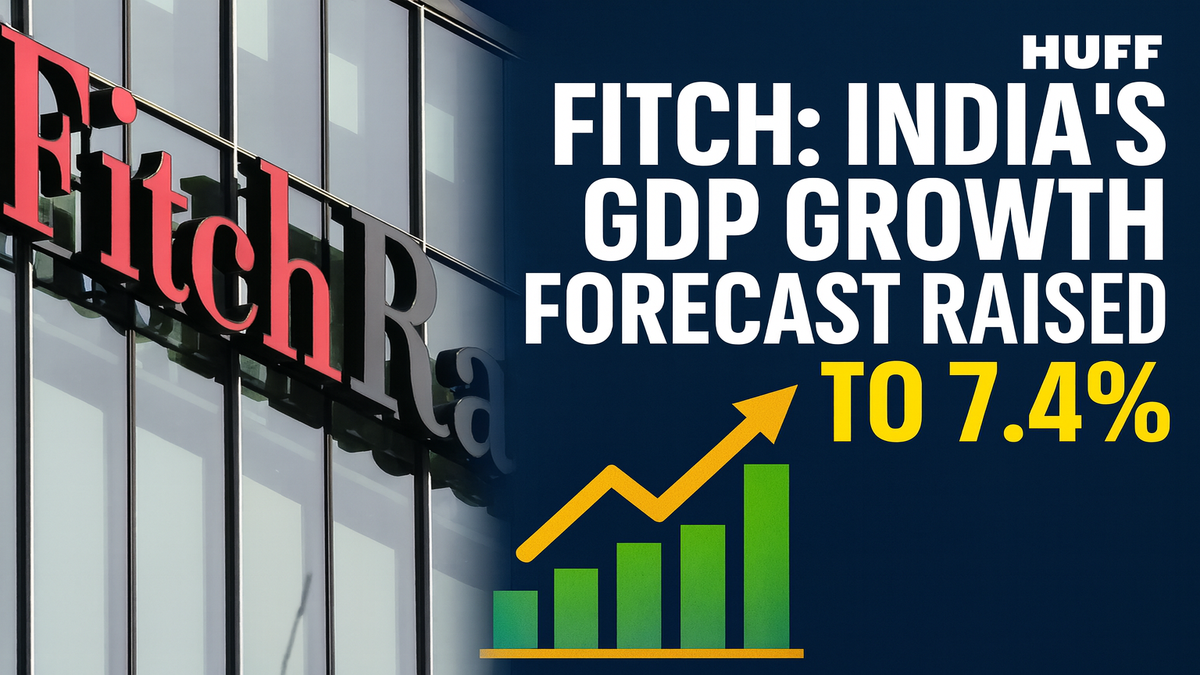



In a major boost to investor confidence, Fitch India Growth Forecast for FY26 has been upgraded to 7.4%, up from the earlier projection of 6.9%. The global credit ratings agency cited strong household spending, improving real incomes, and the momentum generated by recent GST reforms as key reasons for the upgraded outlook.
(Source link: Reuters report)
This upward revision positions India firmly as one of the world’s fastest-growing major economies, even amid global economic slowdowns and geopolitical uncertainties. The new Fitch FY26 projection reflects India’s resilience and expanding domestic demand, which have consistently outperformed market expectations in 2024 and 2025.
Consumption Boom is Driving India’s Growth
According to Fitch, India consumption growth is now the primary engine of economic expansion. Rising real wages, a recovery in rural markets, and robust services activity have amplified domestic demand.
Higher disposable incomes, particularly in urban centres, have boosted sectors like retail, consumer electronics, automobiles and services. The India GDP Growth 2025 outlook also benefits from large-scale hiring in technology, banking and organised retail, generating greater purchasing power among middle-income households.
GST reforms—especially simplified filings and faster refund mechanisms—have enhanced business efficiency, leading to smoother supply chains and increased market participation from small and medium enterprises.
Capital Expenditure Momentum Continues
Government-led capital expenditure remains a significant contributor to India’s robust economic trajectory. Massive investments in highways, renewable energy, logistics parks, metro infrastructure and manufacturing hubs have amplified job creation and enhanced economic multiplier effects.
Private sector investments are also gaining pace, supported by global companies shifting supply chains to India. Sectors such as semiconductor manufacturing, electric mobility, solar components and defence production continue to attract strong inflows.
This sustained rise in investments aligns with the positive India economic outlook reflected in Fitch’s upgraded forecast.
🇮🇳 Inflation Stable, But Risks Remain
While the economic environment is largely positive, Fitch warns that inflation remains a risk. Volatility in food prices and global crude oil fluctuations could pressure household budgets in coming months.
However, the Reserve Bank of India’s cautious monetary stance and gradual liquidity management offer stability. A moderate inflation environment supports long-term growth and maintains confidence among businesses and consumers.
Global Slowdown Not Expected to Derail India
Many global economies are expected to grow at significantly slower rates in 2025–26 due to tightening financial conditions and geopolitical tensions. Despite this, India is projected to remain resilient.
Strong domestic demand, expanding manufacturing capacity, rising exports in services, and digital-sector growth underpin the India GDP Growth 2025 narrative. India’s unique economic structure—built on consumption, technology and expanding infrastructure—provides insulation from global shocks.
What the Upgrade Means for India
The revised Fitch India Growth Forecast has far-reaching implications:
- Boosts investor confidence in Indian markets
- Encourages foreign investment and long-term portfolio inflows
- Strengthens India’s fiscal positioning
- Enhances creditworthiness and economic stability
- Signals strong demand outlook for industries
For households, this projection indicates rising employment opportunities, stable incomes, and an improving economic environment.
Conclusion: India Strengthens Its Position as a Global Growth Leader
With the Fitch FY26 projection revised upward to 7.4%, India continues to reinforce its status as a global economic powerhouse. Strong consumption, resilient services growth, stable inflation management, and a rising investment cycle position India favorably for sustained expansion.
As the world navigates uncertain economic waters, India’s robust fundamentals ensure that its growth story remains one of the most compelling narratives of 2025–26.
Related: IPO 2025 India Boom Ignites Market Frenzy
Related: Exciting Growth: Lululemon India Expansion Ahead!