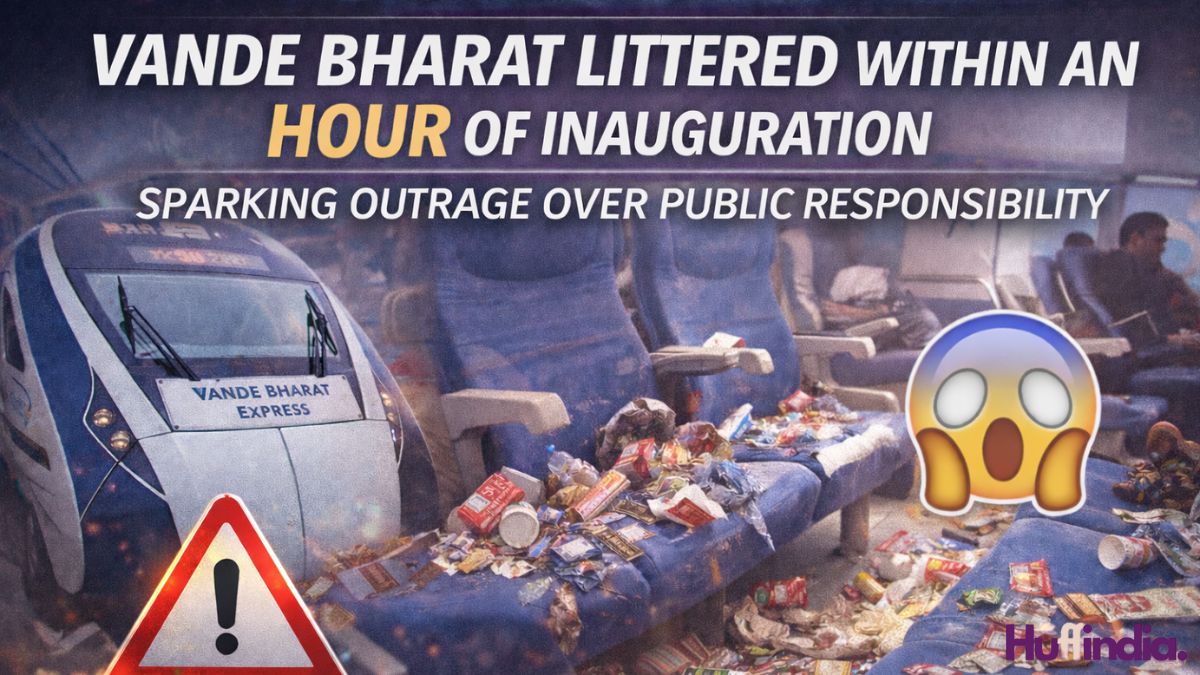



New Delhi: A case of Vande Bharat littering reported barely an hour after the inauguration of a newly launched service has sparked widespread concern over railway passenger behaviour and the upkeep of premium public infrastructure. Visuals circulating on social media showed food wrappers, disposable cups and other waste strewn inside the coach, undermining the image of the semi-high-speed train that has been positioned as a symbol of Indian Railways’ modernisation drive.
Railway officials confirmed that the coach had been handed over in a clean condition following the inauguration. The rapid deterioration of cleanliness, they said, points not to gaps in infrastructure but to a deeper issue of civic responsibility and public property misuse that India continues to grapple with.
Railways React to Vande Bharat Littering Incident
Responding to the Vande Bharat train incident, Indian Railways officials described the situation as “disappointing” and reiterated that maintaining cleanliness onboard is a shared responsibility between authorities and passengers. The Vande Bharat fleet is equipped with multiple dustbins, regular onboard housekeeping schedules and audio announcements encouraging passengers to dispose of waste responsibly.
“Modern trains alone cannot ensure cleanliness. Behavioural change is equally important,” a senior railway official said, adding that repeated misuse damages public assets and increases maintenance costs.
Officials said housekeeping staff were deployed soon after the incident, but the speed at which litter accumulated raised concerns about enforcement and deterrence.
Social Media Outrage and Public Debate
Images of the littered coach quickly went viral, drawing sharp reactions from commuters, civil society voices and transport experts. Many users questioned how a train inaugurated with much fanfare could be neglected so quickly, while others argued that stricter penalties were needed to curb Vande Bharat littering and similar behaviour on other premium trains.
Some passengers suggested deploying onboard marshals or increasing CCTV monitoring to discourage irresponsible conduct. Others emphasised the need for sustained awareness campaigns to address railway passenger behaviour, rather than relying solely on punitive measures.
Cleanliness Standards and Enforcement Challenges
Indian Railways has invested heavily in cleanliness initiatives under the Swachh Bharat mission, introducing mechanised cleaning, bio-toilets and dedicated housekeeping contracts on premium services. Despite these efforts, officials acknowledge that enforcement remains challenging, particularly on trains with high passenger turnover.
Under existing railway rules, passengers found littering can be fined, but enforcement depends on real-time monitoring and reporting. Experts say the Indian Railways cleanliness challenge reflects a broader issue seen across public transport systems in urban India.
“Clean infrastructure can deteriorate rapidly if users do not feel collective ownership,” said a transport policy analyst. “Vande Bharat trains are technologically advanced, but they still operate within the same social environment.”
Broader Implications for Public Infrastructure
The incident has reignited a larger debate on public property misuse India faces across sectors, from trains and buses to roads and public spaces. Analysts note that flagship projects often attract greater scrutiny, making lapses more visible and reputationally damaging.
Given the premium branding of Vande Bharat services, even isolated cases of Vande Bharat littering risk overshadowing broader progress in railway modernisation. Officials said lessons from the incident would be reviewed to strengthen onboard monitoring and passenger communication.
What Comes Next
Indian Railways said it is examining options to reinforce cleanliness standards, including clearer signage, stricter fines and enhanced staff presence during the initial days of new services. Authorities also stressed the importance of public cooperation in preserving modern infrastructure.
As India continues to invest heavily in transport upgrades, the episode serves as a reminder that infrastructure alone cannot drive change. Without responsible railway passenger behaviour, even the most advanced systems risk falling short of their intended impact.
Related: Vande Bharat Sleeper Launched: Indian Railways’ Big Push for Long-Distance Travel
Related: India Infrastructure Push Gains Pace as Roads and Railways