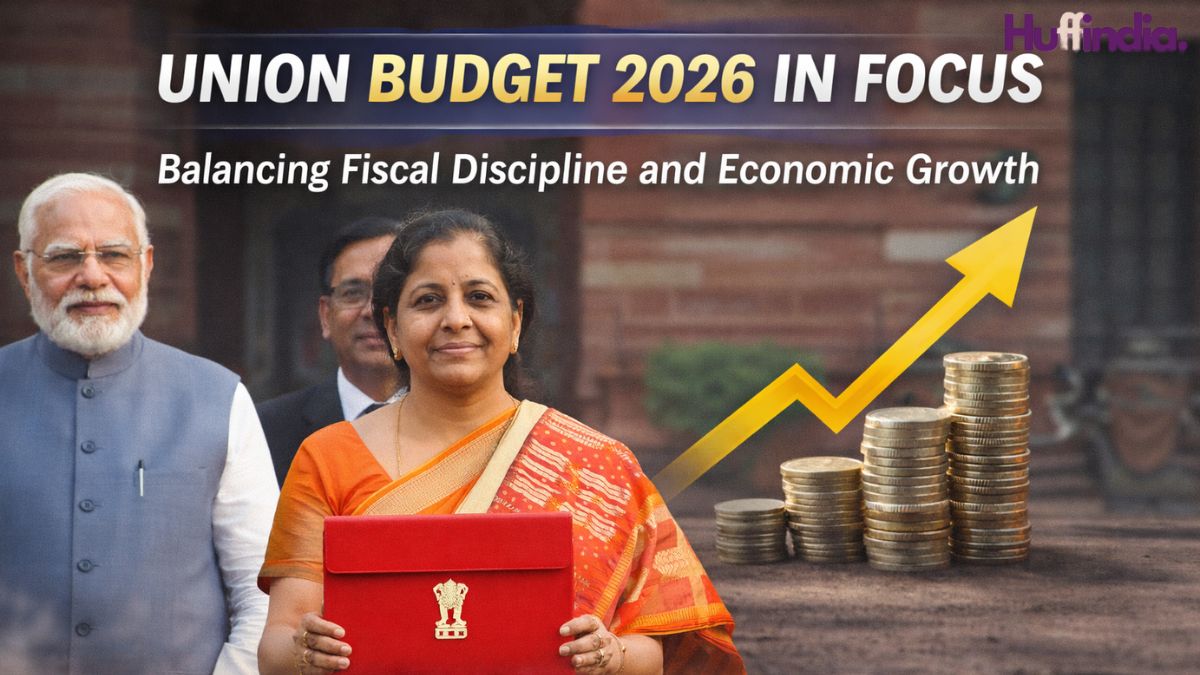



New Delhi: As preparations for the Union Budget 2026 enter a decisive phase, the government faces a familiar but complex challenge: sustaining economic growth while maintaining fiscal discipline. With global uncertainties persisting and domestic demand showing mixed signals, policymakers are under pressure to strike a balance between higher public spending and prudent deficit management.
Finance ministry officials have indicated that the upcoming budget will prioritise long-term growth drivers without compromising the credibility of India’s fiscal framework. Analysts expect the government to remain committed to its medium-term fiscal consolidation roadmap, even as demands for increased spending mount ahead of the new financial year.
Union Budget 2026 and the Fiscal Deficit Question
One of the key areas of focus in the Budget expectations 2026 is the fiscal deficit target. India has been gradually narrowing its deficit since the pandemic-era expansion, and economists believe any major deviation from the stated path could unsettle financial markets.
While revenue collections have remained relatively stable, rising expenditure commitments—particularly on infrastructure, defence, and social welfare—could limit the government’s room for manoeuvre. Experts say the budget is likely to adopt a calibrated approach, relying on realistic revenue assumptions and controlled spending growth.
According to the Ministry of Finance’s official budget framework, the government remains committed to a gradual reduction in the fiscal deficit while supporting growth-oriented spending, as outlined on the Union Budget portal.
Capital Expenditure to Remain a Key Pillar
Despite fiscal constraints, capital expenditure India is expected to remain a central pillar of the budget strategy. Over the past few years, higher government spending on roads, railways, and digital infrastructure has been credited with crowding in private investment and supporting employment.
Economists argue that continued emphasis on capital expenditure could help offset global headwinds and strengthen domestic growth momentum. However, they caution that the quality and efficiency of spending will be as important as the headline allocation figures.
Economic Growth and Global Headwinds
The Indian economy outlook remains relatively resilient compared with many global peers, but risks persist. Slowing growth in advanced economies, volatile commodity prices, and geopolitical tensions could weigh on exports and investment flows.
Against this backdrop, the budget is expected to focus on measures that enhance productivity and competitiveness rather than short-term stimulus. Policy stability, tax certainty, and support for manufacturing and services exports are likely to feature prominently in budget proposals.
Market and Industry Expectations
Financial markets and industry stakeholders are closely tracking signals from policymakers ahead of the budget. Investors are particularly sensitive to any changes in taxation, subsidy rationalisation, or borrowing plans that could influence interest rates and liquidity conditions.
Industry bodies have called for targeted support for small and medium enterprises, incentives for green energy, and continued reforms to improve ease of doing business. Analysts note that while not all demands can be met, the budget’s tone and direction will play a key role in shaping sentiment.
What to Watch on Budget Day
Key announcements related to the fiscal deficit target, borrowing programme, and capital spending allocations are expected to dominate headlines on budget day. Observers will also watch for cues on disinvestment, asset monetisation, and reforms aimed at boosting private sector participation.
Taxpayers, meanwhile, will be looking for clarity on personal income tax provisions, although major changes are not widely anticipated this year.
Outlook Beyond the Budget
Ultimately, the success of the Union Budget 2026 will be judged not just by its numbers but by its ability to reinforce confidence in India’s economic trajectory. A balanced approach that supports growth while safeguarding fiscal credibility could help maintain stability amid an uncertain global environment.
As expectations build, the budget is shaping up to be a critical policy moment—one that could set the tone for India’s economic priorities in the year ahead.
Related: GST Reform 2025: New Rates Cut Costs on Essentials
Related: Global Stock Markets Face Volatility as Investors Await Key Economic Signals