
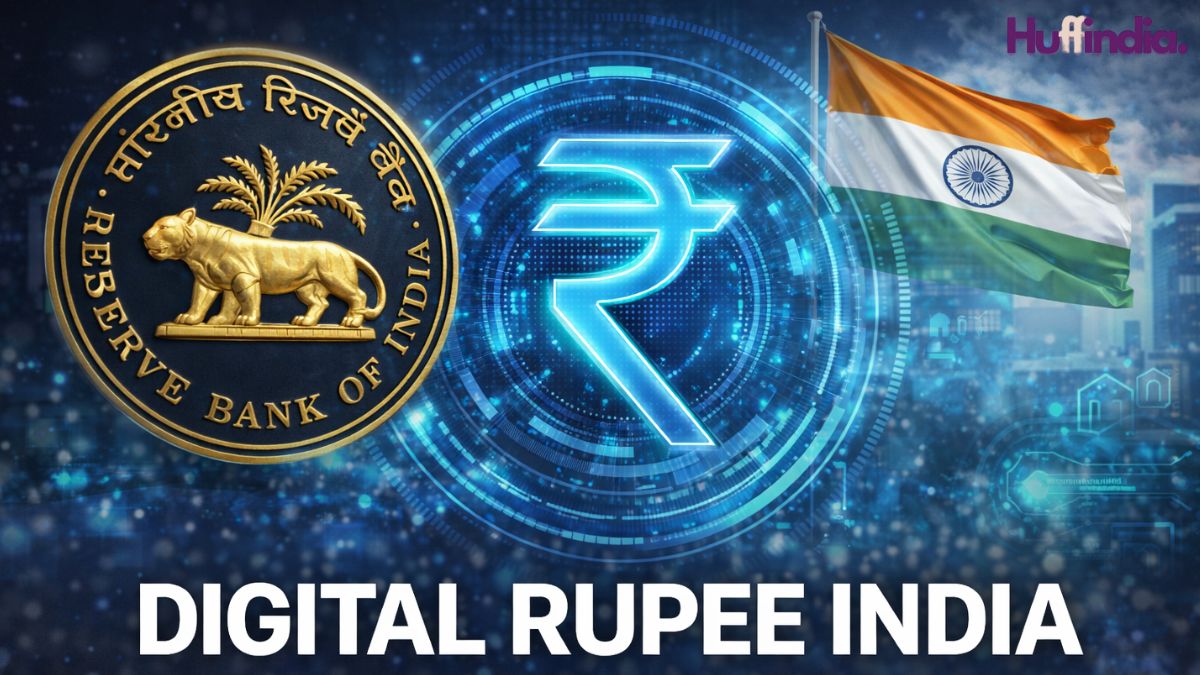



In a landmark shift toward a cash-lite economy, the Reserve Bank of India (RBI) has ramped up efforts to popularize the digital rupee India program — officially known as the Central Bank Digital Currency (CBDC). What began as a pilot in select cities is now seeing nationwide traction, with over 1 million daily users across retail and wholesale platforms, according to RBI data.
RBI Governor Shaktikanta Das confirmed earlier this week that the central bank’s goal is to reach 1 million transactions per day through banks and payment partners as part of its Phase 2 CBDC pilot.
“CBDCs shouldn’t compete with UPI, they should complement it,” said Nischal Shetty, founder of a leading crypto exchange, in an interview with The Economic Times.
What is RBI’s Digital Rupee?
The digital rupee is a tokenized, electronic version of the Indian currency, backed directly by the central bank. Unlike cryptocurrencies, it is fully regulated and holds the same value as a physical rupee — just without the paper trail.
It is currently being tested for:
- Retail transactions (e.g., payments via QR codes in shops)
- Wholesale payments (like interbank settlements and securities clearing)
Participating banks include State Bank of India, ICICI Bank, HDFC Bank, and Axis Bank, among others.
How the Digital Rupee India Could Transform the Payment Landscape
India already leads the world in real-time payments thanks to Unified Payments Interface (UPI). So why launch a new digital currency?
The RBI CBDC offers several unique advantages:
- Instant offline payments (no internet required)
- Programmability (e.g., subsidies or welfare payments directly credited and time-locked)
- Reduced dependency on cash management logistics
It could also offer long-term cost savings in minting currency and improve monetary policy transmission.
Benefits and Risks of India’s CBDC Rollout
Analysts say the digital rupee could redefine India’s digital payment system, especially in rural and underserved regions. The ability to make digital payments without relying on third-party apps could close financial inclusion gaps.
However, fintech experts warn that full-scale adoption requires:
- Clear data privacy frameworks
- Interoperability with current systems like UPI
- Adequate public education to avoid confusion
“CBDCs shouldn’t compete with UPI, they should complement it,” said Nischal Shetty, founder of a leading crypto exchange, in an interview with The Economic Times. (link to source)
Global Context: India Joins CBDC Race
India joins more than 100 countries exploring central bank digital currencies, including China (Digital Yuan), the European Union (Digital Euro), and the U.S. (FedNow pilot).
While China’s pilot is more mature, India’s unique fintech infrastructure — including Aadhaar, Jan Dhan Yojana, and UPI — gives it a significant advantage in scaling retail use of a CBDC.
The World Economic Forum listed India’s CBDC trials among the “Top 5 Central Bank Digital Experiments to Watch in 2026.”
What’s Next for the Digital Rupee?
According to RBI’s roadmap, the next phase will focus on:
- Enabling cross-border CBDC trials with Singapore and UAE
- Expanding retail pilots to Tier-3 and rural areas
- Launching developer APIs for private fintech integrations
Ultimately, whether the digital rupee India becomes as popular as UPI will depend on public trust, policy clarity, and ease of use.
But one thing is clear: India’s financial future is going increasingly digital — and the digital rupee is fast becoming part of that vision.
Related: RBI Inflation Outlook Turns Cautious as Central Bank Stresses Price Stability
Related: RBI Interest Rate Policy Signals Caution on Rate Cuts Amid Inflation Risks