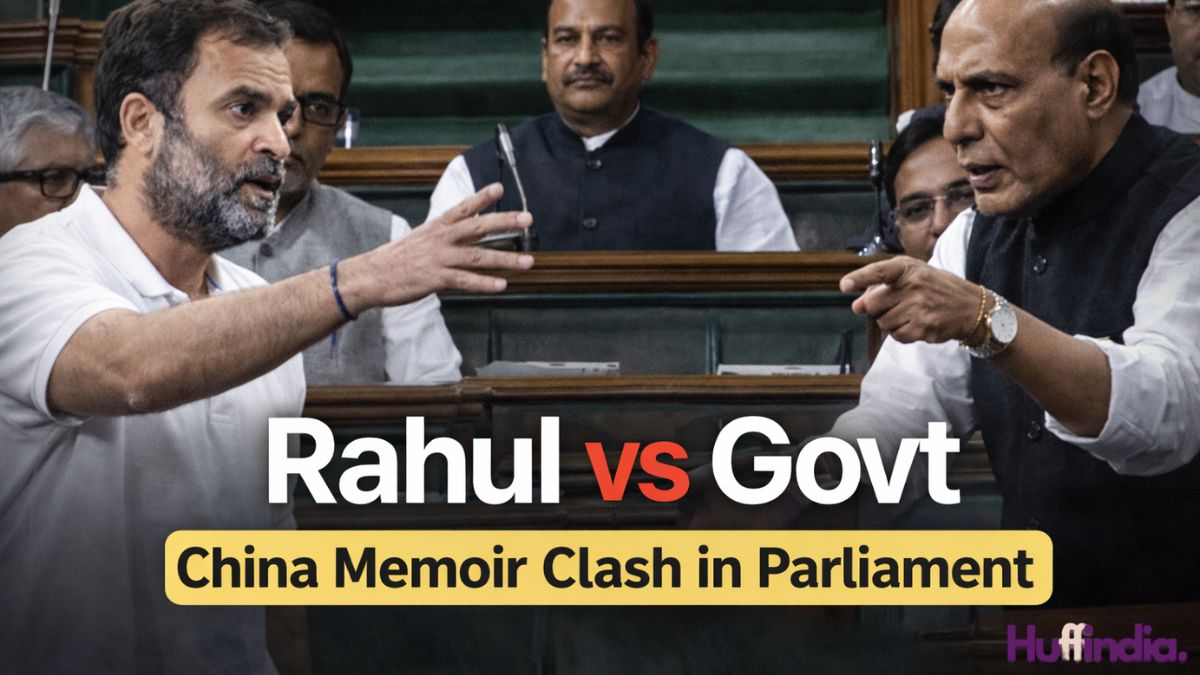



Rahul Gandhi Lok Sabha remarks sparked a political firestorm on February 2, 2026, when the Congress leader attempted to quote from an unreleased memoir by former Army Chief Gen. M.M. Naravane. The claim: four Chinese tanks crossed into Indian territory during a tense 2020 military standoff. The moment, dramatic on its own, quickly escalated into a full-blown confrontation that exposed the emotional and procedural sensitivities in India’s Parliament—and once again thrust the China border dispute into national headlines.
Rahul Gandhi Lok Sabha Remarks Spark Heated Exchange Over China Memoir
Gandhi’s intervention came during a heated debate over national security. Citing what he said were excerpts from Naravane’s yet-to-be-published book, Four Stars of Destiny, Gandhi described a moment when Indian troops confronted Chinese forces in eastern Ladakh, reportedly backed by four tanks. “This is what the former Army Chief himself has written,” Gandhi declared, before being interrupted by shouting from the Treasury benches.
At the heart of the clash was parliamentary rule 349, which prohibits quoting from unpublished or unrelated sources during debate. Defence Minister Rajnath Singh immediately rose to object, saying Gandhi was violating House protocol. Speaker Om Birla warned Gandhi to authenticate his source or withdraw the quote. “This book has not been tabled. You cannot read it here,” the Speaker ruled, citing procedural decorum.
But Gandhi refused to back down. “I am not reading a book. I am reading what has already been reported in the public domain,” he argued, referring to a Caravan magazine article that cited the memoir. The Congress MP insisted his comments were patriotic, not political: “They are scared to hear the truth. The truth is: Chinese tanks crossed into Indian territory. And the Prime Minister allowed it.”
The Naravane memoir controversy ignited fresh tensions between the BJP-led government and the Opposition. Union ministers warned that such remarks—without verification or publication—could demoralize troops. “This is dangerous,” Home Minister Amit Shah added. “Our jawans are on the borders and he is quoting fiction in Parliament?”
The India China tensions have been a flashpoint for years, especially following the deadly Galwan clashes in 2020. Since then, border talks have continued with limited breakthroughs. Rahul Gandhi’s comments aimed to spotlight what he termed as the Modi government’s failure to safeguard Indian territory. “Where is the 56-inch chest now?” he asked sarcastically outside Parliament.
In response, BJP MPs countered that the Congress had a long history of strategic failures, dating back to the 1962 war. Parliamentary Affairs Minister Pralhad Joshi accused the Opposition of using the military for “cheap political drama.” He said Gandhi’s actions violated not just parliamentary rule 349, but also basic standards of accountability.
Observers noted that Speaker Om Birla tried to maintain balance during the chaos but eventually adjourned the House for the day. The event has since dominated news cycles and social media, with #NaravaneMemoir and #RahulGandhi trending widely.
Experts also raised questions about the authenticity of the memoir Gandhi referenced. According to a report by Indian Express, Naravane’s book is still under review and has not been officially released. That technicality provided fuel for the BJP’s procedural objections.
However, former diplomats and military analysts suggested the core issue was not procedure, but truth. “If the memoir is true, it reflects a very dangerous situation on the ground,” said Lt. Gen. (Retd.) D.S. Hooda. “It warrants serious debate—not just political grandstanding.”
The China border dispute has resurfaced repeatedly in electoral campaigns, military briefings, and foreign policy forums. Rahul Gandhi’s reference may have reignited it, but the responsibility for resolution remains bipartisan.
In the end, the Rahul Gandhi Lok Sabha clash is not just about rules or rhetoric. It is a reflection of how unresolved national security issues continue to test the very limits of India’s democratic institutions—and public patience.
Related: Election Reform India: Fresh Proposal Sparks Political Reactions
Related: Indian Opposition Coordination Builds Ahead of Key Parliamentary Session