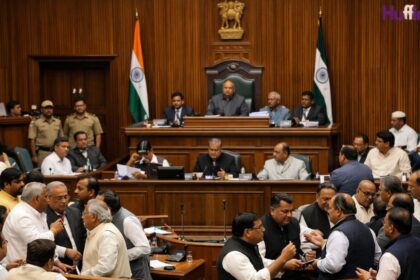


Punjab women protest unfulfilled ₹1,000 promise today with hundreds of participants from across the state marching toward the residence of Arvind Kejriwal in Chandigarh. The protest, organised by the Bharatiya Janata Party (BJP) Mahila Morcha, highlights growing frustration among women in Punjab who say they have yet to receive the ₹1,000 monthly assistance promised over four years ago. The Times of India
Why the Protest Matters
The demonstration marks a critical moment in Punjab’s political climate. Women who supported the scheme claim their expectations were raised—and subsequently left unmet. The BJP frames this as a broader governance issue, alleging a significant gap between promises and delivery.
What Is the Promise and How Was It Made?
During a rally in Moga on November 22, 2021, Kejriwal, the national convenor of the Aam Aadmi Party (AAP), pledged a monthly payment of ₹1,000 to women in Punjab as part of a welfare guarantee ahead of the state assembly elections. Punjab News Express
Four years later, according to BJP leaders, not a single installment has been received by qualified women—despite the scheme being a headline promise.
Accountability Demands in Focus
Punjab women protest unfulfilled ₹1,000 promise in frontline action
At 11 a.m., hundreds of women and party activists began marching from the BJP Sector-37 office in Chandigarh toward Kejriwal’s “Sheesh Mahal” residence. The Mahila Morcha leadership described their action as “the beginning of a major campaign against false guarantees.” The Times of India
Key demands include:
- Immediate disbursement of pending payments covering ~45 months (≈ ₹45,000 per woman)
- Full transparency on why the scheme has not been implemented
- Assurance of future payments and mechanisms for accountability
BJP Punjab working president Ashwani Sharma accused the AAP government of “betraying the trust” of three crore women in the state. Punjab News Express
Context: Governance and Public Trust
Such protests reflect a wider trend in Indian politics: the gap between campaign promises and effective governance. For women reliant on welfare assistance, delayed schemes undermine trust in government and party credibility.
Analysts suggest that unfulfilled guarantees pose risks not only for public welfare but also for democratic legitimacy and electoral outcomes.
What this means for AAP and Punjab
- AAP may face intensified scrutiny around welfare-commitments ahead of future elections
- BJP’s campaign may gain momentum through mobilisation of women voters
- Oversight of scheme implementation will now become a focal point for civil society
Challenges & Possible Responses
While the protesters’ grievances are clear, several practical barriers may have delayed the scheme’s rollout:
- Administrative clearance and fund allocation
- Identifying eligible beneficiaries accurately in rural and semi-urban regions
- Budget constraints and competing state priorities
To respond effectively, the state government could:
- Publish a detailed timeline for disbursement
- Set up a helpline/portal for women to track payments
- Conduct independent audits of the promise’s status
- Engage women’s groups in monitoring and feedback
Looking Ahead
If not addressed, the issue of the Punjab women protest unfulfilled ₹1,000 promise could evolve into a sustained political movement. For the women of Punjab, the wait for the payment they were promised turns into a symbol of unmet expectations.
For the wider political system, it represents a test of accountability, implementation capacity and the ability to translate welfare promises into tangible outcomes.
Stay tuned for more updates: Huffindia.com
Related: India resumes tourist visas for Chinese citizens after 5year