

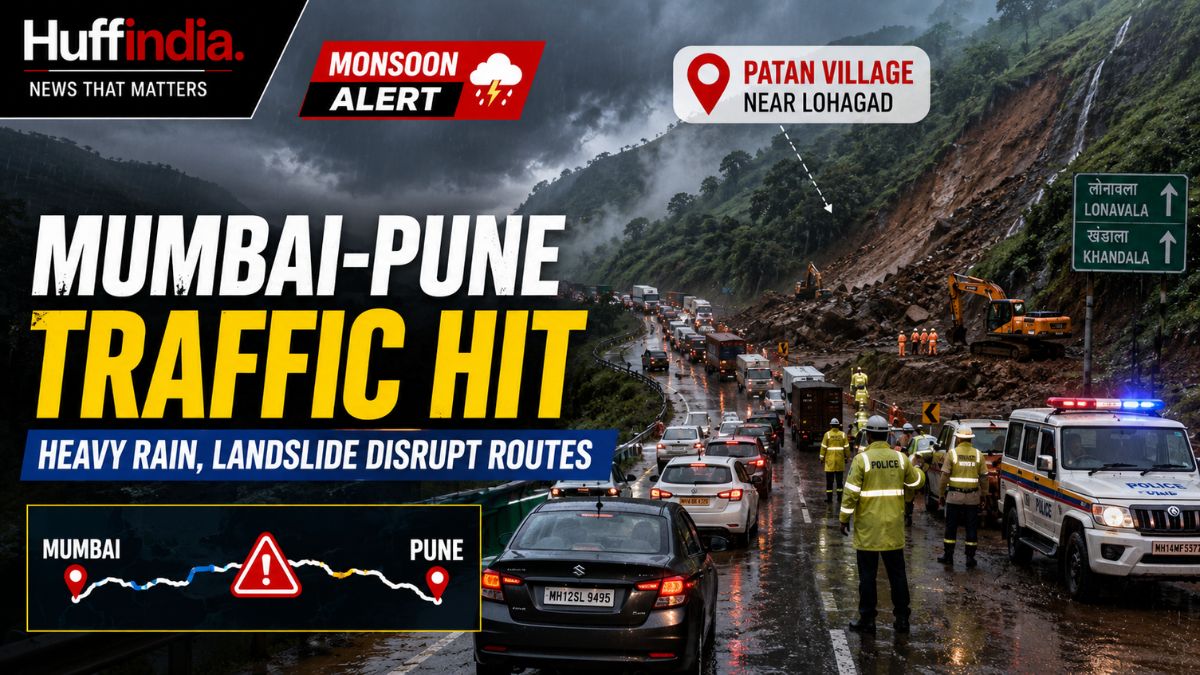
Pune-Mumbai Expressway Landslide disruption and relentless monsoon rainfall severely affected travel between Pune and Mumbai on Monday, July 6, as authorities suspended or diverted traffic on key road links amid flooding and slope-failure concerns.
Reports said traffic on both the Pune-Mumbai Expressway and the old Mumbai-Pune Highway was hit after intense overnight rainfall triggered multiple disruptions across the ghat region. A separate landslide emergency was also reported at Patan village in Pune district’s Maval area, near the wider Lohagad-Lonavala region, where rescue operations were launched after a house was reportedly buried under debris.
What Happened on the Pune-Mumbai Route?
The Pune-Mumbai Expressway Landslide situation developed amid exceptionally heavy rainfall across the ghat section connecting the two cities.
According to multiple reports, authorities suspended traffic on both the expressway and the old highway as flooding, waterlogging and landslide-related hazards made movement unsafe. Reports also described a landslide near the newly opened Missing Link section, adding to the disruption faced by motorists.
The closures and diversions triggered long queues, with some travellers reporting being stranded for hours. Motorists were advised to avoid unnecessary travel and follow police instructions rather than relying solely on usual navigation routes.
Patan Village Landslide Triggers Rescue Operation
A serious landslide incident was separately reported in Patan village in Maval taluka, where heavy rainfall reportedly caused debris to collapse onto a house.
Initial reports said members of a family were feared trapped, prompting emergency and rescue operations. Because rescue efforts were ongoing and early casualty information could change, figures should not be treated as final until confirmed by competent authorities.
This distinction is important: the Patan village rescue incident and the traffic disruption on the major Pune-Mumbai corridors are related to the same severe weather episode, but available reporting does not justify presenting them as one identical landslide location.
Continuous Rain Worsens Conditions
Persistent rainfall across the Lonavala and ghat belt compounded the crisis. Waterlogging, reduced visibility and unstable slopes created difficult conditions for road users and emergency teams.
The Pune-Mumbai Expressway Landslide disruption was part of a broader monsoon emergency affecting transport across the region. Rail connectivity between Mumbai and Pune was also hit by landslide-related problems in the ghat section, with cancellations and diversions reported.
Travellers can check the latest rainfall warnings and official weather forecasts on the India Meteorological Department (IMD) website before beginning their journey.
Why the Ghat Section Is Vulnerable During Heavy Rain
The Mumbai-Pune transport corridor passes through steep Sahyadri terrain around Lonavala, Khandala and adjoining areas. During prolonged heavy rainfall, saturated soil, loose rock and runoff can increase the risk of slope failures and falling debris.
For motorists, the danger is not limited to a major landslide. Heavy rain can also create:
- Sudden waterlogging
- Poor visibility
- Falling rocks
- Slippery road surfaces
- Traffic bottlenecks
- Emergency diversions
These conditions can change rapidly during intense monsoon spells.
Motorists Face Long Delays
The disruption affected one of Maharashtra’s busiest intercity travel corridors.
Travellers reported severe congestion as authorities halted movement or redirected vehicles away from affected stretches. Diversions also placed additional pressure on alternate roads, contributing to long delays.
Anyone planning travel between Mumbai and Pune should verify the latest position immediately before departure because reopening decisions can change based on rainfall, debris clearance and safety inspections.
Authorities Focus on Safety and Clearance
Emergency teams and road authorities were working to assess affected stretches and manage traffic movement.
Before full traffic restoration, authorities typically need to ensure that:
- Debris has been cleared
- Slopes are stable enough for movement
- Floodwater has receded
- Road surfaces are safe
- No fresh rockfall risk is immediately visible
The Pune-Mumbai Expressway Landslide episode highlights how quickly severe monsoon weather can disrupt major transport corridors.
Wider Transport Disruption Across the Region
Road traffic was not the only mode affected. Heavy rain and landslide incidents also disrupted railway movement in the Mumbai-Pune corridor, particularly around the ghat section.
Reports said several services were cancelled, suspended or diverted as railway teams dealt with landslide and track-related safety concerns.
The combined impact left road and rail passengers facing significant uncertainty.
What Travellers Should Do
Motorists planning to use the Pune-Mumbai corridor should take a safety-first approach:
- Check official traffic advisories before departure
- Avoid unnecessary travel during intense rainfall
- Do not enter barricaded or closed stretches
- Keep fuel and phone batteries sufficiently charged
- Avoid stopping near unstable slopes
- Follow police diversions
- Never attempt to cross visibly flooded roads
Travellers should also be cautious about viral social-media posts because old landslide footage is often recirculated during major weather events.
Also Read | Vande Bharat Routes: 5 Scenic Train Journeys to Experience This Monsoon
Final Thoughts
The Pune-Mumbai Expressway Landslide disruption on Monday, July 6, came amid a wider spell of intense monsoon rainfall that affected the expressway, the old Mumbai-Pune Highway and rail connectivity across the ghat region.
The separate landslide emergency at Patan village added to the seriousness of the situation as rescue teams responded to reports of people feared trapped under debris. With weather and road conditions capable of changing quickly, travellers should rely on current official advisories before beginning their journey.