
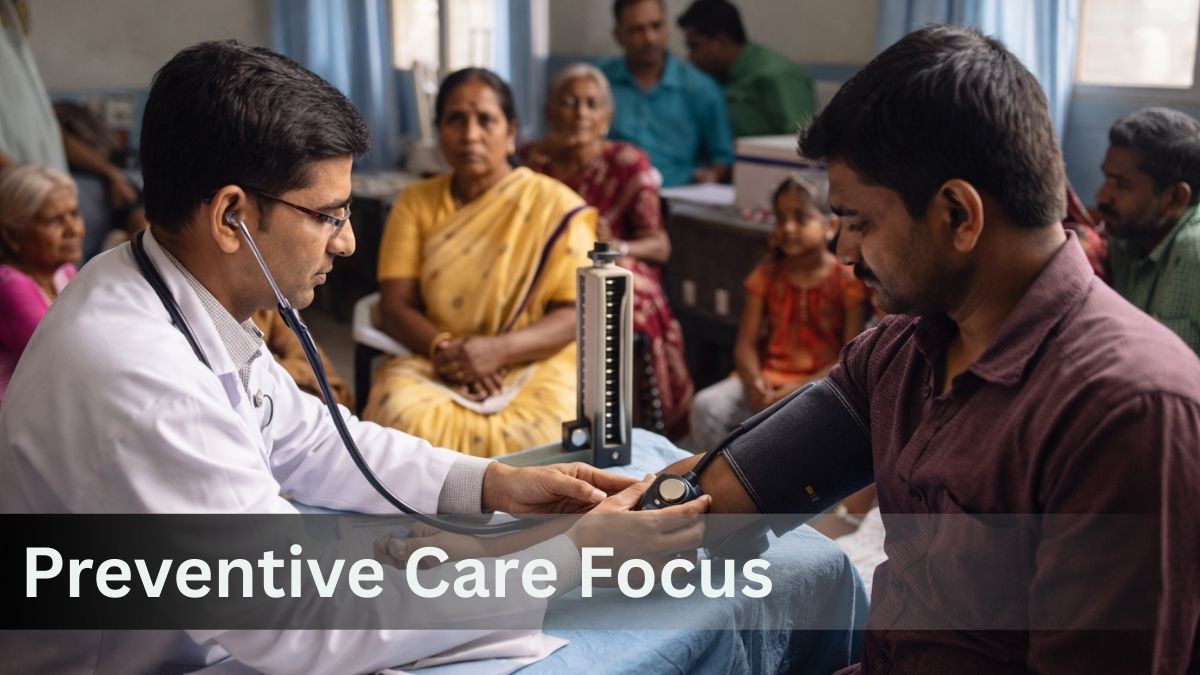



Preventive healthcare in India is receiving renewed attention as policymakers, healthcare providers, and public institutions expand early screening programs and wellness initiatives aimed at reducing long-term disease burden. Health experts say the shift reflects a growing recognition that prevention can significantly lower healthcare costs while improving population health outcomes.
The focus comes amid rising cases of lifestyle-related illnesses and increasing pressure on healthcare infrastructure.
Early Screening Becomes Central to Public Health Strategy
Health authorities are placing greater emphasis on early screening programs to detect conditions such as diabetes, hypertension, and certain cancers at an earlier stage. Medical professionals note that timely diagnosis allows for more effective treatment and reduces complications that strain hospitals and families.
Screening camps, mobile health units, and digital health platforms are being used to reach wider sections of the population, particularly in semi-urban and rural areas.
Preventive Healthcare in India Shapes Policy Direction
The expansion of preventive healthcare in India marks a shift in public health India strategy from reactive treatment to proactive intervention. Policymakers are increasingly integrating prevention-focused measures into national health planning, emphasizing regular check-ups and health awareness.
Wellness Initiatives India Gain Wider Adoption
Workplace health programs, community wellness drives, and school-based health education are gaining traction. These wellness initiatives in India promote physical activity, balanced diets, mental well-being, and routine health monitoring.
Experts say such programs are particularly effective when supported by local institutions and sustained public engagement.
Role of Technology in Preventive Care
Digital health tools are playing a growing role in preventive care delivery. Mobile applications, telemedicine platforms, and electronic health records are helping track health indicators and remind individuals about screenings and follow-ups.
Healthcare providers believe technology can bridge access gaps, especially in regions with limited medical facilities.
Economic and Social Benefits
Preventive healthcare offers economic advantages by reducing long-term treatment costs and productivity losses. Health economists argue that investing in prevention can ease the financial burden on both households and public health systems.
Communities with strong preventive care programs often report improved quality of life and reduced absenteeism in workplaces and schools.
Challenges in Implementation
Despite progress, challenges remain. Awareness levels vary across regions, and access to diagnostic facilities is uneven. Ensuring consistent follow-up care after screenings is another hurdle, particularly in underserved areas.
Health experts stress the importance of strengthening primary healthcare networks and training frontline health workers to support preventive initiatives effectively.
Government and Expert Perspectives
Officials emphasize that prevention must become a shared responsibility between government, healthcare providers, and citizens. Sustained funding, public education campaigns, and data-driven planning are viewed as critical for long-term success.
According to coverage of India’s evolving healthcare priorities, preventive strategies are increasingly seen as essential to managing future health risks.
As India continues to expand preventive healthcare efforts, experts say the focus should remain on accessibility, quality, and community participation. Early screening and wellness initiatives, if scaled effectively, could transform health outcomes over the next decade.
For now, the growing emphasis on preventive healthcare in India signals a shift toward more sustainable and inclusive health management.
Related: Global Health Alert as Respiratory Illnesses Rise Across Regions
Related: Lifestyle Diseases in India Rise, Creating a Growing Public Health Challenge