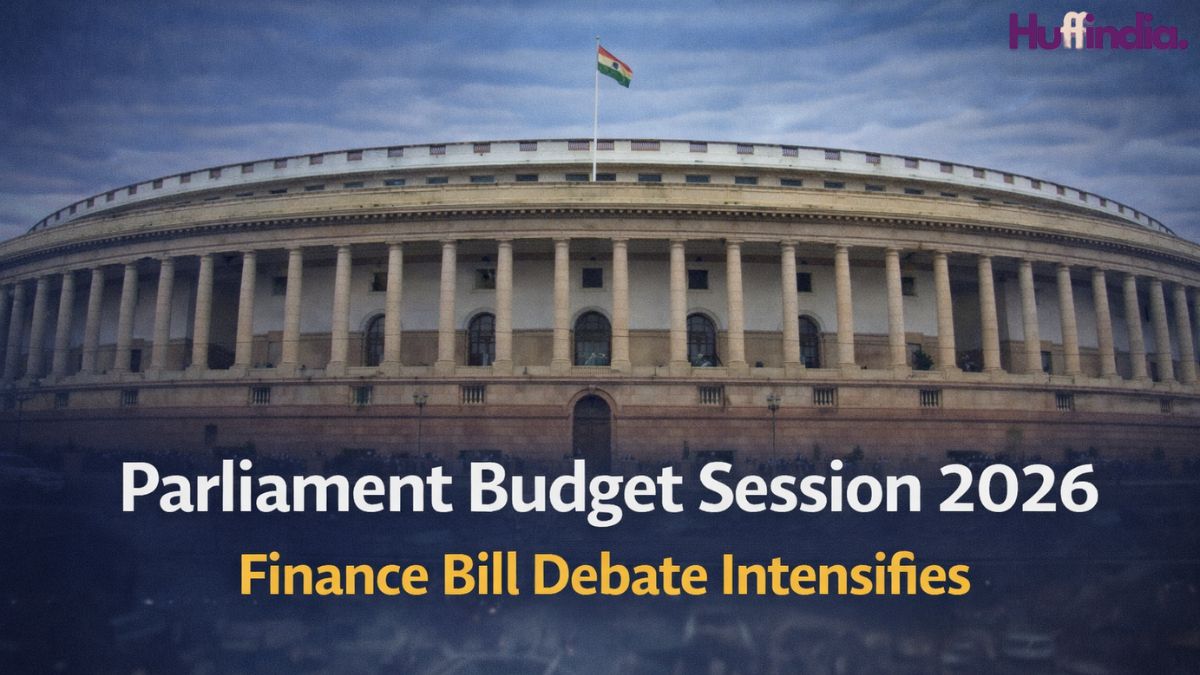



The Parliament Budget Session 2026 witnessed heated exchanges on Wednesday as members of both Houses engaged in an extended debate over provisions in the Finance Bill and key taxation proposals.
The ongoing Parliament Budget Session 2026 has become a focal point of political discussion, with opposition parties raising concerns over fiscal allocations, subsidy rationalisation and revenue projections. The government, meanwhile, defended its economic roadmap, describing it as balanced and growth-oriented.
Proceedings saw multiple adjournments during the day as lawmakers pressed for clarifications on sector-specific allocations and welfare spending commitments.
Parliament Budget Session 2026: Finance Bill Under Scrutiny
During the Parliament Budget Session 2026, opposition members questioned revenue assumptions and expenditure priorities outlined in the Finance Bill. Several MPs sought greater transparency regarding capital expenditure targets and rural development funding.
Finance Ministry officials reiterated that the proposed measures aim to sustain economic momentum while maintaining fiscal discipline.
According to official documents available on the Ministry of Finance website, the budget strategy focuses on infrastructure expansion, digital transformation and social sector support.
Economic policy analyst Dr. Meenal Sharma noted:
“The Parliament Budget Session 2026 reflects the balancing act between growth incentives and fiscal prudence. Debate is part of democratic accountability.”
Key Issues Raised During Debate
Among the primary concerns discussed during the Parliament Budget Session 2026 were:
- Direct tax reforms and compliance measures
- Agricultural subsidy rationalisation
- Allocation for healthcare and education
- Infrastructure spending commitments
- Employment generation strategies
Members from regional parties highlighted state-specific funding considerations, arguing that equitable distribution remains essential for balanced development.
The government responded by stating that long-term capital investment would create multiplier effects across sectors.
Political Reactions and Broader Implications
The intensity of the debate during the Parliament Budget Session 2026 reflects broader political positioning ahead of upcoming state elections in several regions.
Analysts believe that economic policy narratives emerging from this session may influence voter perception regarding inflation management, job creation and public welfare delivery.
Parliamentary affairs experts say such debates underscore the role of legislative oversight in shaping fiscal policy.
“The Parliament Budget Session 2026 is not only about numbers; it is about economic direction,” said constitutional expert Prof. Arvind Rao.
Market and Public Response
Financial markets responded cautiously to developments during the Parliament Budget Session 2026, with investors closely tracking discussions around taxation and expenditure.
Industry bodies have issued statements welcoming infrastructure allocations while urging clarity on regulatory frameworks.
Public interest groups have also called for continued transparency in budget implementation.
What Comes Next?
The Parliament Budget Session 2026 is expected to continue through the week, with voting on key amendments anticipated in the coming days.
Observers suggest that consensus-building efforts may intensify as lawmakers seek common ground on select provisions.
As deliberations proceed, the Parliament Budget Session 2026 remains central to shaping India’s fiscal and economic roadmap for the coming financial year.
Further updates are expected following detailed clause-by-clause discussions in both Houses.
Related: India-France Strategic Partnership 2026 Strengthened During Macron Visit
Related: UPI Payment Glitches Disrupt Transactions as Banks Acknowledge Issues