
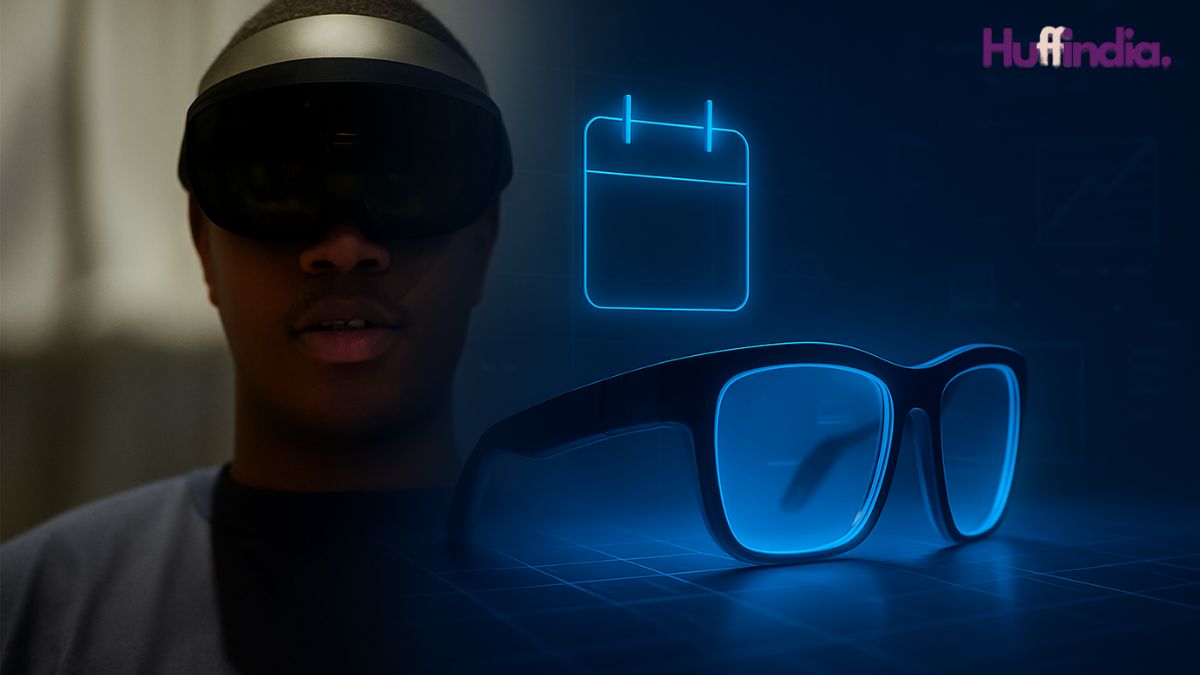



Meta’s long-anticipated Meta Phoenix AR Glasses, which were originally projected for a consumer launch around 2025–2026, have now officially been delayed to 2027, according to internal sources familiar with the company’s hardware roadmap. The delay marks a significant shift in Meta’s augmented reality strategy and raises questions about the company’s ability to deliver a breakthrough next-gen wearable that integrates seamlessly with its AI and metaverse ambitions.
Source News from : Reuters
Meta has been aggressively investing in AR hardware for nearly a decade, positioning its AR glasses as the “iPhone moment for augmented reality.” But building a lightweight, high-resolution, always-connected AR wearable has proven far more challenging than anticipated — especially in terms of optics, battery life, heat management and AI integration.
Why Meta Delayed the Phoenix AR Glasses
According to insiders, the Meta Phoenix AR glasses delay stems from key hardware and software hurdles, including:
1. Battery Limitations for All-Day Wear
AR glasses require substantial power for high-brightness displays, AI processing and continuous connectivity. Current prototypes reportedly offer less than two hours of battery life — far below Meta’s consumer expectations.
2. Waveguide Optics Still Not Market-Ready
Waveguide technology, essential for projecting crisp AR visuals, remains expensive and difficult to manufacture at scale. Producing distortion-free, high-brightness lenses remains one of the biggest engineering obstacles.
3. On-Device AI Models Need More Optimization
Meta’s roadmap aims for glasses that run real-time multimodal AI without constant cloud dependence. This requires breakthroughs in edge-processing efficiency that the company has not yet achieved.
4. Rising Competition Pressures the Timeline
Competitors like Apple Vision Pro, Google AR prototypes, Samsung XR alliances, and Microsoft HoloLens create a fast-moving market. Meta needs to ensure that Phoenix offers a truly next-gen leap — not just incremental upgrades.
These hurdles collectively pushed the launch into 2027, allowing Meta more time to refine core features.
What This Delay Means for the Augmented Reality Industry
Despite setbacks, the delay is not necessarily a negative sign. Tech analysts point out that augmented reality is still in its early innings, and premature launches can damage long-term consumer confidence.
The future of augmented reality depends heavily on advancements in:
- Lightweight display materials
- Advanced AI processors
- Battery energy density
- 5G/6G connectivity
- User comfort and ergonomic design
Meta is attempting to solve all of these simultaneously — an ambitious but extremely complex goal.
Meta’s Broader Hardware Roadmap Remains Unchanged
Though the Phoenix glasses have slipped to 2027, Meta continues to push forward with:
- Meta Ray-Ban smart glasses (AI-powered)
- Quest VR headsets, including next-gen mixed reality devices
- Neural interfaces, such as EMG wristbands that read muscle signals
These products remain central to Meta’s strategy of building an integrated XR ecosystem combining VR, AR and wearable AI.
Meta CEO Mark Zuckerberg has repeatedly emphasized the long-term vision for AR, framing it as the ultimate personal computing interface — more natural, immersive and productive than smartphones.
How Consumers Should Interpret the Delay
For everyday users, the Meta Phoenix AR glasses delay signals two things:
1. Meta Phoenix AR Glasses Are Not Ready for Mainstream Use — Yet
Despite hype, true consumer-grade AR glasses remain years away from mass deployment.
2. Meta Wants a Polished “Flagship” Launch
Instead of rushing out limited or bulky hardware, Meta aims for a reliable, sleek, premium device worthy of long-term adoption.
Consumers can expect more incremental updates to Ray-Ban smart glasses and Quest headsets in the meantime.
Conclusion
The delay of the Meta Phoenix AR glasses to 2027 underscores the immense technical challenges of building a next-generation augmented reality device. While disappointing for early adopters, the decision reflects Meta’s commitment to delivering a polished, high-performance wearable that aligns with the company’s larger vision for the future of spatial computing. As the AR industry continues to evolve, Phoenix remains one of the most anticipated devices — even if its arrival takes a little longer.
Related: Intel India AI Chief Sachin Katti Joins OpenAI to Lead Human-Like Intelligence Research
Related: India AI’s YUVAi for All Launch Sparks a Powerful Nationwide AI Literacy Movement