
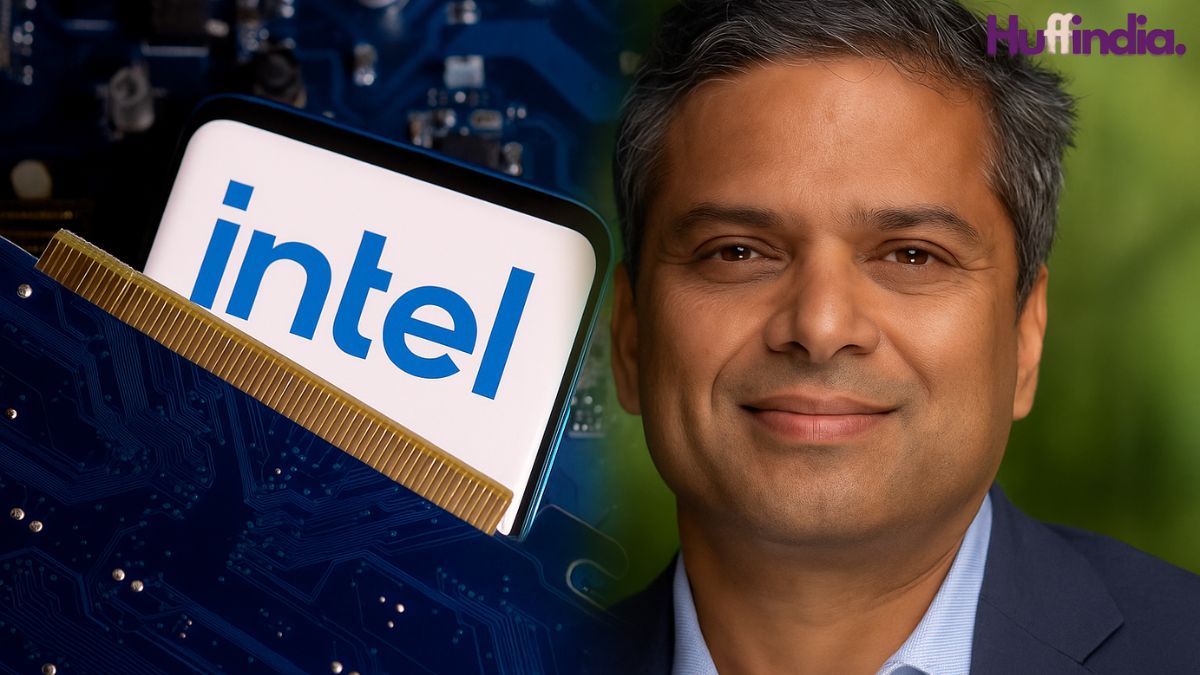



Bengaluru, November 11: In a major talent move shaking up the global tech scene, Intel India AI Chief Sachin Katti has joined OpenAI, where he will lead infrastructure design and research for “next-generation human-like intelligence systems”.
The shift signals how Indian AI talent is increasingly shaping global artificial-intelligence innovation.
Why the Move Matters
Katti, a Stanford-educated computer scientist, has been a leading voice in distributed AI systems at Intel. At OpenAI, he will spearhead the company’s Compute Infrastructure and Scalability Division, focusing on optimising large-language-model efficiency.
OpenAI’s CEO Sam Altman welcomed the move on X (formerly Twitter):
“Thrilled to have Sachin Katti join our mission to expand AI capabilities safely and globally.”
India’s Growing AI Footprint
Over the past three years, India has emerged as a critical talent pool for AI. Engineers from Bengaluru, Hyderabad, and Pune now work on core teams at Google DeepMind, Anthropic, and NVIDIA.
According to NASSCOM, India’s AI sector employs over 420,000 professionals and could double by 2030.
Katti’s appointment reflects India’s strategic value: technical expertise, cost-effective innovation, and strong academic foundations.
OpenAI’s New Direction
Following its ChatGPT success, OpenAI aims to move toward Artificial General Intelligence (AGI) — AI that can reason, plan, and learn like humans.
Katti’s team will focus on creating energy-efficient neural architectures, reducing compute cost per token, and developing “safety-aligned reinforcement systems”.
Analysts see this as a turning point. TechCrunch India noted:
“This signals OpenAI’s intent to localise more R&D work across Asia while tapping India’s engineering depth.”
Impact on Intel India
While Intel praised Katti’s contributions, insiders acknowledge the loss is significant. Intel India has been working on AI chips (Gaudi series) and AI-at-the-Edge projects; leadership succession plans are underway.
An Intel spokesperson told Huff India:
“We wish Sachin the very best. His work on distributed inference pipelines continues to guide Intel’s AI acceleration roadmap.”
What This Means for India’s AI Ecosystem
Experts believe such transitions strengthen India’s global presence rather than drain it.
“Every Indian researcher who joins a global lab becomes an ambassador of our capability,” says Dr Aparna Joshi, AI Policy Advisor at IIT-Bombay.
OpenAI has also hinted at setting up a satellite research office in Bengaluru, underscoring the city’s role as Asia’s AI capital.
Conclusion
Katti’s move is more than a career shift — it symbolises India’s rise from a service-driven IT hub to an AI innovation powerhouse influencing the world’s smartest machines.
As OpenAI’s next frontier unfolds, Indian talent continues to prove that the future of AI runs through Bengaluru.