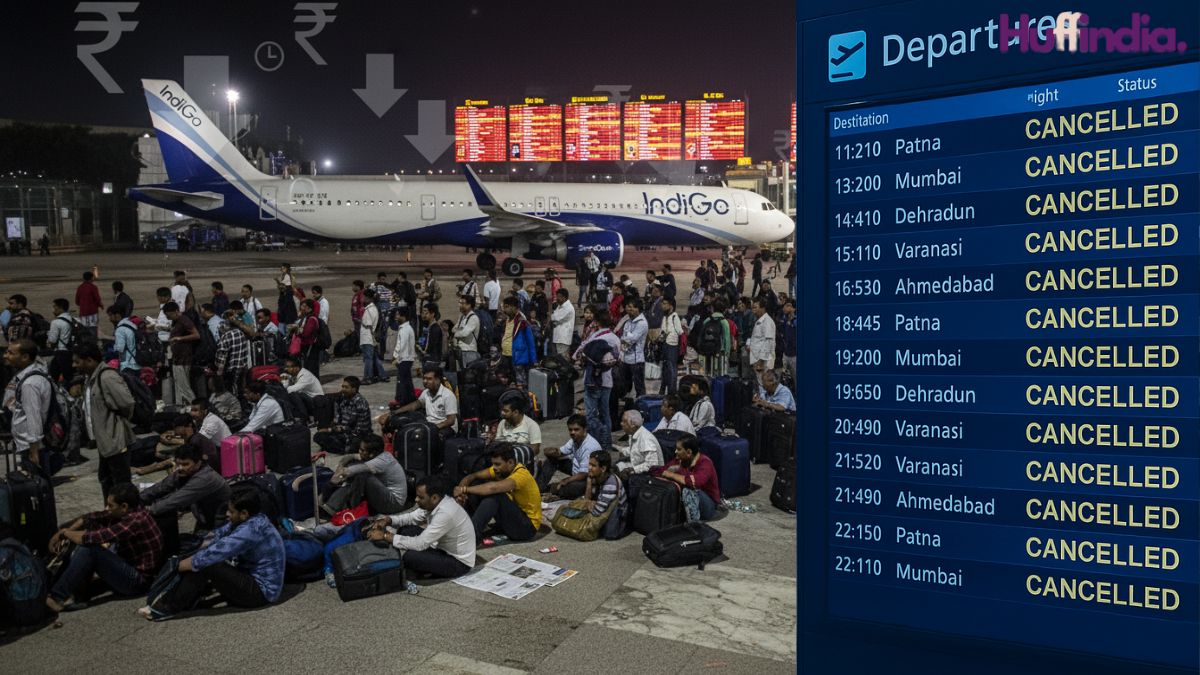



The IndiGo Flight Crisis 2025 intensified on 7 December 2025, marking the sixth consecutive day of severe disruptions across India’s aviation network. What began as a sudden wave of cancellations earlier in the week has now escalated into a nationwide operational emergency, prompting direct government intervention, airfare caps, and mounting pressure on the country’s largest airline.
According to multiple airport authorities and aviation reports on 7 December, IndiGo cancelled or significantly delayed more than 100 flights in Hyderabad, dozens more in Delhi, and a substantial number across Mumbai, Bengaluru, and Kolkata. The scale of today’s IndiGo cancellations represents one of the worst airline disruptions India has experienced in recent years.
Passenger frustration has continued to grow as airports reported overcrowding, long queues, inadequate communication from the airline, and repeated last-minute boarding gate changes — all of which contributed to a cascading wave of complaints on social media platforms.
Government Steps In: Temporary India Airfare Cap Announced
To curb aggressive price hikes by competing airlines, the central government imposed an immediate India airfare cap across domestic routes. With IndiGo operating at severely reduced capacity, last-minute ticket prices on alternate airlines had surged to 5–10 times normal levels, pushing air travel out of reach for thousands of passengers.
Officials stated that the fare cap was essential to prevent predatory pricing, maintain fairness, and ensure that stranded travelers were not financially penalized for systemic failures. The Ministry of Civil Aviation also confirmed that it is actively monitoring compliance and will take corrective measures against airlines that violate the cap.
This intervention highlights the seriousness of the IndiGo Flight Crisis 2025 and underscores its impact on India’s aviation stability.
According to the Source link: Reuters
Nationwide Travel Disruption: Airports Under Pressure
Passenger accounts from across major airports paint a picture of widespread confusion:
- Hours-long check-in lines, particularly at Delhi and Mumbai
- Repeated gate reassignments without announcements
- Unreachable customer care helplines
- Missing or delayed SMS/email alerts
- Stranded families waiting overnight for updates
- Lack of IndiGo staff presence during peak disruption hours
At Hyderabad Airport alone, where over 100 IndiGo cancellations were recorded today, passengers described the situation as “paralysing,” with many forced to cancel business meetings, medical travel plans, and connecting international journeys.
These incidents have intensified scrutiny of IndiGo’s crisis management and passenger communication strategy.
What Caused the Airline Operational Failure?
While IndiGo initially labelled the situation an “operational challenge,” industry experts and regulatory officials have pointed to multiple internal failures contributing to the crisis:
1. Severe Crew Shortages
New Flight Duty Time Limit (FDTL) regulations introduced in 2025 require pilots and cabin crew to adhere to stricter rest cycles. IndiGo is reported to have miscalculated crew allocations, leading to system-wide shortages.
2. Flawed Rostering Systems
IndiGo’s automated roster management reportedly failed to account for the new regulatory framework, causing widespread collapse in scheduling.
3. Rising Pilot Fatigue Concerns
Overworked crew members reportedly filed more sick leaves due to fatigue — a major aviation safety concern.
4. High Dependency on Tight Turnaround Times
IndiGo’s operating model relies on fast turnarounds, making it highly vulnerable when even a few flights slip off schedule.
Together, these factors triggered a domino effect, leading to the IndiGo Flight Crisis 2025 spiraling far beyond initial projections.
IndiGo Responds — But Passengers Demand More Accountability
IndiGo released a brief statement claiming it is “working tirelessly to stabilize operations,” but did not offer a concrete timeline for resolution. The airline has begun offering refunds and rebooking options, but many passengers report delays in processing and limited alternative flights.
Consumer rights groups are calling for:
- Mandatory compensation for cancellations within 12 hours of departure
- Penalties for large-scale operational failures
- Clearer timelines for service restoration
- Transparent communication regarding crew availability and rostering practices
Passengers argue that IndiGo’s scale — controlling a major share of domestic operations — means any systemic failure impacts the entire national aviation grid.
Impact on India’s Air Travel Network
The ripple effect of today’s flight disruptions in India has extended to:
- Overbooked flights on competing airlines
- Surge in demand for premium rail tickets
- Rising hotel occupancy around airports
- Disrupted cargo schedules
- Delayed business and tourism itineraries
Industry analysts estimate that the ongoing crisis may cost IndiGo hundreds of crores in refunds, penalties, and brand damage.
What Travelers Should Do Right Now
Experts recommend:
- Checking flight status every 30–45 minutes
- Arriving 3 hours early for domestic flights
- Avoiding same-day international layovers
- Keeping receipts, boarding passes, and screenshots for refund claims
- Exploring alternate airports (e.g., Pune instead of Mumbai; Chandigarh instead of Delhi)
Conclusion
The IndiGo Flight Crisis 2025 on 7 December 2025 marks a turning point for Indian aviation, revealing deep operational vulnerabilities within the country’s largest airline. With airfare caps now in place, regulatory scrutiny rising, and passenger dissatisfaction at record levels, the next 48 hours will be crucial for IndiGo to restore stability — before the holiday travel rush grows even more intense.