
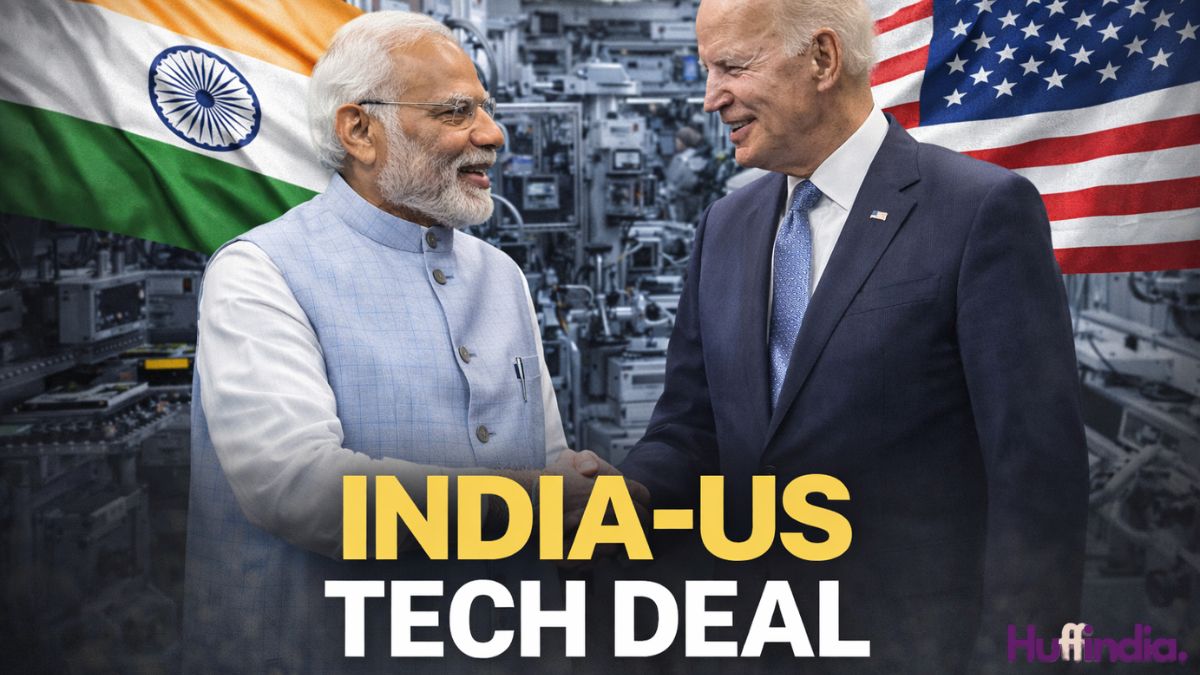



In a landmark agreement, India and the United States announced a broad technology trade pact emphasizing semiconductors and high-tech manufacturing. The India US tech trade deal covers cooperation in chips, critical minerals and digital services, and is seen as a major boost for India’s technology sector. Reuters reported that both governments plan a memorandum of understanding on semiconductors, pledging to jointly map the supply chain and pursue chip-related joint ventures. Market watchers say the agreement could invigorate India’s chip industry and help modernize its manufacturing base.
India US tech trade deal: Impact on Semiconductor Manufacturing
Under the deal, India and the US will deepen collaboration on chip fabrication. For example, an NDTV report noted plans for India’s first multi-material semiconductor fabrication plant, supported by the India Semiconductor Mission and partners including Bharat Semi and U.S. agencies. This facility will produce advanced chips – from infrared sensors to power electronics – for both defence and commercial use. Prime Minister Modi even highlighted the initiative, saying the day is not far when “you will see made-in-India chips in America”.
The pact aligns with India’s broader push under its national chip mission to become a global tech manufacturing hub. Reuters notes that India has offered up to 50% fiscal support for new semiconductor plants as part of a $10 billion incentive program. U.S. companies are taking notice: chipmaker Marvell has announced plans to expand hiring and R&D in India to tap growing demand, saying India is making semiconductor manufacturing central to its strategy. Industry analysts say the India US semiconductor pact and the related investments will help build local tech manufacturing capacity and integrate India into global chip supply chains.
Global Supply Chain Resilience and Digital Partnership
Analysts say this technology deal also aims to diversify and secure global supply chains. Reuters reported that several agreements between the two countries were “aimed at diversifying supply chains to reduce dependence on China”. To that end, the U.S. has invited India to join Pax Silica, a new initiative to build a “secure and resilient global supply chain for semiconductors and AI technology”. U.S. officials describe this effort as pooling resources among like-minded economies to safeguard critical tech components.
Alongside hardware, the negotiations touch on software and data. The deal is expected to strengthen the US-India digital partnership, covering areas like cloud services, AI and cross-border data flows. U.S. Ambassador-designate Sergio Gor said both sides “continue to actively engage” on finalizing the broader trade agreement. He also confirmed that India will soon be part of initiatives (like Pax Silica) intended to protect semiconductor and AI supply chains. Experts say the combined package should boost global supply chain resilience and deepen collaboration in cutting-edge technologies.
Observers note that the India US tech trade deal reflects a deepening of strategic ties. Reuters pointed out that by teaming up on chips and technology, India aims to become “a key player in the global supply chain” for advanced manufacturing. If implemented, the agreements could mark a breakthrough for India’s tech sector, drawing significant U.S. investment and know-how into local manufacturing. In sum, analysts say the new pact will not only expand India’s tech industry at home but also improve the resilience and diversity of global technology supply chains.
Sources: Official statements and news reports from Reuters and other media, among others.
Related: Fuel Prices Today 23rd Jan 2026 Stay Unchanged Across Major Cities
Related: India Core Inflation Eases, but Food Prices Keep Cost Pressures High