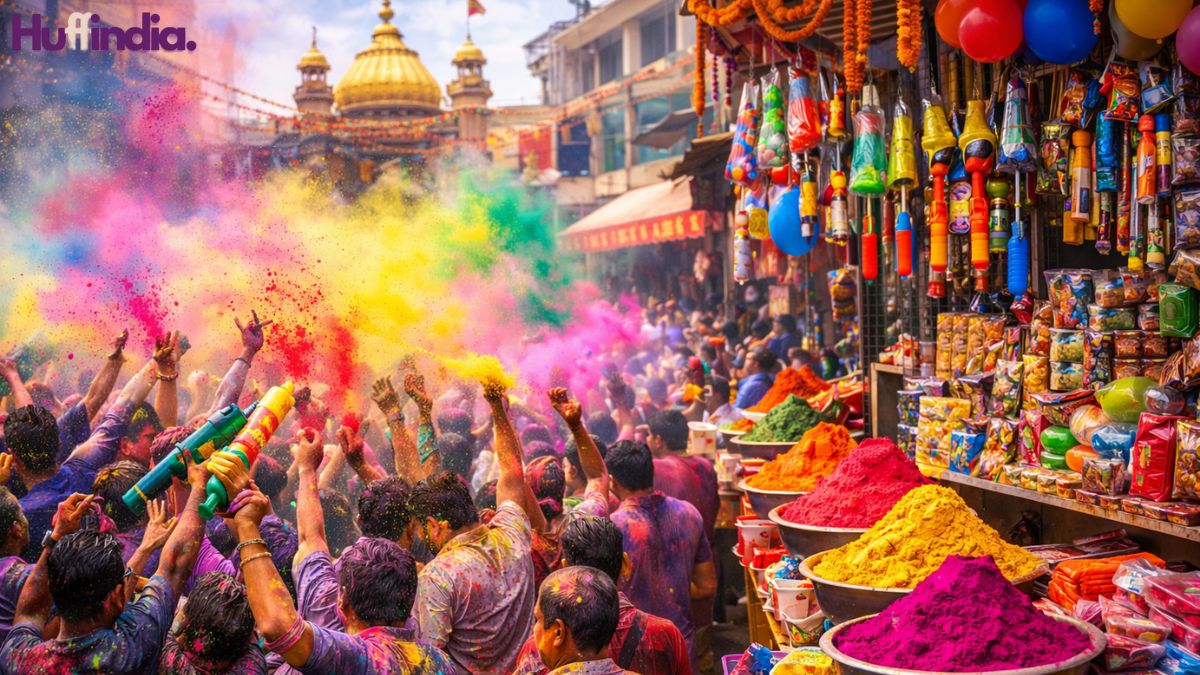



The Holi 2026 economy in India is witnessing a massive festive boom, with traders estimating that the festival of colors has generated nearly ₹80,000 crore in nationwide economic activity. From bustling local markets to online shopping platforms, Holi festival spending in India has surged across sectors, including sweets, clothing, travel, decorations, and hospitality.
As one of the biggest cultural festivals in the country, Holi has evolved into a major seasonal driver for India’s consumer economy. This year, the Holi 2026 economy in India appears stronger than in previous years, fuelled by rising consumer confidence, digital commerce growth, and a shift toward locally manufactured festive products.
Markets Across India See Huge Holi Demand
Retail markets across major cities such as Delhi, Jaipur, Mumbai, and Lucknow saw heavy footfall in the days leading up to the festival. Shopkeepers reported record sales of gulal (colored powder), water guns (pichkaris), sweets, snacks, and festive clothing.
According to trade bodies like the Confederation of All India Traders, the Holi market India 2026 expanded significantly due to the growing preference for “Made in India” products.
Traders say the demand for eco-friendly colors and herbal gulal also increased this year as consumers became more environmentally conscious. This shift has created new opportunities for small manufacturers and cottage industries across the country.
The Holi 2026 economy in India is not just limited to retail stores. Online marketplaces and quick-commerce platforms have also recorded a spike in Holi-related orders, including festive hampers, organic colors, and ready-to-cook sweets.
Tourism and Hospitality Sector Get Festive Boost
The India festive economy Holi has also significantly benefited the tourism sector. Popular Holi destinations like Mathura, Vrindavan, Jaipur, and Udaipur experienced a surge in hotel bookings and travel demand.
Travel platforms reported a sharp rise in weekend trips and festival packages, as people opted to celebrate Holi in culturally iconic destinations.
Hotels, resorts, and event venues hosted Holi-themed parties, music festivals, and cultural events, attracting both domestic travellers and international tourists.
Industry experts say festival tourism is becoming a strong contributor to the Holi 2026 economy in India, as travellers increasingly look for immersive cultural experiences.
Sweet Shops and Food Industry Record Strong Sales
No Indian festival is complete without food, and Holi is no exception. Sweet shops and food brands have witnessed strong demand for traditional delicacies such as:
- Gujiya
- Thandai
- Malpua
- Namak pare
- Dahi bhalla
Many confectionery brands introduced special Holi gift boxes and festive dessert collections, which became popular corporate gifting options.
Food delivery apps also reported increased orders for Holi party snacks and beverages, further contributing to the Holi retail sales trend in India.
Local Manufacturing Gains Momentum
One of the most notable developments in the Holi 2026 economy in the India story is the reduced reliance on imported festival goods.
In previous years, imported plastic pichkaris and synthetic colors dominated markets. However, this year traders reported a strong push toward domestic manufacturing, supporting small businesses and local artisans.
Experts say the shift toward Indian-made products is strengthening the Holi market in India in 2026 while also boosting employment in small-scale industries.
Festivals Continue to Power India’s Consumer Economy
Economists believe festivals remain a critical pillar of India’s consumption-driven economy. Events like Holi, Diwali, and Eid trigger seasonal demand across multiple sectors—from retail and hospitality to travel and logistics.
The strong Holi festival spending in India this year reflects the resilience of the Indian consumer, even amid global economic uncertainty.
With rising disposable incomes, expanding e-commerce access, and a renewed emphasis on local products, the Holi 2026 economy in India demonstrates how cultural celebrations continue to fuel economic momentum across the country.
As businesses wrap up the festive season, industry experts expect the momentum from Holi to spill over into upcoming wedding season sales, keeping India’s retail sector vibrant in the months ahead.
Related: India Heatwave 2026: IMD Issues Summer Temperature Warning
Related: Jaipur Literature Festival 2026 Begins with Powerful Debates on Democracy and Culture